BBL Recovery Timeline
Updated
BBL recovery gets discussed almost entirely in terms of the sitting rule, and that rule is real. But it is only the visible part of something more interesting, which is that a BBL is the one body contouring procedure where your behavior during recovery genuinely interacts with the biology of the result.
Aliestetic is an aesthetic center; the surgery is performed by an affiliated plastic surgeon, and for a BBL, coordinating the recovery phase means being precise about which areas can be touched and which cannot.
Why is a BBL recovery different?
Because you are recovering from two things at once.
Because you are recovering from two things at once.
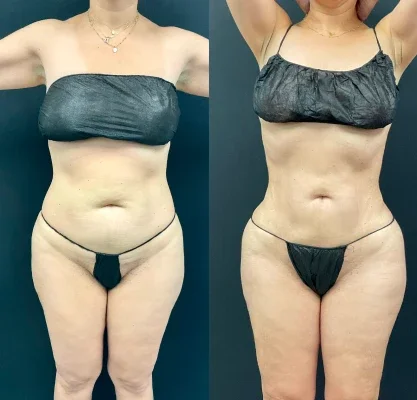
The donor areas, usually the abdomen, flanks and back, heal like liposuction. Swelling, bruising, tightness, fluid drainage from incisions, compression, the whole familiar sequence.
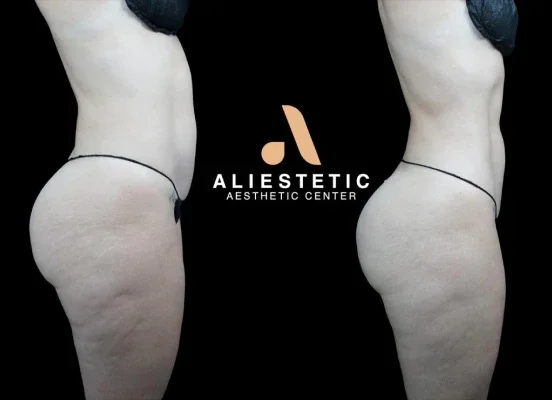
The grafted area behaves differently. Fat that has been transferred has no blood supply of its own at the moment it is placed. It survives by establishing new vascular connections with the surrounding tissue, a process that takes weeks. Cells that establish that supply persist. Cells that do not are reabsorbed.
Sustained direct pressure on the area compresses the tissue while those connections are forming. That is the mechanical reason behind the sitting restriction. It is not superstition and it is not a way to sell you a special pillow.
Recovery week by week
- 01
Days 0 to 3
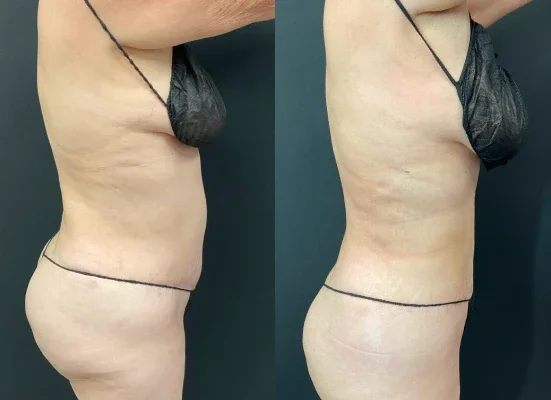
Discomfort is usually described as worse in the donor areas than in the buttocks. Movement is awkward because the normal ways you sit, lean and get out of bed are all restricted. Drainage from liposuction incisions is common. Walking short distances frequently matters here for circulation.
- 02
Days 4 to 7
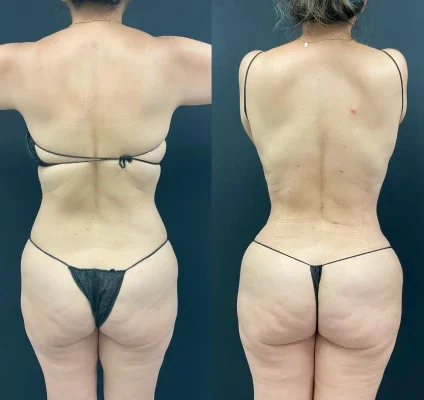
Swelling peaks. The buttocks often look larger than the final shape will be, which is temporary and misleading in both directions. Sleeping arrangements are the main practical problem, since sleeping on your back is generally off limits.
- 03
Weeks 2 to 4
Bruising fades, mobility improves, most people return to desk work with a cushion arrangement or a standing setup. The grafted area is still in the vulnerable window. This is also when volume starts to visibly change as some transferred fat is reabsorbed, which alarms people who were not warned.
- 04
Weeks 4 to 8
Sitting restrictions are typically relaxed in stages according to your surgeon’s protocol, usually with an offloading cushion before unrestricted sitting. Exercise returns progressively. Donor area firmness may be noticeable.
- 05
Months 3 to 6 and beyond
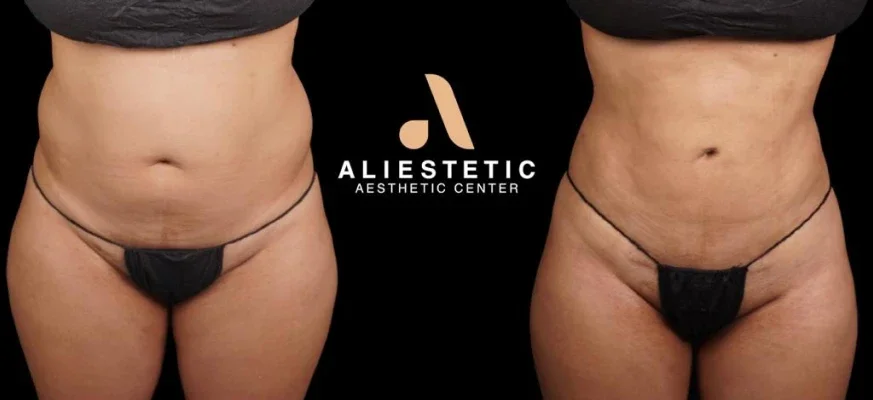
Volume stabilizes as reabsorption completes and remaining graft settles. Donor area contour continues refining, on the same long timeline as any liposuction. Judging your result before this point is judging an unfinished process.
How much fat survives?
Some of it is reabsorbed. The proportion varies between patients and depends on factors including technique, how the fat was handled, how it was distributed, blood supply in the recipient area, and post-operative pressure.
Some of it is reabsorbed. The proportion varies between patients and depends on factors including technique, how the fat was handled, how it was distributed, blood supply in the recipient area, and post-operative pressure.
You will see confident percentages quoted online. Treat them carefully. What is reasonable to say is that partial reabsorption in the first months is expected and normal, that following the pressure restrictions is one of the few variables you personally control, and that nobody can promise you a specific volume outcome.
Weight changes also matter. Grafted fat is living tissue and behaves like the fat it came from, so significant weight loss after the procedure can reduce volume.
The safety part nobody should skip
Gluteal fat grafting has received more safety attention than any other cosmetic procedure, and for good reason.
Gluteal fat grafting has received more safety attention than any other cosmetic procedure, and for good reason.
The Aesthetic Surgery Education and Research Foundation convened a task force that reported on mortality from gluteal fat grafting in Aesthetic Surgery Journal. Their central finding is the one worth knowing: the fatal cases they reviewed shared a pattern at autopsy involving fat in the gluteal muscles or beneath them, damage to gluteal veins, and massive fat embolism to the heart or lungs. No reported death has been documented with fat confined to the subcutaneous space. A multisociety advisory involving ASERF, the ASPS Regenerative Medicine Committee and the ISAPS Patient Safety Committee followed from that work, recommending that the entire procedure stay in the subcutaneous plane without violating the fascia over the gluteus maximus.
Florida then legislated it. Under Florida Statute 458.328, effective since July 2023, a physician performing gluteal fat grafting must examine the patient in person no later than the day before the procedure, must use ultrasound guidance or equivalent technology during cannula placement and navigation, may only inject fat into the subcutaneous space without crossing the fascia over the gluteal muscle, and may not delegate fat extraction or gluteal fat injection to anyone else. The statute also requires a one physician to one patient ratio during the procedure.
If you are choosing a surgeon in Florida, these are not optional preferences. They are the legal standard, and asking about them directly is a completely reasonable thing to do.
What recovery coordination should look like
For a BBL, the most important instruction we need from your surgeon is a map: which areas may be treated, which areas are off limits, and for how long.
For a BBL, the most important instruction we need from your surgeon is a map: which areas may be treated, which areas are off limits, and for how long.
Donor areas generally follow standard liposuction recovery, with compression and lymphatic drainage timed to surgeon clearance. The grafted area is usually left undisturbed early, and any manual work there happens only with explicit authorization.
Wood therapy is not an early post-operative treatment anywhere on the body, and it is particularly inappropriate over a fresh graft. Carboxytherapy, where used, is scheduled by stage and by surgeon clearance. A 45 minute wellness protocol exists because the sitting restrictions and the visible volume changes make this a psychologically demanding recovery, and that part is real too.
Aliestetic runs this phase in Miami inside what your surgeon has written. We do not improvise on a graft.
Red flags
Contact your surgeon or seek emergency care rather than booking a treatment if you have:
Contact your surgeon or seek emergency care rather than booking a treatment if you have:
- Shortness of breath, chest pain, or a rapid heartbeat, which need immediate emergency assessment
- Fever or chills
- Spreading redness, worsening pain, or foul smelling drainage from any incision
- A hot, hard, extremely tender area
- Pain or swelling in one calf
- Skin over the buttocks that turns dusky, dark, or blisters
Fat embolism symptoms typically appear during or shortly after surgery, but respiratory symptoms at any point in recovery deserve urgent attention rather than a wait and see approach.
If you are traveling to Miami for a BBL
Two specific planning problems come with this procedure. First, a flight home involves sitting, and sitting is exactly what is restricted, so the return trip has to be discussed with your surgeon in advance rather than assumed. Second, the CDC has documented adverse outcomes among people who travel for cosmetic surgery, including post-surgical infections, with the underlying issue often being aftercare that was never organized.
Two specific planning problems come with this procedure. First, a flight home involves sitting, and sitting is exactly what is restricted, so the return trip has to be discussed with your surgeon in advance rather than assumed. Second, the CDC has documented adverse outcomes among people who travel for cosmetic surgery, including post-surgical infections, with the underlying issue often being aftercare that was never organized.
Ask your surgeon three questions before you commit: what is my sitting protocol and for how long, how am I supposed to travel home and when, and who is monitoring me here while I heal. If you have solid answers to all three, you have a plan. If you do not, you have a booking.
What does BBL recovery involve and how long does it take?
A Brazilian Butt Lift moves fat from liposuctioned areas into the buttocks, so recovery has two halves that behave differently. The donor areas heal like liposuction, with swelling, bruising and compression. The grafted area is different, because transferred fat must establish a new blood supply before it can survive, and sustained direct pressure on it works against that process. This is why surgeons restrict sitting and sleeping on the back for a period they define, commonly several weeks. Some of the transferred fat is reabsorbed during the first months and the proportion varies from person to person, so no honest provider predicts a number in advance. Aliestetic, in Miami, coordinates the recovery phase around the operating surgeon's instructions, including which areas may be treated and which must be left alone. Gluteal fat grafting is regulated in Florida and safety rules exist for a reason.
Frequently asked questions
How long can I not sit after a BBL?
Your surgeon sets the rule, and protocols vary. Many restrict direct sitting for several weeks and then allow it progressively with a cushion that offloads the buttocks. The reason is that sustained pressure on grafted fat works against the blood supply it is trying to build.
How much of the transferred fat survives?
Some is reabsorbed during the first months and the proportion differs between patients. Nobody can tell you your number in advance. Be skeptical of any provider who quotes you a precise survival percentage as though it were a guarantee.
Can I have lymphatic drainage on my buttocks after a BBL?
The donor areas and the grafted area are treated differently. The grafted area is usually left undisturbed early on, and any work there requires explicit clearance from your operating surgeon. Bring your written instructions to any provider before your first session.
What makes a BBL safer?
Placement matters most. The ASERF Task Force found that fat confined to the subcutaneous space has not been implicated in reported deaths, while fatal cases involved fat in or beneath the gluteal muscle. Since July 2023, Florida law requires ultrasound guidance and subcutaneous only placement for gluteal fat grafting.
Questions about your case?
Consultations are free, in person in Miami or by video if you are out of state.
Book a free consultation