Updated
What is carboxytherapy and what is it actually used for after liposuction?
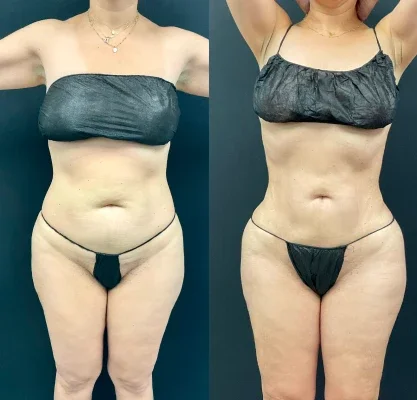
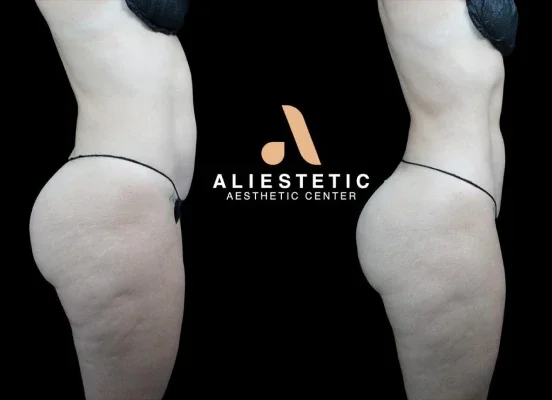
Carboxytherapy, offered at Aliestetic in Miami and Naples, is the injection of small volumes of sterile medical carbon dioxide gas into the dermis or the layer of fat just beneath it, using a very fine needle and a device that regulates flow and dose. The gas separates tissue planes mechanically and triggers a local response that increases blood flow to the treated spot and recruits fibroblasts, which is the reason it is used in aesthetic medicine on scar tissue, stretch marks and hardened areas. After liposuction, the most frequent request in Miami, it is applied to zones of fibrosis, the firm irregular bands that form as the body heals unevenly, with the goal of softening them so that massage and compression can work. Published dermatology reviews describe these applications as promising, but the evidence base is small and consists largely of case series rather than large controlled trials, so it should be presented as an adjunct and not a cure.
Benefits of Real and Lasting Results
Stimulates the Skin
Stimulates the production of collagen and elastin.
Improvement of Imperfections
Diminishes cellulite, improves skin texture, and softens stretch marks.
Cellular Activation
Activates circulation and tissue oxygenation.
Safety
It is safe, effective, and with progressive results.
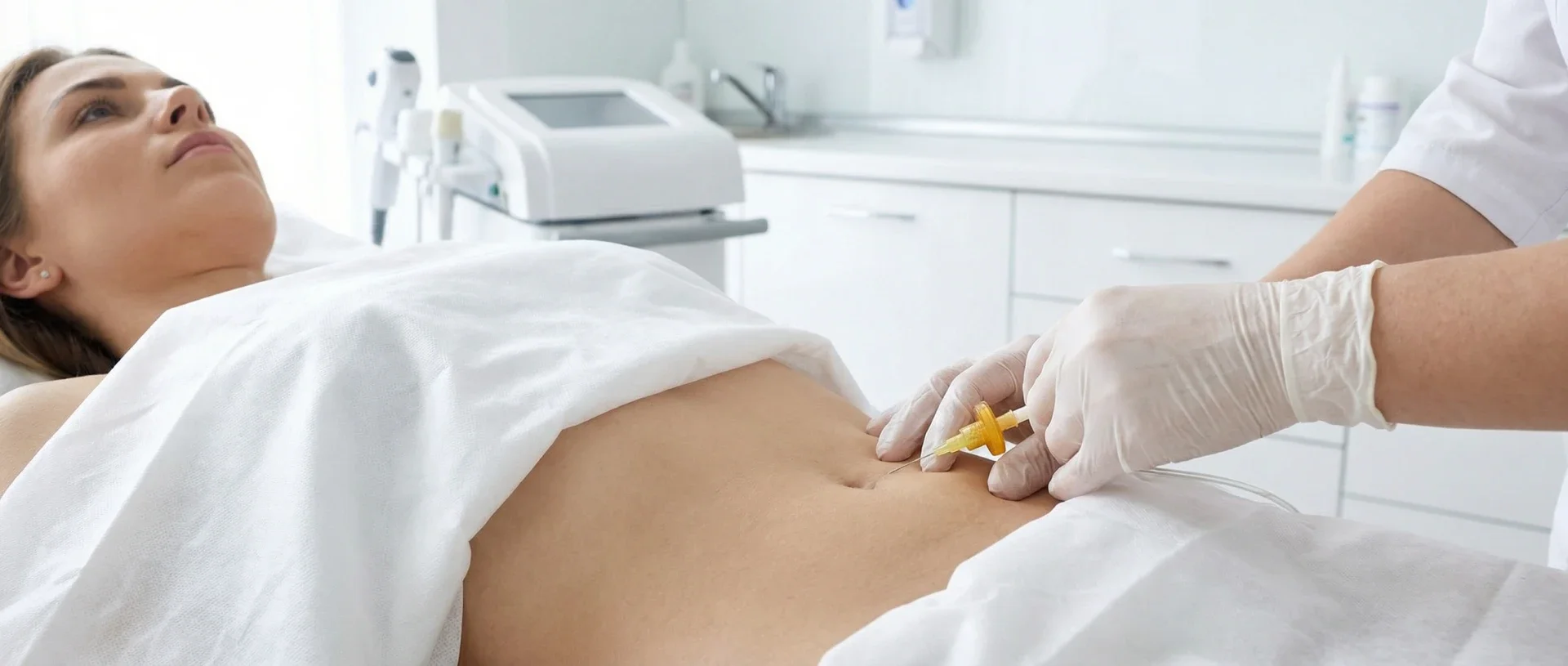
How Does It Work?
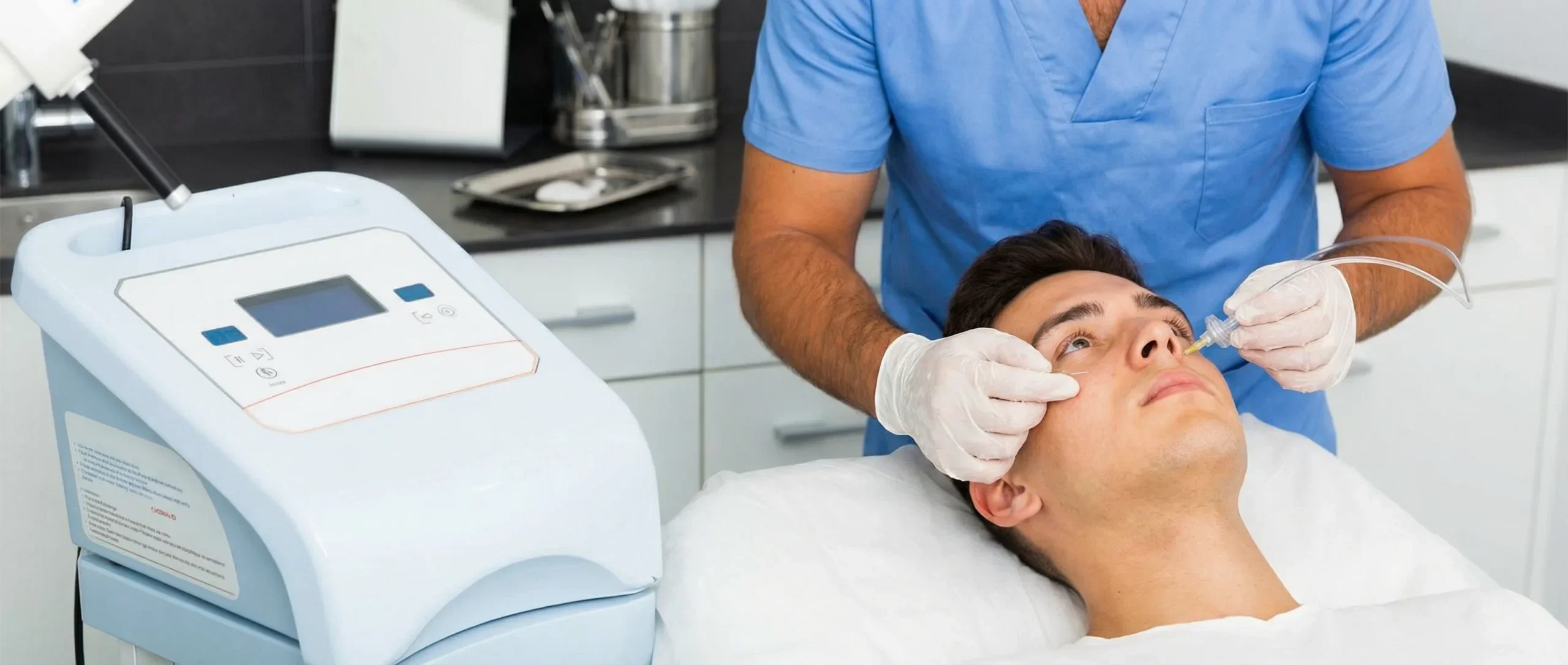
- CO2 is applied to the skin through microinjections.
- The gas diffuses into the tissues, activating circulation and cellular metabolism.
- Stimulates collagen regeneration and fat elimination.
- It is an outpatient procedure, with minimal discomfort.
Duration per session
20–30 minutes per area
Results
Visible results from the 3rd session. A protocol of 6–10 sessions is recommended
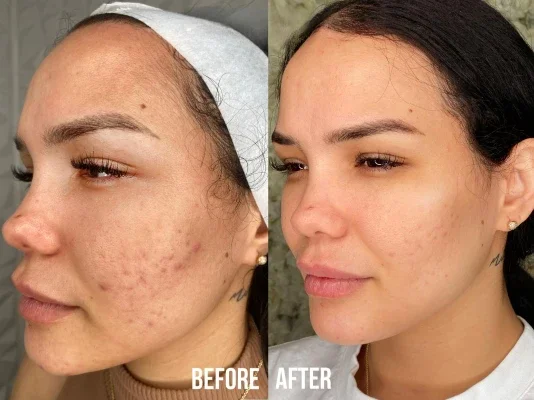
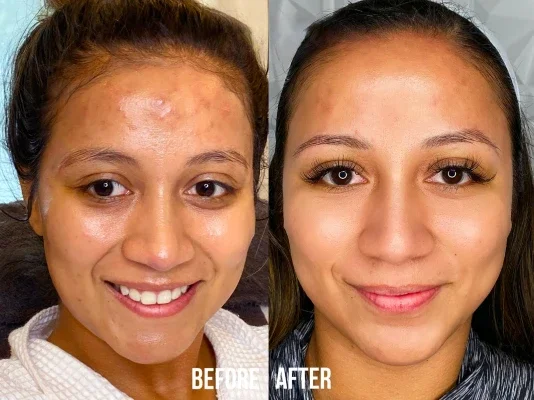
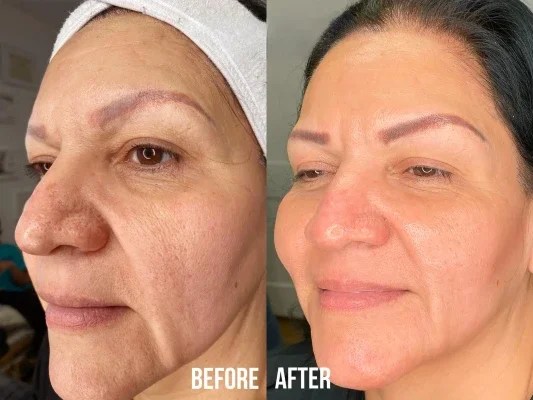
Real transformations
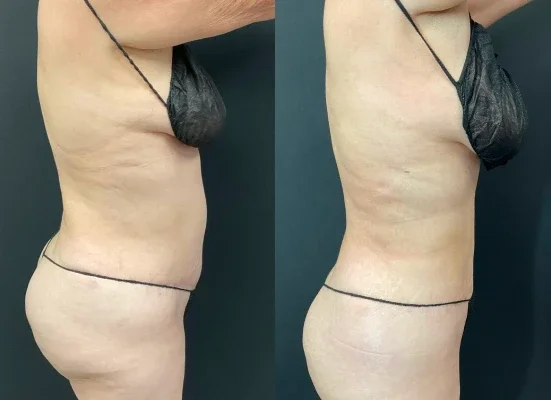
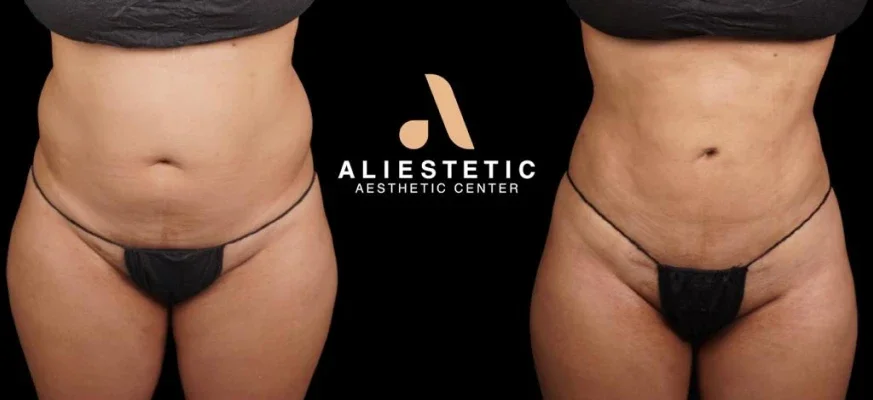
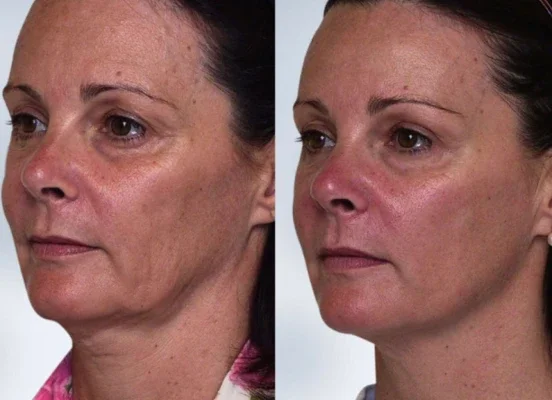
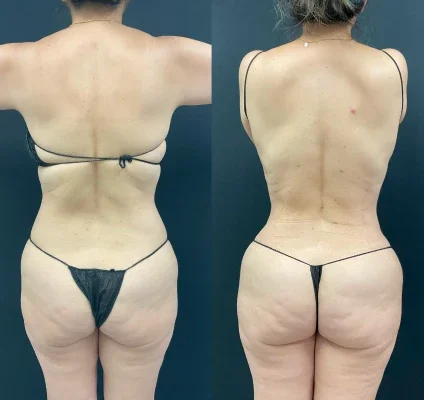
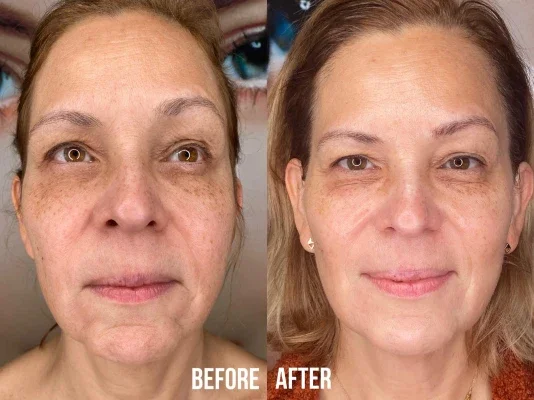
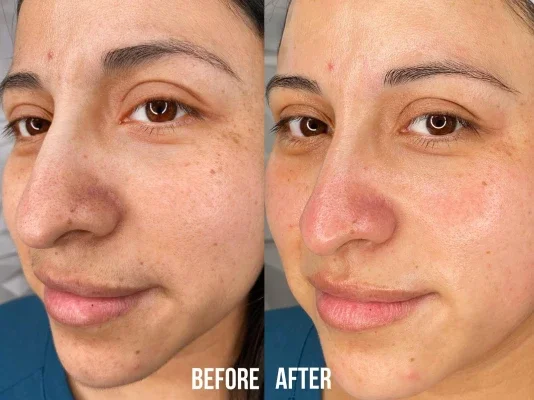
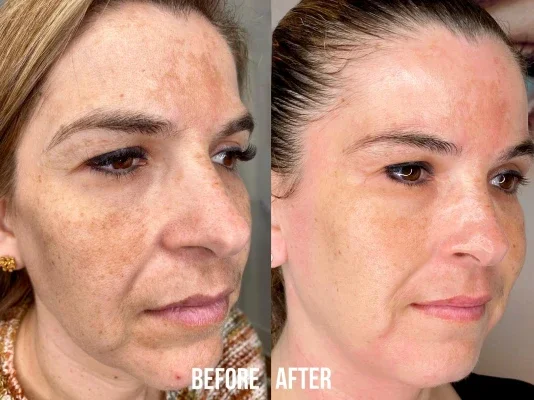
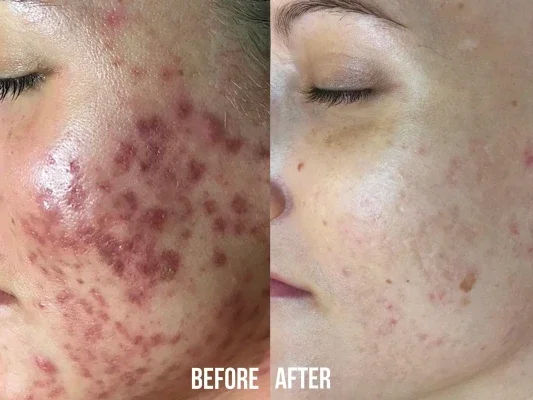
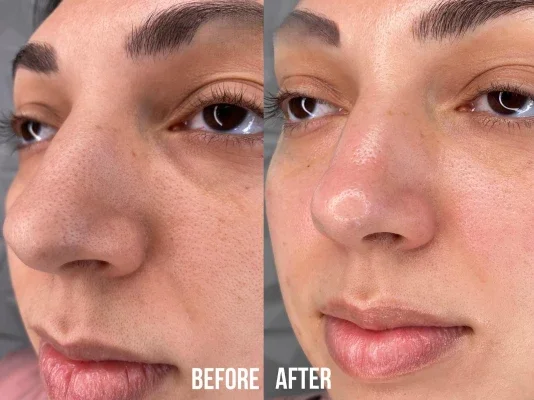
“After a few sessions I noticed firmer skin, dark circles diminished, and cellulite improved greatly.” (Natalia S., 37 years old).
Results are individual: one patient’s experience does not represent what any given person should expect.
Book your appointment nowQuick facts
- What it is
- Microinjections of sterile medical carbon dioxide gas under the skin with a very fine needle
- Most common use in Miami
- Fibrosis and hardened areas after liposuction, alongside drainage and compression
- Other uses
- Stretch marks, crepey skin texture, dull or shadowed under eye skin
- Comfort
- Strong burning pressure for a few seconds per injection. Uncomfortable, brief, no anesthesia normally used
- Skin tone
- No light or heat involved, appropriate for Fitzpatrick I to VI, with care taken around needle related pigmentation
On this page1 / 8What carboxytherapy actually is
Carboxytherapy is one of those treatments that people in Miami hear about from a friend who had liposuction, and then cannot find a straight explanation of anywhere. The Spanish speaking community searches for it constantly as carboxiterapia, and most of what comes back is either a clinic promising smooth thighs in three sessions or a wall of technical language that never says what it feels like. So here is the plain version.
Aliestetic is an aesthetic center with locations in Miami and Naples. Carboxytherapy is one of the treatments we perform ourselves, in house. Surgery is a separate matter, coordinated with an allied plastic surgeon.
What carboxytherapy actually is
A machine holds a canister of sterile, medical grade carbon dioxide and regulates the flow rate and…
A machine holds a canister of sterile, medical grade carbon dioxide and regulates the flow rate and volume delivered. A very fine needle, similar in gauge to what is used for insulin or fillers, goes just under the skin, and a measured puff of gas is released into the tissue. That is it: no drug, no filler, no light and no heat. The only thing entering your body is a gas your body already produces and clears through your lungs.
Two things happen when the gas goes in. The first is mechanical: gas under pressure separates tissue that is stuck together, and in a zone of post surgical fibrosis, where healing has laid down bands of tough tissue, that separation is the point. The second is physiological: the local presence of CO2 increases blood flow to the area and draws fibroblasts, the cells that build and remodel connective tissue, into the treated zone. Dermatology reviews describe this as the basis for its use on scars, stretch marks and fibrolipodystrophic adhesions after liposuction.
The Miami reality: fibrosis after liposuction
This is the reason most of our carboxytherapy patients walk in.
This is the reason most of our carboxytherapy patients walk in.
Somebody has liposuction, the first weeks go well enough, and then around week three, four or five, an area of the abdomen or flank starts to feel hard. Not swollen, hard: a ridge that was not there before, a lumpy patch, a shelf you can trace with a finger. That is fibrosis, scar tissue contracting and organizing itself unevenly.
The standard tools for it are manual work and compression. Both are essential and neither reaches inside the plane where the problem lives. Carboxytherapy does, and that is its niche: we use it on areas that have plateaued, where drainage and consistent compression have taken the swelling down but a specific hard zone will not soften. The approach is a grid of small injections across the fibrotic area, repeated weekly, combined with hands on work in the same session, never a replacement for your drainage sessions or your garment.
Stretch marks
Stretch marks are not a surface problem, they are a scar in the dermis where the collagen and…
Stretch marks are not a surface problem, they are a scar in the dermis where the collagen and elastin architecture tore and rebuilt itself badly, thinner than the skin around it. That is why creams do so little. There is nothing wrong with the surface, and carboxytherapy is used here because the mechanism aims at the right layer instead. No treatment removes stretch marks; improvement in color, texture and depth is the realistic goal, and newer marks that are still pink or purple respond better than old white ones.
Under eye circles
The under eye area is the one indication where we set expectations lowest, on purpose. Dark circles…
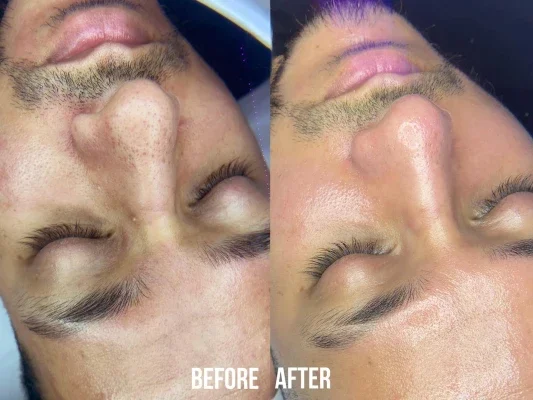
The under eye area is the one indication where we set expectations lowest, on purpose. Dark circles have at least three causes that look similar to an untrained eye: vascular, where thin skin lets the bluish congestion of underlying vessels show through; pigmentary, where the skin itself carries excess melanin, common in Latin, Mediterranean, South Asian and Middle Eastern skin; and structural, where a hollow between the lower lid and cheek casts an actual shadow.
Carboxytherapy addresses the first kind, improving perfusion and stimulating a modest thickening of very thin skin. It does very little for the second and nothing for the third. Patient reports here are more mixed than for body indications, with some describing a good result that faded within weeks. We would rather send you away from a treatment than take your money for the wrong one.
What the session is really like
Book about thirty to forty five minutes for a body area. Each injection delivers a small volume of…
Book about thirty to forty five minutes for a body area. Each injection delivers a small volume of gas over a few seconds: you will feel a spreading burn and stretching pressure, sometimes traveling well beyond the injection point, that peaks and then dies down. Fibrotic areas and heavy cellulite are the worst; the under eye area feels more like fizzing.
Afterward the treated skin may look slightly swollen and feel crackly under your fingers as the gas absorbs, usually within an hour or two. Pinpoint bruises are common and fade over several days. There is essentially no downtime. Avoid the pool, sauna and heavy sweating for the rest of the day, and keep the area out of direct sun.
Brown and dark skin
We treat a lot of Fitzpatrick IV to VI skin, and it changes how we do this. Carboxytherapy uses no…
We treat a lot of Fitzpatrick IV to VI skin, and it changes how we do this. Carboxytherapy uses no light and no heat, so melanin is not a target and there is no burn or pigment-damage risk of the kind laser and intense pulsed light devices carry. The real consideration in richly pigmented skin is different: any needle trauma, bruise or inflammation can trigger post inflammatory hyperpigmentation, so we use fine needles, limit entry points, keep pressure on any bleeding spot and insist on sun protection over the treated area. Ask any clinic in Miami how they adjust their protocol for your skin. If the answer is that they do not adjust anything, that tells you what you need to know.
Who should not have it
We will not treat you if you are pregnant, over an active infection, an open wound or an unclosed…
We will not treat you if you are pregnant, over an active infection, an open wound or an unclosed incision, or an area where a seroma is suspected until it has been evaluated. Significant heart, kidney or lung disease, uncontrolled blood pressure or severe anemia need medical clearance, and blood thinners mean we talk to your doctor first. If you had surgery recently, your surgeon sets the timing, and we hold the appointment until we have that clearance, even when a patient pushes.
How to book
Come in for an assessment first: we need to touch the area to know whether what you are feeling is…
Come in for an assessment first: we need to touch the area to know whether what you are feeling is fibrosis, swelling, a seroma or normal healing, and those call for four different plans. At that visit you leave with a written plan: which areas, how many sessions, how far apart, and what we expect to change. If we do not think carboxytherapy is right for you, we will say so at that visit rather than after you have paid for a package.
Frequently asked questions
Does carboxytherapy hurt?
Yes, more than most clinics admit. Patient reviews on sites like RealSelf describe it consistently, and the description matches what we see: the needle itself is thin and barely registers, but the sensation of gas expanding under the skin is a strong burning, stretching pressure that peaks for several seconds and then fades. Areas with dense fibrosis or heavy cellulite hurt the most. Most people describe it as very unpleasant but tolerable, and it is over quickly. Under the eyes it feels different, more like a fizzing pressure than a burn. If somebody tells you carboxytherapy is painless, they either have not done it or they are not being straight with you.
Why is carboxytherapy used for fibrosis after liposuction?
Fibrosis is scar tissue that has organized itself into hard bands and lumps in the space where fat was removed. Compression and hands on work address it from the outside. Carboxytherapy is one of the few tools that puts something inside that space. The gas physically separates tissue planes as it disperses, and the local response that follows brings blood flow and fibroblast activity to a zone that is often poorly perfused. In practice we use it on stubborn areas that have stopped responding to drainage and massage alone, alongside those things rather than instead of them.
How many sessions will I need?
Carboxytherapy is a series, never a single visit. Depending on the indication, plans commonly run from about six to ten sessions spaced roughly a week apart, and stubborn post surgical fibrosis often sits at the higher end. We will give you a planned number after we assess the area in person, and we will tell you at the halfway point whether it is doing anything. If it is not, we will say so and stop rather than sell you another package.
Can carboxytherapy remove my stretch marks?
No treatment removes stretch marks. Improvement in color, texture and depth is the realistic goal. Carboxytherapy is used for striae because the mechanism, stimulating fibroblasts and collagen in an area of thinned, disorganized dermis, is the right one for the problem, and reviews of the literature list stretch marks among its more supported dermatologic uses. Newer marks that are still pink or purple respond better than old white ones. Anyone showing you a photo of stretch marks that disappeared is showing you lighting.
Does it work for dark circles under the eyes?
Sometimes, and it depends entirely on what is causing your dark circles. If the shadow comes from thin skin with visible bluish vessels and sluggish circulation, carboxytherapy targets exactly that and people often see a fresher, less bruised look. If your circles come from pigmentation in the skin itself or from a hollow that casts a shadow, this is the wrong tool and we will tell you. Patient reports for the eye area are notably more mixed than for other indications, with some describing a good immediate effect that faded within weeks, so go in with modest expectations.
Is carboxytherapy safe for brown and dark skin?
This is one of the reasons we offer it. Carboxytherapy uses no light and no heat, so melanin is not a target and there is no risk of the burns or pigment damage that laser and intense pulsed light devices carry in Fitzpatrick IV to VI skin. The real consideration in richly pigmented skin is different: any needle trauma, bruise or inflammation can trigger post inflammatory hyperpigmentation, so we use fine needles, limit the number of entry points, keep pressure on any bleeding spot and insist on sun protection over the treated area. We would rather do more sessions gently than fewer sessions aggressively.
What does a session feel like and what happens afterward?
A session on a body area runs roughly twenty to forty minutes depending on how much surface we are covering. You will feel the gas moving under the skin, sometimes several inches away from where the needle went in, and you may hear or feel a faint crackle when we press the area. Afterward the skin can look puffy and feel crunchy to the touch for an hour or two while the gas absorbs. Small bruises at the entry points are common. Most people go straight back to their day.
Who should not have carboxytherapy?
It is not appropriate if you are pregnant, if you have significant heart, kidney or lung disease, uncontrolled hypertension, severe anemia, a bleeding disorder or are on blood thinners without clearance, if there is any active infection, open wound or unhealed incision in the area, or if you have a fresh suspected seroma. After surgery, timing is set by your surgeon, not by us. We ask for clearance and we hold the appointment if we do not have it.
How soon after liposuction can I start carboxytherapy?
Not in the first days. Early recovery belongs to drainage, compression and rest. Carboxytherapy enters the plan later, once incisions are closed and healed and the surgeon has cleared you, and it is aimed at fibrosis that is already forming rather than at preventing swelling. We ask for that clearance in writing or by direct contact with the surgeon's office. If you had surgery elsewhere and cannot reach your surgeon, we will still see you, but we will be conservative about what we do and when.
Still not sure you are a candidate?
That is what the first consultation is for. It is free, there is no obligation, and you can come to Miami or start by video if you are travelling in.