
Updated

Surgical procedures are performed by an affiliated board-certified plastic surgeon. Aliestetic coordinates your consultation, pre-op and recovery.
Do I need a breast lift or a breast augmentation?
The usual test is where the nipple sits relative to the inframammary fold, the crease under the breast. If the nipple is at or above that crease and the complaint is emptiness in the upper pole, the problem is volume and an implant or fat grafting can address it. If the nipple has dropped to or below the crease, or points downward, the problem is skin envelope and position, and adding volume alone will make a larger breast that still hangs. That case needs a mastopexy, sometimes with an implant, sometimes without. Surgeons grade this with the Regnault classification, and the measurement is taken in person, not from a photo you send by text. At Aliestetic in Miami, that assessment happens in consultation with our affiliated plastic surgeon, who performs the surgery. Aliestetic coordinates the workup and runs the entire post operative recovery program at its Miami location.
Benefits of Real and Lasting Results
Breast Augmentation
Volume improvement through the use of breast implants.
Breast Lift
Known as mastopexy, ideal for lifting and firming the bust.
Breast Reduction
Intervention aimed at providing greater physical and aesthetic comfort.
Asymmetry Correction
Adjustment of irregularities or improvement of previous surgical results.

How is breast surgery performed?
- It begins with a detailed medical evaluation to choose the technique and, if applicable, the appropriate implants.
- The procedure is performed under general anesthesia with a technical focus on minimal scarring.
- Includes a supervised recovery phase under Aliestetic's exclusive postoperative protocols.
- Emotional support and rigorous professional follow-up are offered at each stage of the process.
Duration per session
Between 1.5 and 3 hours, depending on the complexity of the procedure.
Initial results are visible from the 3rd week, with a final evolution reached between 3 and 6 months.
Real transformations
“I had a lift with implants and I feel more confident, more like myself. The result was exactly what I imagined.” (Mariana C., 36 years old).
Results are individual: one patient’s experience does not represent what any given person should expect.
Book your appointment nowQuick facts
- Anesthesia
- General anesthesia in most cases
- Procedure time
- One to three hours depending on which operation
- Recovery
- Five to fourteen days of downtime depending on the procedure
- Back to work
- Five to ten days for desk work, three to four weeks for physical work
- Compression garment
- Surgical bra or compression bra as directed by the surgeon
- Final result
- Three to six months once swelling settles and tissue softens
- Who operates
- An affiliated plastic surgeon. We give you the name, the Florida license number and the board certification at the consultation, before anything is scheduled
- Where recovery happens
- Aliestetic's Miami location, with lymphatic drainage and garment management once the surgeon clears them
On this page1 / 10Lift or volume: the measurement that decides
Most people who call about breast surgery arrive with the procedure already chosen, usually augmentation, and a meaningful share do not need an implant. Four operations live under one search term, and picking the wrong one gives you a clean surgery with a result you do not like.
Aliestetic does not operate. We coordinate the consultation and the workup and run the whole recovery program in Miami. The surgery is performed by our affiliated surgeon, board certified by the American Board of Plastic Surgery, trained at the University of Virginia and Northwestern, with more than two decades in practice.
Lift or volume: the measurement that decides
The landmark is the inframammary fold, the crease under the breast, and what decides the operation…
The landmark is the inframammary fold, the crease under the breast, and what decides the operation is where the nipple sits relative to it.
Nipple at or above the fold with an empty upper pole means the deficit is volume, which an implant or fat grafting addresses. Nipple at or below the fold, or pointing down, means the deficit is position and skin, graded with the Regnault classification: grade one up to one centimeter below the fold, grade two one to three, grade three more than three. An implant raises none of it; it builds a larger breast that still hangs. Plenty of patients need both.
The four routes
Augmentation with an implant
The most performed of the group, 306,196 cases in the 2024 American Society of Plastic Surgeons statistics. Predictable volume, and a device that eventually needs attention.
Augmentation with fat only
Fat is liposuctioned from the abdomen, flanks or thighs and grafted in. The gain is modest and part of it reabsorbs, but there is no device and no capsular contracture. Needs enough donor fat, often more than one session.
Mastopexy, the breast lift
153,616 in 2024. It repositions the nipple, removes excess skin and reshapes what is left without adding size, so most patients look slightly smaller. Scars are the trade and scale with the lifting needed: around the areola, vertical to the fold, or an anchor.
Reduction
76,734 in 2024. It removes gland, fat and skin and lifts at once, because that much weight cannot come out without repositioning. Often done for symptoms.
Removal or exchange
Explant, with or without replacement or a lift in the same operation, for rupture, capsular contracture or size regret.
What actually matters when choosing an implant
Silicone or saline
Silicone gel feels closer to breast tissue and is what most patients choose. Saline rupture is obvious because the breast deflates; silicone rupture is often silent, which is why imaging surveillance exists.
Profile and projection
Two implants of the same volume can have completely different footprints, and a wide base with low projection behaves nothing like a narrow base with high projection on the same chest. It is measured, not picked from a catalog.
Plane
Submuscular sits partly under the pectoralis, with more coverage over the top edge and less interference with mammography. Subglandular sits above it: shorter recovery, more visible edges in thin patients. Dual plane is the middle ground.
Incision
Inframammary hides the scar in the crease and gives the most direct access. Periareolar hides better in some patients but crosses more ductal tissue. Transaxillary leaves no breast scar and limits certain maneuvers.
Cubic centimeters are not a bra size
No conversion chart survives reality: band size, chest width, existing tissue and brand all move the number.
How the process works
The consultation is an examination with measurements, not a conversation about a photo, and your…
The consultation is an examination with measurements, not a conversation about a photo, and your history, imaging status and breastfeeding plans shape it. The workup is standard: labs, clearance if indicated, stopping certain medications, a mammogram if you are due, a ride home.
Implants are not lifetime devices
Manufacturers and the FDA describe breast implants as devices not expected to last forever, and a…
Manufacturers and the FDA describe breast implants as devices not expected to last forever, and a significant number of patients will have a second operation at some point.
Since 2021 the FDA has required a boxed warning on breast implant packaging and a patient decision checklist that you review and initial with the implanting surgeon before surgery.
That checklist lists the alternatives, including fat grafting and a lift without an implant. If a practice never shows it to you, that is information about the practice.
Am I a candidate?
Good candidates are medically stable, at a weight they can hold, non smoking or willing to stop…
Good candidates are medically stable, at a weight they can hold, non smoking or willing to stop well before and after, and clear about which complaint they want solved.
Not right now if you are pregnant or breastfeeding, smoke and will not stop, have uncontrolled diabetes, a bleeding disorder or an untreated infection, or if your weight is still moving. A suspicious imaging finding gets worked up first. A family history of breast cancer does not disqualify you, but it changes the conversation about imaging and about implant plane.
Recovery week by week
- 01
Days 1 to 3
Tightness, pressure and swelling peak, and submuscular implants produce a spasm sensation with deep breaths. Sleep elevated, and walk the same day, briefly and often, to lower clot risk.
- 02
Days 4 to 7
Prescription pain medication usually stops here. Breasts look high, firm and too round, which is normal and not the final shape.
- 03
Weeks 2 to 4
Sutures dissolve or come out and the upper pole softens as the implants settle, what people call dropping and fluffing. No lifting, no overhead reaching, no chest exercises until cleared.
- 04
Weeks 4 to 8
Normal daily life and gradual exercise. Scars are at their reddest and most raised around week six to eight.
- 05
Months 3 to 6
Shape settles, firmness resolves, and sensation changes improve if they are going to. Scars keep maturing for a year.
That timeline runs with us, including lymphatic drainage after surgery once the surgeon authorizes it. Nothing manual is done over an undiagnosed finding: a new fluid collection, a hot red area, fever or a sudden shape change means we stop and send you back to your surgeon. Most complications are easier to fix early, and early is when they are hardest to notice yourself.
Real risks
Capsular contracture, where the scar capsule around an implant tightens and hardens or distorts the…
Capsular contracture, where the scar capsule around an implant tightens and hardens or distorts the breast, is the most common reason for reoperation. Then rupture, silent in silicone and obvious in saline. Rippling, meaning visible or palpable device edges, more likely in thin patients. Permanent changes in nipple and skin sensation. Malposition, bottoming out and symmastia. Infection, hematoma, seroma, delayed healing and, in lifts and reductions, nipple or skin loss. Widened scars. Clots. Anesthesia risk.
BIA-ALCL, a rare lymphoma arising in the capsule around textured surface implants and the reason Allergan recalled its macro textured Biocell line in 2019 at the FDA’s request, shows up as swelling or fluid years later. It is treatable early, which is why late swelling gets imaged rather than watched.
How to read a before and after
Photo galleries are marketing until you make them behave like evidence: same angle, distance…
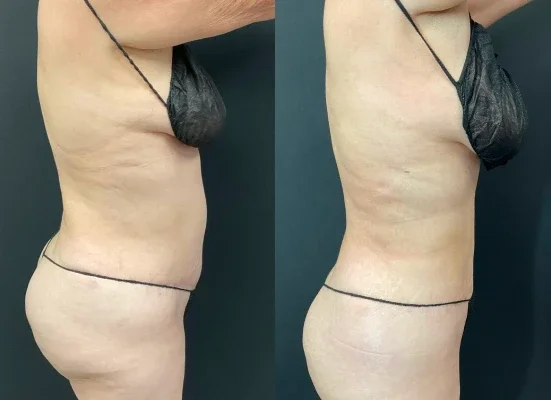
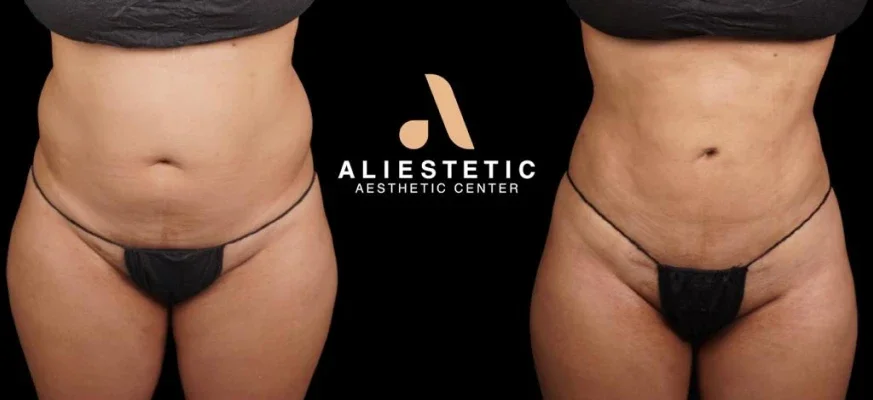
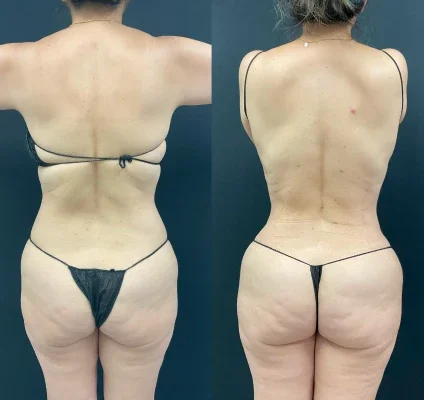
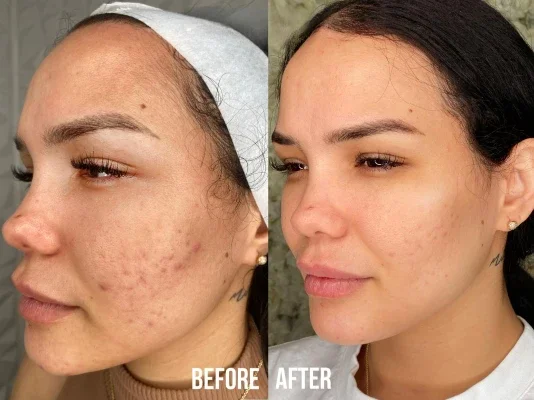
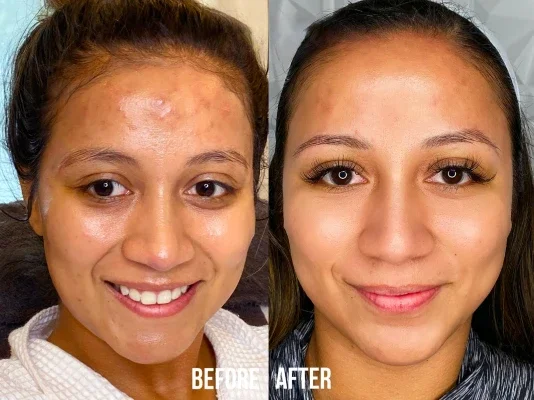
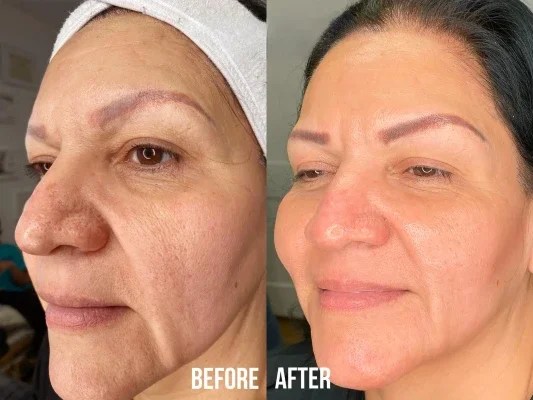
Photo galleries are marketing until you make them behave like evidence: same angle, distance, lighting and arm position, a stated interval since surgery, and starting anatomy like yours in chest width, skin quality and ptosis.
What to ask before choosing a surgeon
Verify the license before the deposit. The Florida Department of Health, through its Division of…
Verify the license before the deposit. The Florida Department of Health, through its Division of Medical Quality Assurance, runs a free public portal where you search by name or license number and see license status and any public discipline. Then verify board certification with the American Board of Plastic Surgery, and know that board certified in plastic surgery and the title cosmetic surgeon are not the same credential.
Then ask which of the four operations they think you need and why, in anatomic terms. Where the surgery happens and who gives anesthesia. What a revision costs, and who pays. For implants, ask to see the FDA patient decision checklist before the day of surgery, not on the table.
Frequently asked questions
How many days of recovery do I need?
Plan on five to seven days off for a straightforward augmentation, seven to ten for a lift, and ten to fourteen for a reduction. Those numbers describe getting through a normal day, not being fully healed. Swelling, firmness and shape changes continue for months, and the final result is usually judged somewhere between three and six months.
Does it hurt?
The first two to three days are the worst, and submuscular implants hurt more than subglandular ones because a muscle was lifted. Most patients describe pressure, tightness and soreness with deep breaths rather than sharp pain. Lifts and reductions tend to feel tight rather than painful because no muscle is disturbed. Prescription medication is usually needed for two to four days.
When can I go back to work?
Desk work is realistic around day five to seven after augmentation and closer to day ten after a reduction. Anything involving lifting, reaching overhead or physical labor waits three to four weeks or longer, and your surgeon decides. Coming back too early is one of the more common causes of bleeding, swelling and widened scars.
Will an implant lift a sagging breast?
Not meaningfully. An implant adds volume behind the breast and can fill a slightly deflated upper pole, but it does not raise the nipple or remove excess skin. Putting a large implant into a ptotic breast usually creates a heavier breast that still sits low, with more stretch on the skin over time. If the nipple sits below the fold, a lift is the operation that changes position.
Are implants permanent?
No. Manufacturers and the FDA describe breast implants as devices that are not meant to last a lifetime. Many patients will need a second operation at some point for rupture, capsular contracture, position change, or simply because their preference changed. Budgeting emotionally and financially for a possible future surgery is part of making this decision honestly.
How do I know if an implant ruptured?
Saline rupture is obvious because the breast deflates within days. Silicone rupture is often silent, which is why the FDA recommends imaging surveillance: a first ultrasound or MRI at five to six years after placement, then every two to three years, and an MRI if there are symptoms or if the ultrasound is equivocal. Report any new firmness, pain or shape change.
What is BIA-ALCL?
Breast implant associated anaplastic large cell lymphoma is a rare cancer of the immune system that develops in the scar capsule around an implant. The known risk is tied to textured surface implants, and in 2019 Allergan recalled its macro textured Biocell line at the FDA request. It typically shows up years later as sudden swelling or fluid collection, and that symptom always needs evaluation.
Does insurance cover a breast reduction?
It may, when the case is documented as symptomatic macromastia rather than cosmetic. Plans typically ask for a record of persistent neck, back and shoulder pain, bra strap grooving or skin rashes, failed conservative treatment, and a minimum amount of tissue removed per breast, sometimes calculated with the Schnur scale. It is a preauthorization process that can take months, and no one can promise an outcome.
Can I breastfeed after breast surgery?
Many women do, but no honest surgeon guarantees it. Augmentation through an inframammary incision with the implant behind the muscle disturbs the least tissue. Periareolar incisions and reductions carry more risk to ducts and nerves because tissue near the nipple is divided. If future breastfeeding matters to you, say so at the consultation so it shapes the technique.
What about mammograms with implants?
You still get them, and you tell the scheduler and the technologist that you have implants before the appointment so they use displacement views, which take extra images to see around the device. Implants can obscure some breast tissue on standard views. Keep your implant record, including manufacturer, size and surface type, and bring it to imaging appointments.
Is it worth it?
For patients whose complaint matched the operation they chose, satisfaction after breast surgery is consistently high, and reduction in particular tends to rate well because it relieves physical symptoms. The unhappy cases cluster in one place: someone who needed a lift bought volume instead, or someone chose a size that did not fit their frame. Choose the right operation before you choose the size.
Still not sure you are a candidate?
That is what the first consultation is for. It is free, there is no obligation, and you can come to Miami or start by video if you are travelling in.