
Updated

Surgical procedures are performed by an affiliated board-certified plastic surgeon. Aliestetic coordinates your consultation, pre-op and recovery.
How long can you not sit after a BBL, and how much of the fat survives?
A BBL, clinically a gluteal fat grafting procedure, harvests fat by liposuction and places it in the buttocks. Transferred fat arrives with no blood supply of its own and needs weeks to build new vascular connections, so sustained pressure on the grafted area works against it. That is why surgeons restrict sitting, often for several weeks, then reintroduce it in stages with a cushion that unloads the buttocks. Part of the fat is reabsorbed over the first months and the proportion varies from patient to patient, so no honest surgeon promises a survival percentage in advance. In Florida, statute 458.328 has required since July 2023 that fat be placed only in the subcutaneous space, never crossing the fascia over the gluteal muscle, with ultrasound guidance during cannula navigation. Aliestetic, in Miami, coordinates the consultation and runs the full post-op recovery program. Surgery is performed by our affiliated plastic surgeon.
Benefits of Real and Lasting Results
Natural Volume
Enhances the buttocks with a natural look and feel.
Simultaneous Sculpting
Shapes the waist, back, and abdomen at the same time by extracting fat from those areas.
360° Harmony
Achieves visible and proportionate results from every angle.
Maximum Safety
Uses advanced techniques with surgical precision.

How is the BBL performed?
- Fat extraction is performed through liposuction, either Lipo360 or in specific selected areas.
- The extracted fat undergoes a process of purification and preparation for grafting.
- Purified fat is carefully injected into the buttocks to achieve shape and symmetry.
- The process concludes with a guided recovery under the Aliestetic postoperative protocol.
Duration per session
Between 3 and 4 hours.
Results are visible from the 3rd week and continue to improve progressively up to 6 months.
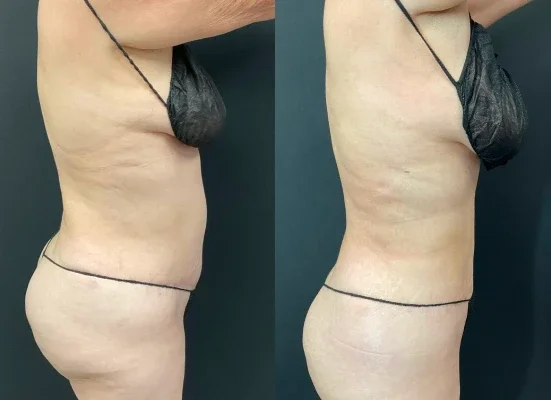
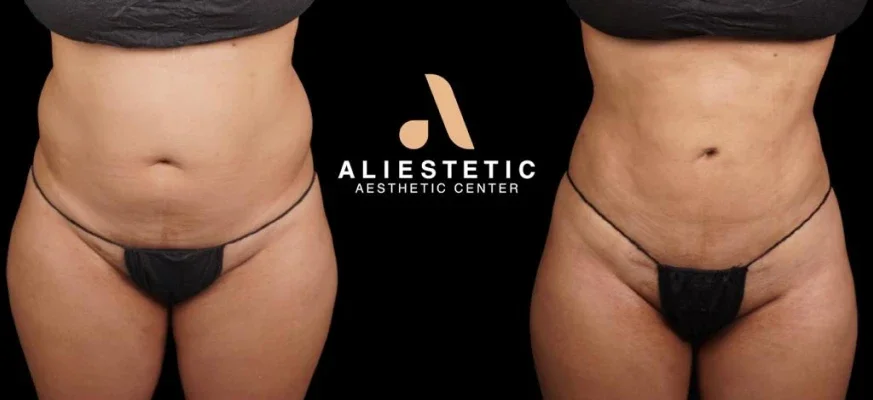
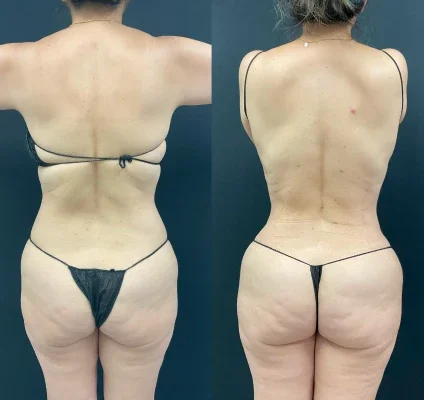
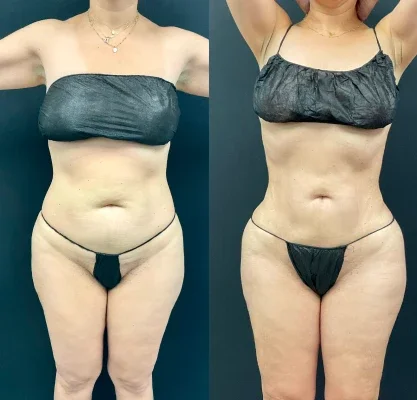
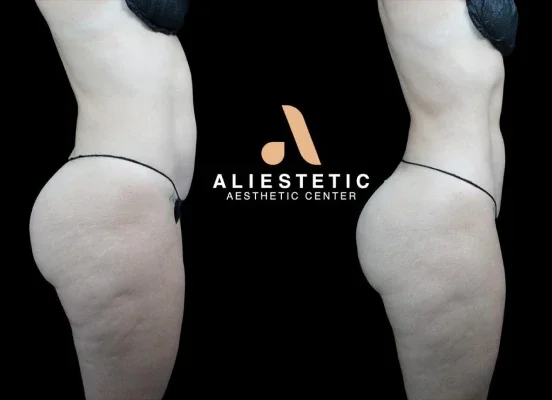
Real results
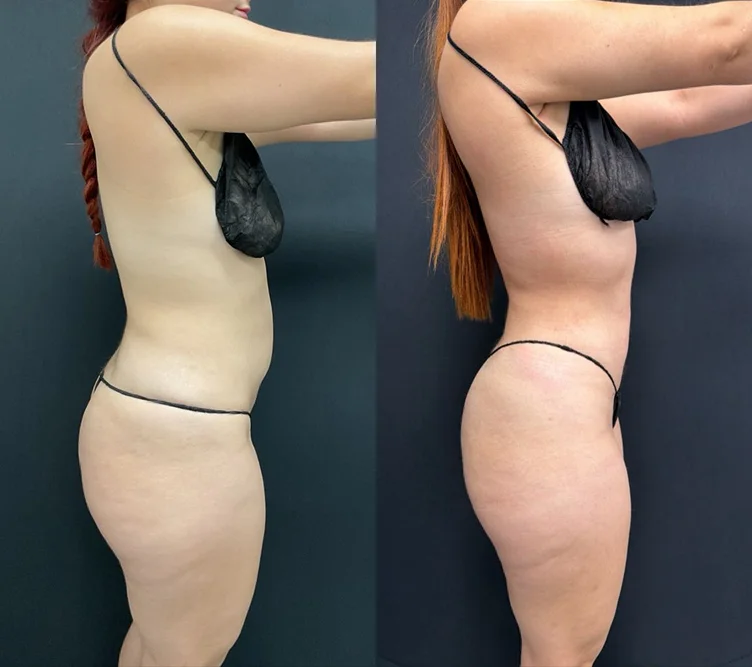
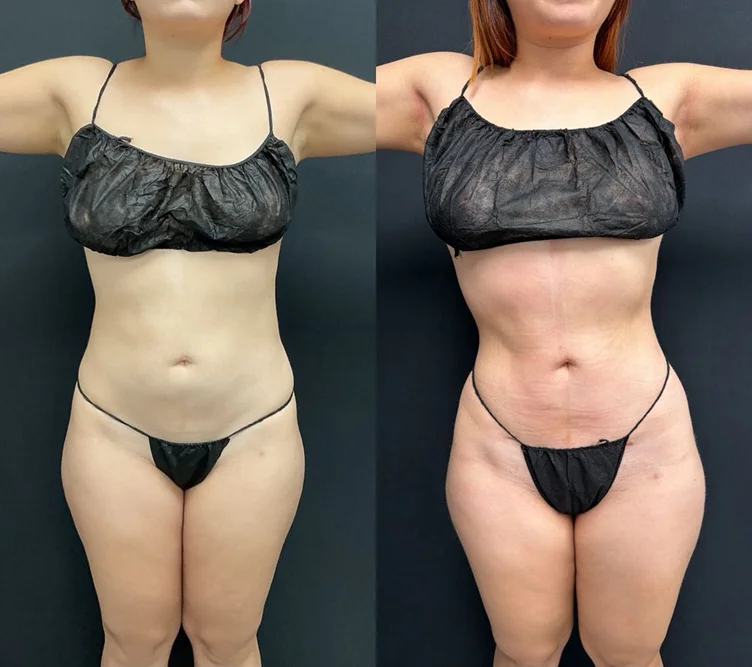
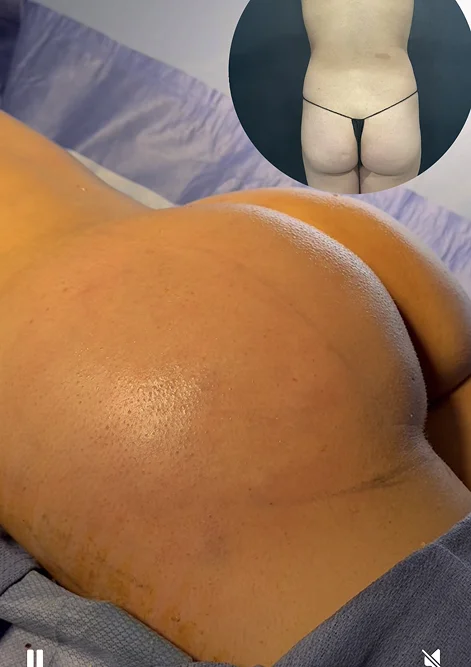
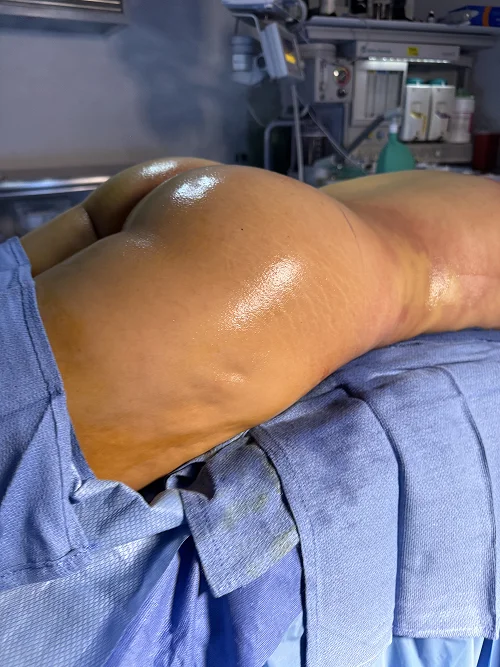
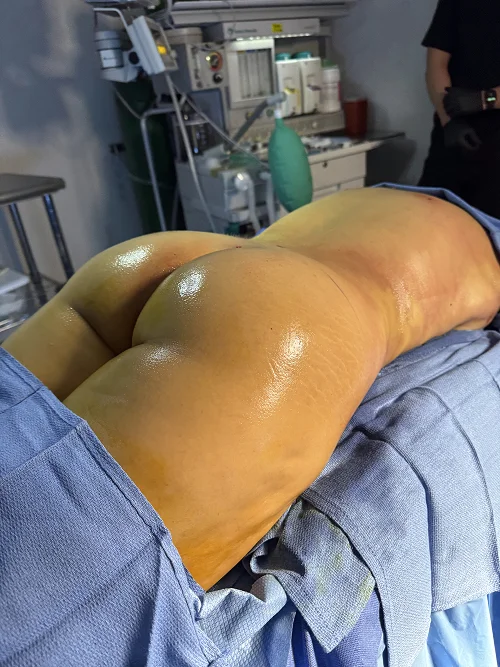
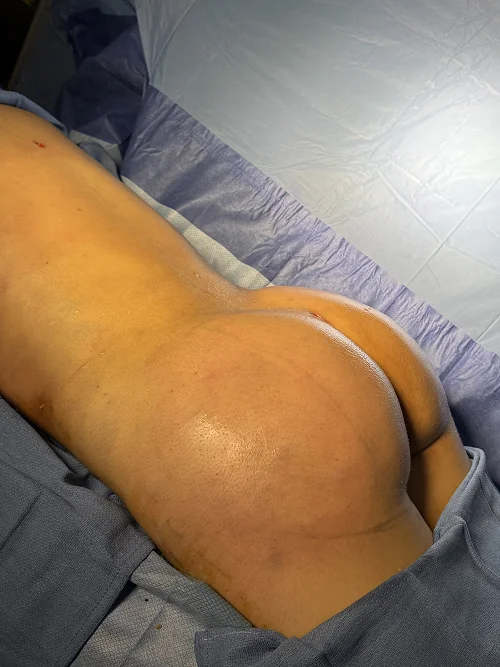
Results are individual and do not represent what any given person should expect.
Real transformations
“They took fat from my back and abdomen, and now my buttocks have shape and proportion. I am happy.” (Fernanda V., 28 years old).
Results are individual: one patient’s experience does not represent what any given person should expect.
Book your appointment nowQuick facts
- Anesthesia
- General anesthesia or deep sedation, decided by the surgeon and anesthesia provider
- Procedure time
- Commonly 2 to 4 hours depending on how many areas are liposuctioned
- Recovery
- Strict restrictions for the first weeks, shape stabilizes around 3 to 6 months
- Back to work
- Desk work with a BBL cushion, frequently around weeks 2 to 3 once cleared
- Compression garment
- Staged, starting immediately after surgery, per the surgeon instructions
- Florida law
- Statute 458.328: subcutaneous placement only, ultrasound guidance, one physician per patient
- Who operates
- An affiliated plastic surgeon. We give you the name, the Florida license number and the board certification at the consultation, before anything is scheduled
- Where recovery happens
- At the Aliestetic facility in Miami, with lymphatic drainage and staged compression
On this page1 / 8What a BBL actually moves
The most useful thing you can learn before you book: in Florida, gluteal fat grafting is regulated by name, and the requirements are specific enough to use as a screening tool. This procedure has one catastrophic complication with one identifiable mechanism, and the law was written to attack that mechanism directly. A surgeon who follows it and one who does not are doing meaningfully different operations, even if the marketing looks identical.
What a BBL actually moves
Two operations in one session: liposuction harvests fat from the abdomen, flanks, back, or thighs…
Two operations in one session: liposuction harvests fat from the abdomen, flanks, back, or thighs, that fat is processed to separate viable tissue from blood, oil, and fluid, and then it is injected into the buttocks and often the hip dips.
A large share of the visual change comes from what is removed, not what is added. Narrowing the waist and cleaning up the lower back changes the silhouette even when the buttocks gain little volume, which is why two patients given the same graft volume can look completely different.
What it does not do: remove skin, tighten laxity, lift a buttock that has dropped from loose skin, or treat cellulite. It is not a weight loss operation.
The Florida law that changed how this is done
Florida statute 458.328 requires five specific things, all aimed at the same failure mode: fat…
Florida statute 458.328 requires five specific things, all aimed at the same failure mode: fat placed too deep. Here is why the law exists before the list itself.
A task force convened by the Aesthetic Surgery Education and Research Foundation published a mortality review of gluteal fat grafting in Aesthetic Surgery Journal. The pattern in the fatal cases was consistent: fat found within or beneath the gluteal muscle, injury to gluteal veins, and fat embolism. No reported death has been documented with fat confined to the subcutaneous space. That produced a joint advisory from ASERF with ASPS and ISAPS recommending the entire procedure stay above the gluteal fascia.
Florida turned that into law. Statute 458.328, effective July 2023, requires five things:
- Fat may be injected only into the subcutaneous space, above the fascia overlying the gluteal muscle. Intramuscular and submuscular injection is prohibited.
- The physician must use ultrasound guidance, or another technology authorized by board rule that equals or exceeds ultrasound quality, during placement and navigation of the cannula.
- Fat harvesting and gluteal injection must be performed by the physician and cannot be delegated.
- The office must maintain a one physician to one patient ratio through all phases, from administration of anesthesia through extubation.
- The physician must examine the patient in person no later than the day before the procedure.
No statute makes surgery risk free. What this one eliminates is a set of practices that had nothing to do with medicine: the surgeon running three operating rooms at once, the assistant doing the injection, the first face-to-face exam happening on surgery morning. If a Florida practice gets defensive when you ask about any of these, that is your answer.
Are you a candidate?
Donor fat comes first, meaning harvestable volume rather than weight. With very little to work…
Donor fat comes first, meaning harvestable volume rather than weight. With very little to work with, the achievable change is small, and it is better to hear that in consultation than to discover it at month four. Weight stability comes second, because grafted fat behaves like the fat it came from.
Third, and least medical but most decisive: whether your life can absorb weeks of not sitting normally, one sleeping position, and real dependence on someone else for the first several days. If that cannot be arranged, the date is wrong even if the anatomy is right.
Poor candidates include people with uncontrolled obesity, clotting disorders or a history of thrombosis without management, significant cardiopulmonary disease, active smokers unwilling to quit, patients who are pregnant or recently breastfeeding, and anyone expecting the edited photo they saved.
Technique, and why the plane is everything
Harvesting uses tumescent technique and small cannulas, and processing separates viable adipose…
Harvesting uses tumescent technique and small cannulas, and processing separates viable adipose tissue from blood, oil, and fluid by decantation, filtration, or centrifugation. Markings are drawn standing, because fat sits differently lying down.
Placement is where safety lives. With the patient prone, the surgeon uses blunt, large-bore cannulas and ultrasound guidance to keep the tip above the fascia, depositing small aliquots across many passes and multiple superficial planes. Small deposits spread widely maximize contact with vascularized tissue, which is the only thing that gives transferred fat a chance to survive.
A hybrid BBL combines fat grafting with a gluteal implant and adds a separate risk profile, including implant-specific infection and malposition. It is not a default.
Recovery week by week
- 01
Days 0 to 3
Donor areas dominate the discomfort, and blood-tinged fluid draining from liposuction incisions is expected. Short, frequent walks matter for circulation; sleeping face down with pillows under the abdomen is usually most tolerable.
- 02
Days 4 to 7
Swelling peaks and the buttocks look larger than the final shape will be. Scheduled lymphatic drainage typically begins here, per your surgeon’s clearance.
- 03
Weeks 2 to 4
Bruising fades and mobility improves, and many patients return to desk work on a cushion. Volume starts visibly decreasing as part of the graft resorbs, which alarms anyone who was never warned it would happen.
- 04
Weeks 4 to 8
Restrictions relax in stages, with unrestricted sitting commonly cleared around weeks six to eight. Firmness or fibrosis can show up in donor areas, and this is the window where it gets worked, guided by compression garment stages.
- 05
Months 3 to 6
Volume stabilizes once resorption finishes and contour keeps refining. There is no result to judge before this point. The day-by-day version lives in our BBL recovery timeline.
Real risks
Fat embolism, the complication that drove the legislation and that tracks with placement plane…
Fat embolism, the complication that drove the legislation and that tracks with placement plane; infection; seroma in donor areas; fat necrosis presenting as firm nodules; contour irregularity and asymmetry; over- or under-correction of volume; deep vein thrombosis and pulmonary embolism, which rise with longer operative time; hyperpigmented incision marks; and the possibility of revision surgery.
Symptoms that require urgent care rather than a phone message: shortness of breath, chest pain, racing heart, fever, pain or swelling in one calf, or buttock skin turning dark, dusky, or blistered.
What to ask before you pick a surgeon
- What plane do you place the fat in, and do you use ultrasound guidance during cannula navigation?
- Do you personally perform the harvesting and the gluteal injection, or is any part delegated?
- How many patients do you operate on the same day, and is the one physician to one patient ratio maintained?
- Will you examine me in person before the day of surgery?
- Who administers anesthesia, and what accreditation does the surgical facility hold?
- What exactly is your sitting and sleeping protocol, and for how many weeks?
- What is your revision policy and who pays for it?
Verify independently: license status and disciplinary history are free to check through the Florida Department of Health, Division of Medical Quality Assurance, and board certification through the American Board of Plastic Surgery or Certification Matters. Board certified and cosmetic surgeon are not the same thing, and in Florida any licensed physician can advertise as a cosmetic surgeon.
How Aliestetic fits in
We do not operate. We coordinate the consultation with our affiliated surgeon, organize the pre-op…
We do not operate. We coordinate the consultation with our affiliated surgeon, organize the pre-op, and run your recovery in Miami according to what your surgeon writes down: scheduled lymphatic drainage, staged compression, carboxytherapy when the stage calls for it, and wood therapy only in late phases, never over a fresh graft.
What we need most from the surgeon on a BBL is a map: which areas can be worked, which are off limits, and until when. Nobody improvises on grafted fat. If anyone offers you aggressive buttock massage in week two, leave.
Frequently asked questions
How long can I not sit after a BBL?
Your surgeon sets the protocol and protocols vary. Many prohibit direct sitting for roughly the first three weeks, then allow short intervals on a cushion that shifts weight to the thighs. Sitting without a cushion is commonly cleared somewhere around weeks six to eight. The reason is mechanical, not cosmetic: sustained pressure compresses the graft exactly while it is trying to establish blood supply.
How much of the fat is reabsorbed?
Some of it always is, mostly in the first few months. The proportion depends on harvesting and processing technique, how the fat was distributed, the quality of the recipient tissue, and how strictly you followed pressure restrictions. You will find confident percentages online. Treat them as marketing. Nobody can calculate your number before surgery, and anyone quoting you one as a guarantee is selling.
When can I sleep on my back again?
Most protocols keep you on your stomach or your side for the first several weeks, and plenty extend that to week six. Sleeping on your back puts your full body weight on the grafted tissue for hours at a time, which is the exact load the restriction exists to prevent. This is the part of recovery patients underestimate most, and the most common complaint in week one.
When can I go back to work?
Desk work is often possible somewhere in week two or three, on a BBL cushion, standing up periodically, and only with your surgeon clearing it. Jobs that involve standing all day, lifting, or physical labor take longer. Driving is its own question, because driving is sitting, and it needs to be authorized specifically rather than assumed.
How many days of recovery should I plan for?
The genuinely hard stretch is the first ten to fourteen days, and that is the minimum block to keep free and close to your surgeon. Contour of the donor areas and final buttock shape keep changing for months after that. If you are traveling to Miami, plan the flight home with your surgeon before you buy the ticket, because flying means sitting.
Does it hurt?
Most patients describe more discomfort in the liposuction areas than in the buttocks themselves. The abdomen, flanks, and back feel deeply bruised and stiff, especially getting out of bed. What tends to wear people down is not the pain but the logistics: not sitting, one sleeping position, and needing help with ordinary things for the first several days.
Is it worth it?
It depends what you want out of it. This is the body contouring procedure where your own behavior during recovery has the most influence on the result, and where the restrictions are the most demanding. Patients who want shape and projection using their own tissue, and who can genuinely clear two to three weeks of normal life, usually say yes. Patients who cannot, usually regret the timing.
Am I too thin for a BBL?
The question is not your weight, it is how much harvestable fat you have. At a low body mass index there may not be enough donor fat to produce a visible change, and pushing for one does not help. Some slim patients get a moderate result by harvesting from several areas. Others are told it is not their procedure, which is a legitimate answer from a good surgeon.
Does a BBL lift loose skin?
No. Fat grafting adds volume and shapes contour, but it removes nothing and tightens nothing. If your main issue is loose skin after pregnancy or major weight loss, adding volume can make the laxity more obvious rather than less. That situation is evaluated for an excisional procedure instead, which is a different operation with a different scar.
What happens to my result if I lose weight later?
Grafted fat is living tissue and behaves like the fat it came from. Significant weight loss after the procedure can shrink buttock volume the same way it shrinks everywhere else. That is the practical argument for operating at a weight you can actually maintain, rather than immediately after an aggressive diet that has not stabilized yet.
How do I read a before and after photo honestly?
Look for the same distance, angle, lighting, and underwear in both images. Ask how many weeks or months post-op the after photo was taken, because at three weeks swelling is still inflating the result. Look for cases with a body type close to yours instead of the single best photo in the portfolio. An undated photo tells you nothing.
Still not sure you are a candidate?
That is what the first consultation is for. It is free, there is no obligation, and you can come to Miami or start by video if you are travelling in.