Updated

Surgical procedures are performed by an affiliated board-certified plastic surgeon. Aliestetic coordinates your consultation, pre-op and recovery.
How long does it really take to see final rhinoplasty results?
Rhinoplasty has the longest results timeline of any facial cosmetic surgery. The external splint usually comes off around day seven and most patients look presentable in public within two weeks, but that is not the result. Roughly eighty to ninety percent of visible swelling resolves in the first three months, and the remaining ten to twenty percent leaves slowly from the tip, which has the thickest skin and the least forgiving contour. Published surgical guidance and patient timelines place the refined final shape at about twelve months for thin to average skin, and twelve to eighteen months or longer for thick skin and revision cases. Judging the outcome at three months is mostly judging swelling. At Aliestetic in Miami we coordinate the consultation and the pre operative workup, our affiliated plastic surgeon performs the surgery, and the early facial recovery and follow up visits happen at our Miami facility, so someone is tracking that swelling curve with you instead of leaving you to guess.
Benefits of Real and Lasting Results
Perfection of Details
Corrects the profile and the nasal tip.
Facial Balance
Harmonizes proportions with the rest of the face.
Respiratory Improvement
Improves breathing if there is any previous obstruction.
Advanced Technology
Modern techniques are used to ensure minimal scarring.

How is Rhinoplasty performed?
- A personalized facial evaluation is performed, including result simulation.
- Surgery can be performed with an open or closed approach, depending on each case.
- Aesthetic and functional correction of the cartilage and nasal bone is carried out.
- The process concludes with a recovery accompanied by detailed follow-up from Aliestetic.
Duration per session
2 to 3 hours.
Results are visible between 2 and 3 weeks. The final result is seen after 6 to 12 months.
Real transformations
“My nose no longer dominates my face; now everything is in harmony. Total respect for my essence.” (Andrea M., 30 years old).
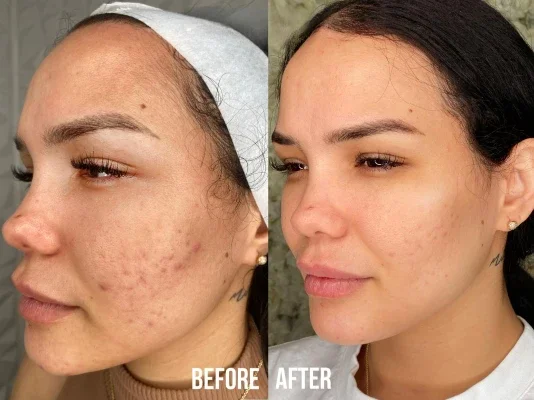
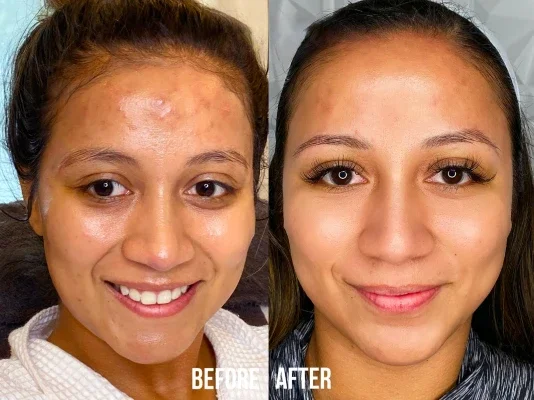
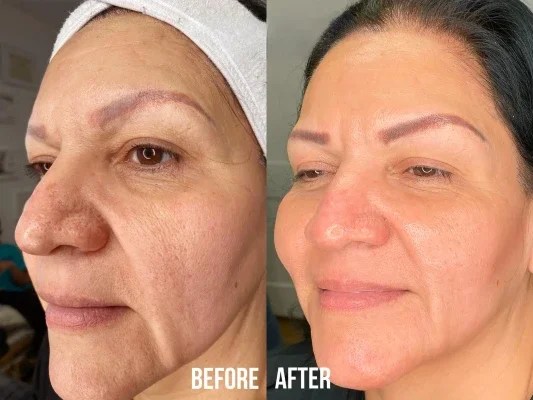
Results are individual: one patient’s experience does not represent what any given person should expect.
Book your appointment nowQuick facts
- Anesthesia
- General anesthesia in most cases, IV sedation for limited work
- Procedure time
- About two to four hours, longer for revision or rib cartilage cases
- Splint
- External splint for about seven days, sometimes internal splints as well
- Back to work
- Desk work commonly seven to ten days, physical work four to six weeks
- First results
- Visible at splint removal, still clearly swollen
- Final result
- About twelve months, twelve to eighteen or longer with thick skin or revision
- Who operates
- An affiliated plastic surgeon. We give you the name, the Florida license number and the board certification at the consultation, before anything is scheduled
- Where recovery happens
- Facial recovery care and follow up at the Aliestetic facility in Miami
On this page1 / 11What rhinoplasty changes, and what it does not
- What rhinoplasty changes, and what it does not
- Am I a candidate?
- Open, closed, preservation, structural
- Cartilage grafts and where they come from
- Functional rhinoplasty and septoplasty
- Ethnic rhinoplasty and keeping your face yours
- Revision, and the filler shortcut
- Recovery week by week
- Real risks
- What to ask before choosing a surgeon
- How the process works with us
The splint comes off in a week, you look normal in two, and the nose you actually paid for shows up around month twelve. That gap is where most of the disappointment in a nose job lives. So is the number nobody volunteers: rhinoplasty carries the highest revision rate of any procedure on this site, commonly cited between five and fifteen percent.
Aliestetic is an aesthetic center in Miami. We coordinate the consultation and pre operative workup, our affiliated plastic surgeon performs the surgery, and your facial recovery care happens with us here.
What rhinoplasty changes, and what it does not
Rhinoplasty reshapes the bone and cartilage framework and lets the skin drape over it. The surgeon…
Rhinoplasty reshapes the bone and cartilage framework and lets the skin drape over it. The surgeon does not redrape that skin: it shrinks to the new frame on its own schedule, and thick skin does it slowly and imperfectly. Surgery moves the dorsal profile, the width of the bony vault, tip projection and definition, nostril width, a deviation of the whole nose, and internal airflow when functional work is included. It does not change skin thickness, asymmetry coming from elsewhere in the face, or how your face ages.
Am I a candidate?
Reasonable candidates have finished facial growth, are in good general health, and can name the…
Reasonable candidates have finished facial growth, are in good general health, and can name the specific thing they want changed. The answer gets more careful with active smoking, which impairs healing badly in a nose; uncontrolled hypertension or bleeding disorders; cocaine use, a septal blood supply question rather than a moral one; untreated sleep apnea; and body dysmorphic concerns, where surgery reliably fails to relieve the distress. Thick skin is not a disqualifier, but it changes what definition is achievable.
Open, closed, preservation, structural
Four words sold as four competing brands. They are two separate decisions.
Four words sold as four competing brands. They are two separate decisions.
Open versus closed is access. Closed works entirely through incisions inside the nostrils. Open adds a small incision across the columella, the strip of skin between your nostrils, so the framework is directly visible. Better exposure for complex tip work, grafting and asymmetry correction, in exchange for more early swelling. The columella scar in trained hands usually fades to something most people cannot find.
Preservation versus structural is philosophy. Preservation keeps the dorsal roof intact and lowers it in one piece. Structural removes what needs to go and rebuilds support with grafts, which is what complex tips, revisions and functional cases usually need. Neither is universally better; what matters is that the surgeon can do the one your nose requires.
Cartilage grafts and where they come from
Support grafts are not a complication. They are how a nose keeps its shape and its airway a decade…
Support grafts are not a complication. They are how a nose keeps its shape and its airway a decade later.
Septum
First choice when available: already in the surgical field, straight, no extra incision. Revision patients often have little or none left.
Ear
Curved cartilage, good for small structural pieces and tip work. Both ears together still yield less than a rib.
Rib
The largest volume of your own cartilage, for major augmentation, reconstruction and revision. Adds a chest incision and a longer operation.
Quick answer
What should I ask about where the cartilage graft comes from? Ask which source is planned and what happens if the septum turns out to be inadequate once surgery is underway. That backup plan is the difference between a surgeon who improvises and one who prepared.
Functional rhinoplasty and septoplasty
A deviated septum, enlarged turbinates and nasal valve collapse are structural obstructions, and…
A deviated septum, enlarged turbinates and nasal valve collapse are structural obstructions, and plenty of people learn on exam that they have been breathing at half capacity for years. Correcting them is functional surgery, not cosmetic surgery, which is why coverage enters the conversation at all. With documented obstruction, a plan may consider the functional component while you pay the cosmetic portion. Read that as may: criteria are set by your carrier.
Ethnic rhinoplasty and keeping your face yours
In Miami this is the default conversation. A large share of patients here have Mestizo, Caribbean…
In Miami this is the default conversation. A large share of patients here have Mestizo, Caribbean, Afro Latino, Middle Eastern or Asian nasal anatomy: broader bony base, softer tip cartilage, frequently thicker skin.
Skin thickness cannot be meaningfully reduced, and thick skin hides fine definition, so the approach inverts. Instead of removing structure you build it, increasing tip projection and support so the skin has something to drape over. Over reducing a thick skinned nose is exactly what produces the collapsed, shapeless result revision surgeons see constantly. Ask to see cases with skin like yours, and say out loud which features you want kept.
Revision, and the filler shortcut
Revision is harder. Scar tissue replaces clean tissue planes, external appearance no longer…
Revision is harder. Scar tissue replaces clean tissue planes, external appearance no longer predicts internal anatomy, the septum has often been harvested, and support may be weak. Revisions therefore lean on ear or rib cartilage, run longer and cost more. Most surgeons ask for roughly twelve months first, because much of what looks wrong at month four is still swelling.
Filler can camouflage a small hump, add projection to a flat bridge or soften a mild asymmetry. It cannot make a nose smaller, narrow bone, lift a heavy tip or improve breathing, and it is not risk free. Published reviews of nonsurgical rhinoplasty report vascular occlusion in roughly 0.35 percent of cases, vision loss in about 0.09 percent and skin necrosis in about 0.08 percent. Rare, devastating, and the nose sits on vessels connecting toward the ophthalmic artery. Blanching, disproportionate pain or any visual change after nasal filler is an emergency.
Recovery week by week
- 01
Days 1 to 3
Splint on, often internal splints too. You breathe through your mouth, your throat dries out and sleep is bad. Head elevated, cold on the cheeks and not on the nose itself.
- 02
Days 4 to 7
Bruising under the eyes peaks then turns yellow. Congestion is the dominant complaint; most people feel physically fine and socially housebound.
- 03
Day 7 to 10
Splint comes off. The nose underneath is swollen, shiny and turned up more than it will end up. Almost everyone panics a little. That is expected and it is not the result.
- 04
Weeks 2 to 4
Swelling visibly down. No glasses resting on the bridge, commonly until week four to six, because the bones are still setting.
- 05
Weeks 6 to 12
Heavier training and contact sports at six weeks at the earliest. Numbness in the tip fades gradually.
- 06
Months 6 to 18
The tip finishes last. Thin skin settles closer to a year, thick skin and revisions can take eighteen months or longer.
Facial swelling behaves differently from body swelling, so our lymphatic drainage guide covers the body version and your facial plan is set separately.
Real risks
Asymmetry, a result you do not like, persistent swelling, nasal valve collapse with new breathing…
Asymmetry, a result you do not like, persistent swelling, nasal valve collapse with new breathing difficulty, septal perforation, altered or reduced sense of smell, prolonged numbness, irregularities you can feel through the skin, bleeding, infection, anesthesia risk, and the need for revision.
Reported figures give scale, not a personal prediction: nasal collapse runs roughly one to five percent depending on technique and patient factors, septal perforation is described across a wide range in the literature, and revision is the one already noted above. They are reasons to ask what a surgeon does when they happen.
What to ask before choosing a surgeon
Verify the license first. The Florida Department of Health, through its Division of Medical Quality…
Verify the license first. The Florida Department of Health, through its Division of Medical Quality Assurance, runs a free public verification portal showing license status, address of record and any public discipline. Then confirm board certification with the American Board of Plastic Surgery: board certified in plastic surgery is not the same credential as the self applied title cosmetic surgeon.
Then ask how many rhinoplasties he does a year and how many revisions, open or closed for a nose like yours and why, what graft sources are planned, what a revision would cost you, whether you can see twelve month photos of patients with your skin thickness, and where you go at 2 a.m. if something is wrong. That last one is where a lot of Miami plans quietly fail.
How the process works with us
Your surgeon examines the internal airway and the external framework and tells you which goals are…
Your surgeon examines the internal airway and the external framework and tells you which goals are reachable. We coordinate the workup and scheduling, the surgeon operates, and you come back to our Miami facility for swelling monitoring, incision checks, taping and positioning guidance as directed, and scheduled visits through the months when the tip is still changing. That is how a change gets caught early instead of discovered in a mirror at month eight. If you are traveling here, plan the follow up before the flight.
Frequently asked questions
How many days of recovery do I need?
Plan on seven to ten days before you look presentable, which is roughly the day the splint comes off plus a couple of days for the crease marks and the worst bruising to fade. Plan on two weeks before you would be comfortable in a meeting, four to six weeks before real exercise, and six weeks minimum before contact sports. The nose itself keeps changing for about a year.
When can I go back to work?
Desk work is commonly seven to ten days, sometimes sooner if you can work from home with a splint on your face. Jobs with heavy lifting, bending, heat exposure or any risk of getting bumped need four to six weeks, and that is a conversation to have with your surgeon before you book, not after. Bruising around the eyes is the part most people underestimate.
Does a rhinoplasty hurt?
Most patients describe pressure and congestion rather than sharp pain. The nose is packed with swelling and you will likely breathe through your mouth for several days, which dries your throat and wrecks your sleep more than any incision does. Headache and a dull ache across the cheeks are common in the first 48 hours. The parts people rate as genuinely unpleasant are splint removal anticipation and the mouth breathing, not the pain.
Is a rhinoplasty worth it?
That depends on whether your expectation matches what surgery can move. Patients who came in with one specific complaint, a hump, a droopy tip, a deviation, and got that complaint addressed tend to be satisfied. Patients who wanted a general improvement in how they photograph tend not to be. Rhinoplasty also carries the highest revision rate on this menu, commonly cited between five and fifteen percent, and you should decide knowing that.
How do I read a before and after honestly?
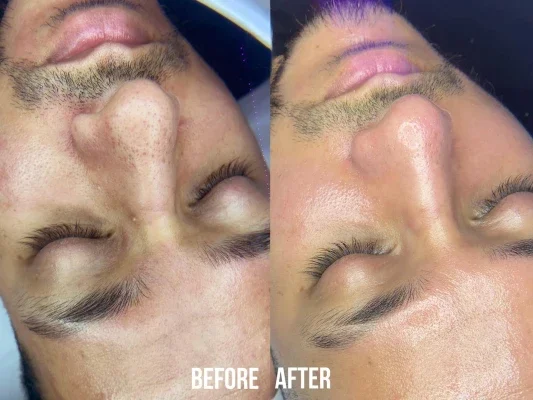
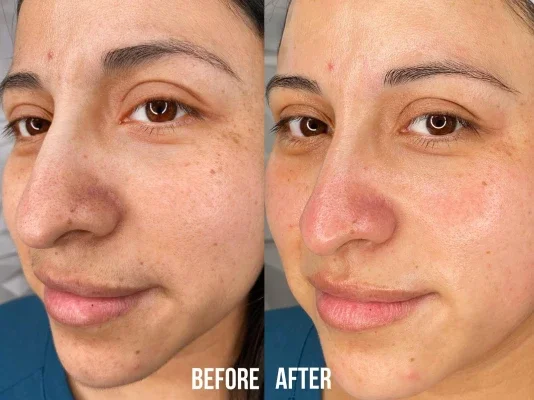
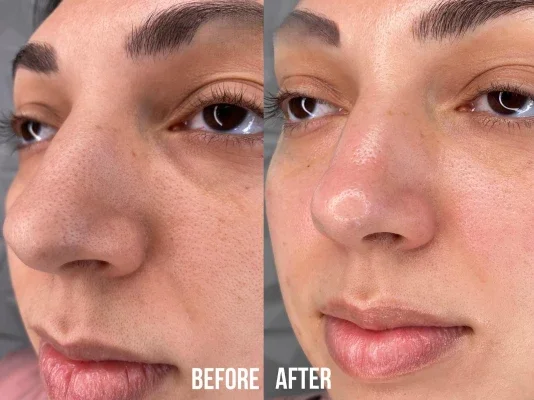
Same angle, same lens distance, same lighting, same expression, and the after photo labeled with how many months post op it is. A three month after photo of a thick skinned nose is a photo of a swollen nose. Look for cases with your skin thickness and your starting anatomy, not for the most dramatic transformation on the page. Ask how many photos exist of that same patient at twelve months.
What is the difference between open and closed rhinoplasty?
Closed rhinoplasty is done entirely through incisions inside the nostrils. Open rhinoplasty adds a small incision across the columella, the strip of skin between the nostrils, so the skin can be lifted and the framework seen directly. The visible scar from an open approach usually fades to something most people cannot find. What actually changes for you is precision on complex tip work and grafting versus slightly less swelling early on.
Where does the cartilage for grafts come from?
First choice is usually your own septum, because it is already in the field and it is straight. When the septum is depleted, which is common in revision cases, the next sources are ear cartilage, which is curved and good for small structural pieces, and rib cartilage, which gives the largest volume for major support or reconstruction and adds a chest incision and more recovery. Ask which source is planned and what the backup is.
Will insurance cover any part of my nose surgery?
The cosmetic portion is not covered. A functional problem sometimes is. When a deviated septum or a collapsed nasal valve causes documented obstruction, a plan may consider the septoplasty or functional component with proper documentation, while you pay the cosmetic portion. This is a maybe, never a promise, and it depends on your specific policy, your documentation and your carrier's criteria.
Can filler replace surgery? Is liquid rhinoplasty safe?
Filler can camouflage a small dorsal hump, add projection to a flat bridge or balance a mild asymmetry. It cannot make a nose smaller, narrow bone or fix breathing. The risk profile is not zero. Published reviews of nonsurgical rhinoplasty report vascular occlusion around 0.35 percent, vision loss around 0.09 percent and skin necrosis around 0.08 percent, which are rare but catastrophic, and the nose is one of the highest risk areas of the face for this.
Why is revision rhinoplasty harder than the first surgery?
Scar tissue replaces clean planes, the anatomy is no longer predictable from the outside, the septum has often already been harvested, and support structures may be weakened. That combination is why revisions frequently need ear or rib cartilage, take longer, swell longer and are quoted higher. Most surgeons ask you to wait about twelve months before revising anything, because a lot of what looks wrong at month four is swelling.
Will my sense of smell change?
A temporary reduction is common in the first week or two, mostly because internal swelling blocks airflow to the olfactory area rather than because a nerve was cut. Most patients report it returning as swelling drops over three to six weeks. Persistent loss is uncommon but it is a documented risk, and it belongs on the consent conversation rather than in the fine print.
Still not sure you are a candidate?
That is what the first consultation is for. It is free, there is no obligation, and you can come to Miami or start by video if you are travelling in.