
Updated

Surgical procedures are performed by an affiliated board-certified plastic surgeon. Aliestetic coordinates your consultation, pre-op and recovery.
Does buccal fat removal age your face?
Buccal fat removal can make a face look older over time when too much is taken, or when the patient was never a good candidate to begin with. The buccal fat pad is deep structural fat in the lower cheek, and the anatomy literature describes deep facial fat as the compartment that loses volume fastest with age. A cheek that was over resected at thirty can read as hollow at forty five. It does not do that to everyone. In a patient with a genuinely full lower cheek, a conservative resection tends to hold up, and patient reviews on RealSelf show a high worth it rating. Selection is what separates the two outcomes. Thin faces, long faces and people chasing a sharper jawline are the ones who report regret, because the jawline is not made of buccal fat. At Aliestetic in Miami we screen for that before anything else, and our affiliated plastic surgeon performs the surgery.
Benefits of Real and Lasting Results
Facial Definition
Significantly improves facial contour and definition.
Natural Enhancement
Highlights the cheekbones in a subtle and natural way.
Speed
It is an outpatient and quick-to-perform procedure.
No Marks
The scar is internal, so it leaves no visible marks on the skin.

How is the Bichectomy performed?
- It begins with a detailed facial evaluation to plan the procedure.
- Local anesthesia is applied to ensure the patient's comfort.
- A small incision is made inside the mouth for the partial extraction of the Bichat pads.
- The closure of the incision leaves no external scars.
Duration per session
Between 30 and 45 minutes.
Initial results are visible from the 3rd week, reaching the final result between 2 and 3 months.
Real transformations
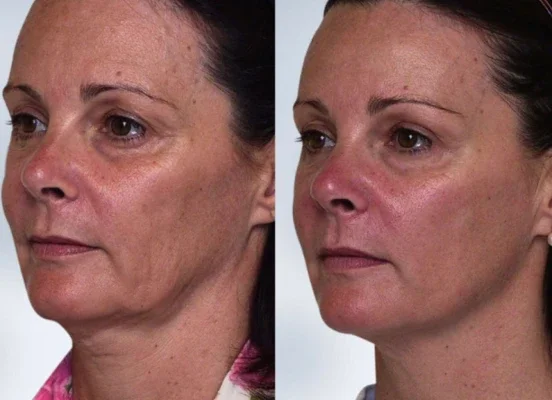
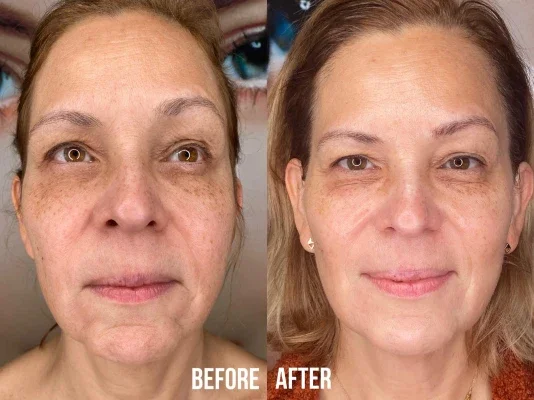
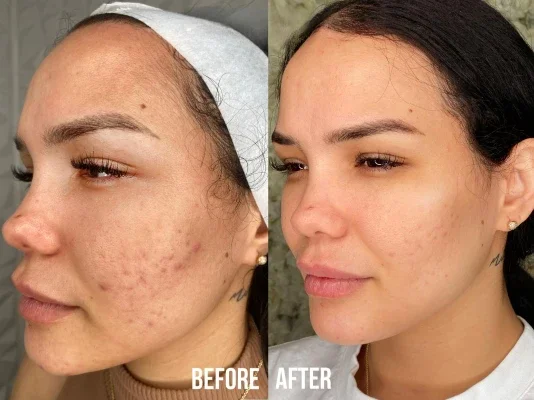
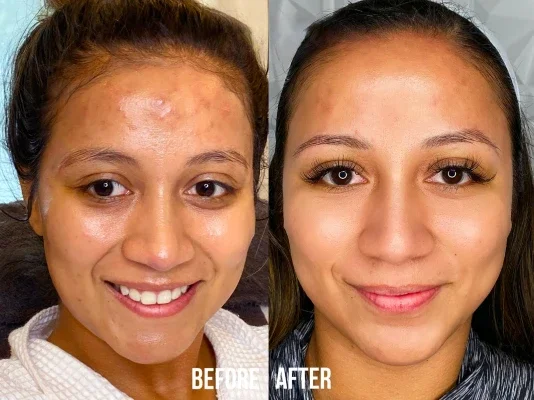
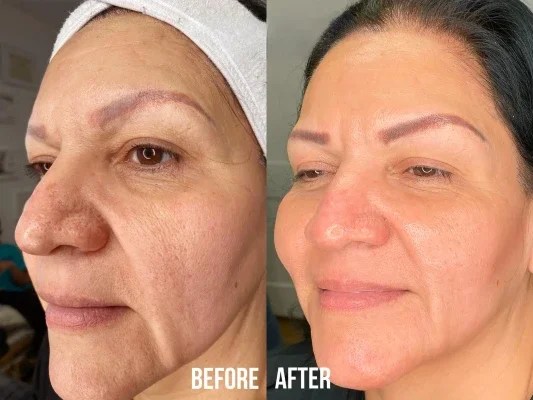
“My face looks much more defined, but I still look natural. It was worth every second!” (Karina M., 27 years old).
Results are individual: one patient’s experience does not represent what any given person should expect.
Book your appointment nowQuick facts
- Anesthesia type
- Local anesthetic, with or without sedation, depending on the plan and any combined procedures
- Procedure time
- Roughly 30 to 60 minutes when performed alone
- Incision
- Inside the mouth, on the inner cheek. No external scar
- Back to work
- Desk work around day 8 to 10 for most patients. Strenuous exercise at 4 to 6 weeks
- Diet
- Soft foods and mouth rinses for the first days, back to normal eating within a week or two
- Final result
- 3 to 6 months, once residual swelling has fully settled
- Who operates
- An affiliated plastic surgeon. We give you the name, the Florida license number and the board certification at the consultation, before anything is scheduled
- Where recovery happens
- Follow up and swelling control at the Aliestetic center in Miami
On this page1 / 8What buccal fat removal actually does
The most searched question about buccal fat removal is not what it costs or how long recovery takes. It is whether it will age you. That question deserves a straight answer: it can, in the wrong patient, and usually does not in the right one.
Buccal fat removal, also called bichectomy, excises part of a discrete pad of deep fat in the hollow of the cheek, between the masseter and buccinator muscles. It is a small operation with an outsized reputation, and unlike a filler it cannot be dissolved on a Tuesday afternoon if you change your mind.
Aliestetic is an aesthetic center in Miami that coordinates the consultation, organizes the pre operative workup and handles post operative follow up at our own center. The surgery is performed by our affiliated plastic surgeon.
What buccal fat removal actually does
The buccal fat pad is not the soft padding you can pinch. It is an encapsulated, structural pad of…
The buccal fat pad is not the soft padding you can pinch. It is an encapsulated, structural pad of deep fat with a body and several extensions, and it does not shrink meaningfully with diet or exercise, which is why people who are lean everywhere else still have full lower cheeks. Weight loss thins the superficial fat over the face; the buccal pad mostly stays.
Removing part of it narrows the lower third of the face at the level of the cheek hollow. In a face that is genuinely wide there, the change is a softer, slightly more tapered lower cheek.
Now the list of things it does not do, since most disappointment lives here. It does not define the jawline, governed by submental fat, skin laxity and bone. It does not lift or project the cheekbone, only deepening the shadow underneath. It does not remove a double chin or tighten skin, and on a face with early laxity, taking away deep support can make the skin look looser.
The aging question, without the marketing
Here is the anatomy that the viral videos leave out. Facial fat is organized into superficial and…
Here is the anatomy that the viral videos leave out. Facial fat is organized into superficial and deep compartments, and they age differently: superficial fat tends to descend, deep fat tends to atrophy, and the buccal pad is deep fat. So the natural direction of travel over the decades is already toward less volume in exactly the area this surgery targets.
That is the mechanism behind the regret you can read about: someone at twenty eight has a conservative amount removed, likes it at six months, and at forty two the same cheek reads as hollow or skeletonized, because time removed the rest.
It is worth being precise, though, because the opposite claim is also oversold. RealSelf shows a high worth it rating across hundreds of reviews, and on the same platform you can find reviews from people who describe a hollow that got more obvious over time. Both are real; what separates them is who was selected and how much was taken.
Two practical consequences follow: conservative removal is not timidity, it is the whole strategy, because more can always be taken later and the pad cannot be put back. And a surgeon enthusiastic about doing this on a face that is already narrow is a reason to leave.
Who is a candidate, and who clearly is not
A reasonable candidate has a genuinely full, wide lower cheek, decent skin elasticity, a stable…
A reasonable candidate has a genuinely full, wide lower cheek, decent skin elasticity, a stable weight and a specific complaint about that fullness rather than a general wish to look sharper.
The poor candidates are easier to name plainly: a naturally thin or narrow face, a long face (narrowing the mid cheek usually makes it read longer, not better), anyone whose real complaint is the jawline or neck (submental fat and skin, not buccal fat), anyone in their early twenties whose face is still maturing, anyone in an active phase of major weight loss, and anyone with early jowling or visible skin laxity, where losing deep support works against the face.
An honest consultation includes the possibility of being told no, or that a different procedure answers your actual complaint.
The technique
The incision is intraoral, on the inside of the cheek, usually a centimeter or so long, which is…
The incision is intraoral, on the inside of the cheek, usually a centimeter or so long, which is why there is no visible external scar. The surgeon works through the buccinator to reach the capsule, delivers the fat with gentle pressure rather than pulling on it, removes a measured amount and closes with dissolvable sutures.
The reason gentle matters is the neighborhood: the buccal branch of the facial nerve and Stensen duct both live near this dissection. Cadaver studies show the buccal branches usually run superficial to the pad, but in a minority of people they travel through it.
Recovery week by week
- 01
Days 1 to 4
Peak swelling. Expect your face to look wider than it did before surgery. Cold compresses, head elevated, soft foods, prescribed mouth rinses, and no straws or vigorous rinsing. Jaw tightness is normal and makes opening wide uncomfortable.
- 02
Days 5 to 10
Swelling comes down noticeably and asymmetry is common, because the two sides rarely deswell at the same rate. Most people return to desk work in this window, and diet moves from soft to normal.
- 03
Weeks 2 to 4
The obvious swelling is mostly gone and the contour starts to look like a result rather than a recovery. Strenuous exercise is still on hold, usually until four to six weeks.
- 04
Months 2 to 6
Deep swelling resolves slowly and quietly. This is the window in which the result becomes the result.
At Aliestetic, the post operative side is handled at our center: incision checks, swelling control, guidance on diet and mouth care, and follow up visits (see lymphatic drainage after surgery for the general logic).
Real risks
Every operation carries risk, and this one is not the exception marketing makes it out to be. A…
Every operation carries risk, and this one is not the exception marketing makes it out to be. A 2024 systematic review and meta analysis in the Journal of Cranio Maxillofacial Surgery pooled 308 patients and found that 81 of them, about a quarter, had some complication. The overwhelming majority were swelling and trismus, jaw tightness, both of which resolve.
The list worth knowing: over resection, the complication with no good fix, showing up as hollowness months later; asymmetry, common early from uneven swelling; injury to the buccal branch of the facial nerve, under one percent, usually temporary weakness around the mouth; injury to Stensen duct, uncommon but serious, presenting as saliva collecting in the cheek; hematoma and infection; trismus for days to weeks; and anesthesia risk.
What to ask before choosing a surgeon
- Verify the license through the Florida Department of Health’s free public verification portal, and confirm board certification with the American Board of Plastic Surgery; board certified and cosmetic surgeon are not the same thing.
- Ask how much fat is planned and why that amount for your face, and whether the surgeon has ever declined this procedure on a patient.
- Ask to see before and after photos of patients with a face shape like yours, at least six months out, and what happens if the result is asymmetric.
The division of labor at Aliestetic
Aliestetic coordinates. The surgeon operates. The recovery happens with us: incision checks…
Aliestetic coordinates. The surgeon operates. The recovery happens with us: incision checks, swelling management, diet and mouth care, and someone available when you panic about an asymmetry that is almost always just fluid. If the honest answer for your face is no, we would rather tell you in the consultation than after the fat is gone.
Frequently asked questions
Does buccal fat removal hurt?
Less than most people expect. The incision is inside the mouth and the area is numbed with local anesthetic, with or without sedation. What patients describe afterward is pressure, tightness and a jaw that does not want to open all the way, more than sharp pain. Most manage with over the counter pain relief and whatever the surgeon prescribes for the first two days. Chewing is the uncomfortable part, which is why the diet is soft at first.
How many days of recovery does buccal fat removal need?
Plan on seven to ten days before you look socially presentable, and about two weeks before you feel normal. Swelling peaks around days two to four, when the face is wider than it was before surgery, then drops steadily. Strenuous exercise waits four to six weeks. The contour keeps refining long after you feel fine, and the honest window for judging the result is three to six months.
When can I go back to work after buccal fat removal?
Desk work is realistic around day eight to ten for most patients, and some go back sooner if they are not concerned about visible swelling. Work that involves heavy lifting, straining or being on camera should wait longer. If you need a hard date, plan two weeks and treat anything earlier as a bonus. Your surgeon gives you a return to work window at the consultation based on your job.
Is buccal fat removal worth it?
It depends almost entirely on whether you are the right face for it. In someone with a full, round lower cheek and good skin quality, the change is subtle and durable and satisfaction is generally high. In someone with a narrow or long face, the same operation buys a hollow that gets more obvious with time. Nobody can promise you a result. What we can do is tell you honestly which group you are in.
Will it define my jawline?
No, and this is the single most common misunderstanding. The buccal fat pad sits in the middle of the cheek, above the jawline, not along it. Jawline definition is a question of submental fat, skin laxity, the position of the platysma and the underlying bone. If your concern is a soft jaw or a double chin, submental liposuction or a different plan addresses it. Removing buccal fat will not.
Does buccal fat removal lift or define cheekbones?
It does not add anything to the cheekbone. What it can do is deepen the hollow just below the cheekbone, which some people read as more definition by contrast. If the goal is actual midface projection, that is a different conversation involving fat grafting or filler. Confusing the two is how patients end up with a hollow lower cheek and a midface that still looks flat.
Can buccal fat removal be reversed?
Not in any true sense. The pad is excised and does not grow back. If someone is over resected, the options are fat grafting or filler to add volume back, and neither restores the original architecture exactly, because the pad had a shape and an attachment pattern that free fat does not reproduce. Treat the decision as permanent, because functionally it is.
How do I read a before and after gallery honestly?
Look for the same angle, the same lighting and the same head position in both photos, and check how much time has passed after surgery. An after photo at three weeks is still showing swelling. Look for patients whose starting anatomy resembles yours, not the best case in the set, and be skeptical of galleries where every after shot has different makeup, hair or camera distance.
What happens if I gain or lose weight later?
The remaining buccal fat behaves like the rest of your fat to a degree, so significant weight gain can restore some lower cheek fullness and significant weight loss will thin the face further. This is why the procedure is usually recommended at a stable weight. If you are actively losing a large amount of weight, it is better to wait until you are near where you plan to stay.
Can it be combined with other procedures?
It often is, and that changes the recovery. Some patients pair it with submental liposuction, chin augmentation or a rhinoplasty, because the buccal pad alone rarely answers a complex facial complaint. Combining lengthens anesthesia time and swelling, and it also changes the cost structure, since facility and anesthesia are shared. Your surgeon goes through the tradeoffs at the consultation.
Am I too young for this?
The face keeps maturing into the mid twenties, and youthful roundness in the lower cheek often resolves on its own. A twenty year old who dislikes a full cheek today may be looking at a very different face at twenty six with no surgery at all. That is why surgeons who take this seriously are cautious with very young patients and why an honest consultation sometimes ends in a no.
Still not sure you are a candidate?
That is what the first consultation is for. It is free, there is no obligation, and you can come to Miami or start by video if you are travelling in.