Updated
Does dermaplaning make facial hair grow back thicker or darker?
No. Dermaplaning does not change the thickness, color, density or growth rate of facial hair, and this is one of the most persistent myths in skincare. At Aliestetic in Miami we explain it the same way every time. A blade cuts hair at the surface, which leaves a blunt cross section instead of the naturally tapered tip the hair grew with. A blunt end feels rougher against your fingertips as it grows out, and that sensation is where the myth comes from. What determines how a hair grows is the follicle below the skin, and the follicle is governed by hormones and genetics. A blade at the surface never touches it. The American Academy of Dermatology has long stated that shaving does not change hair thickness, and dermaplaning is the same mechanical action performed with a sterile single-use blade under controlled conditions.
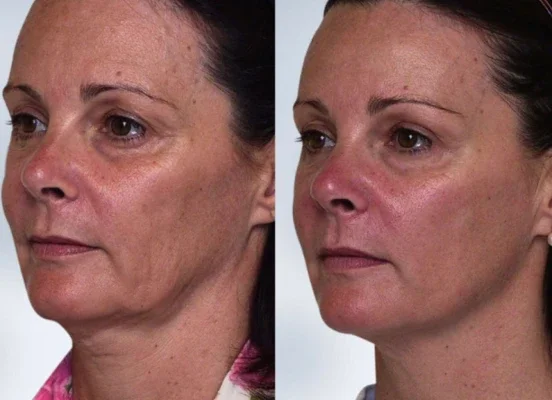
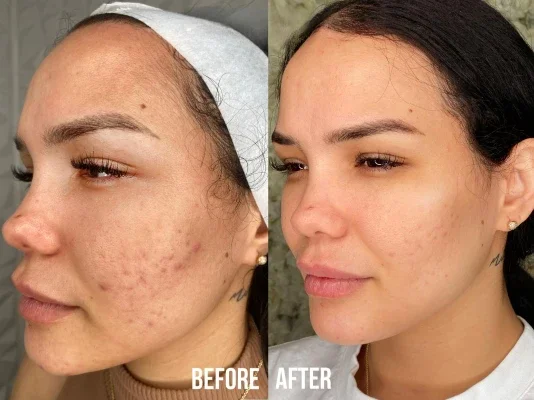
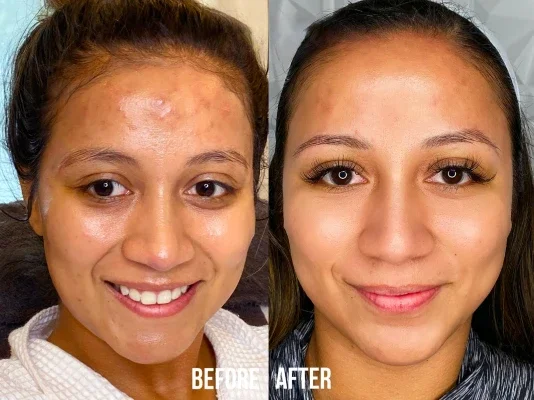
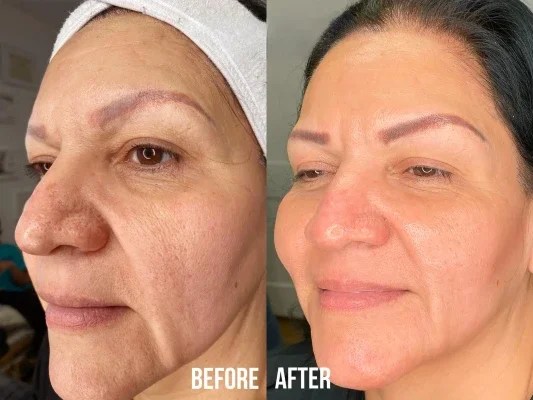
“My skin was so soft I couldn't stop touching it. Makeup applied perfectly.” (Valentina L., 34 years old).
Immediate Benefits
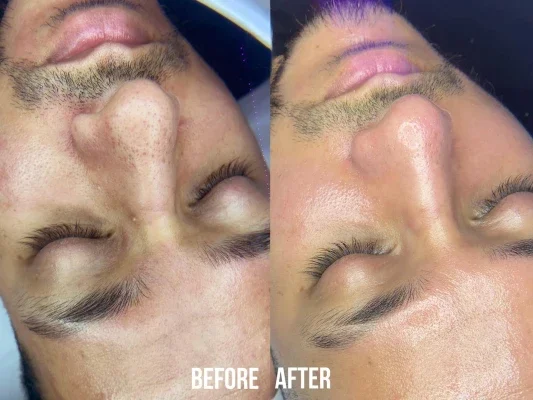
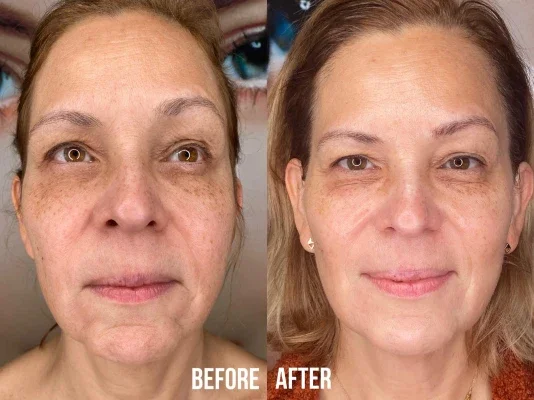
- Removes impurities, dead cells, and facial hair.
- Improves skin texture and glow.
- Allows for better product absorption.
- Makes makeup look flawless.
- Painless, with no downtime.
How is it performed?
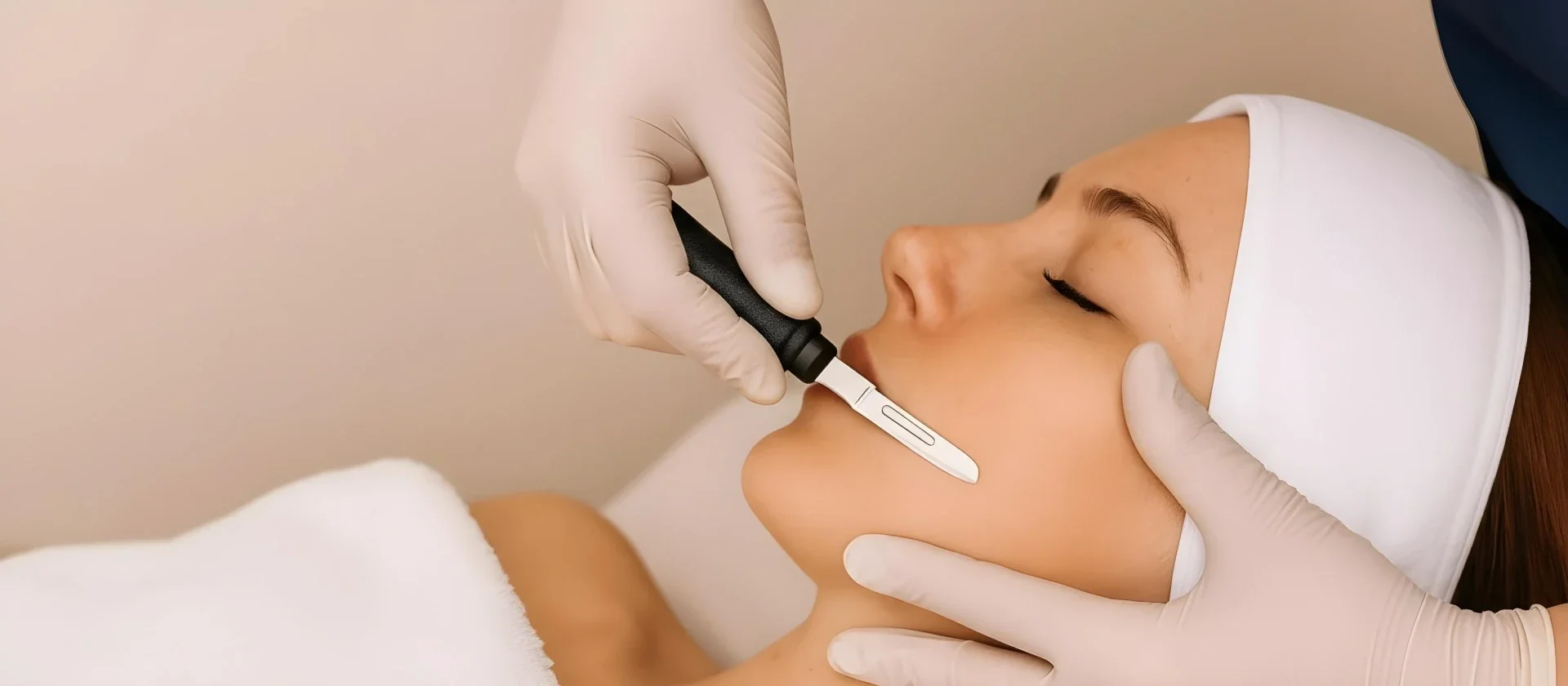
- A special tool with a dermatological edge is used.
- It is gently glided over the skin to exfoliate without irritating.
- Impurities and surface hair are removed.
- Finishes with personalized hydration and protection.
- Duration: 30 minutes.
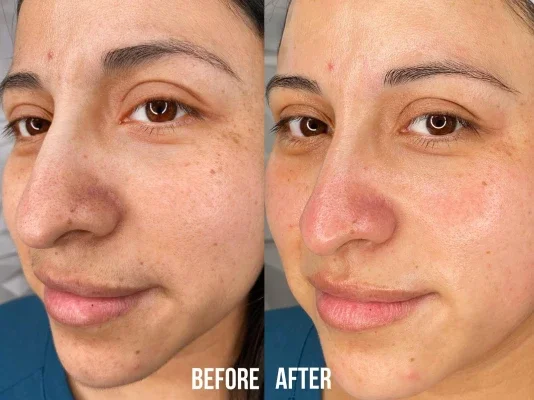
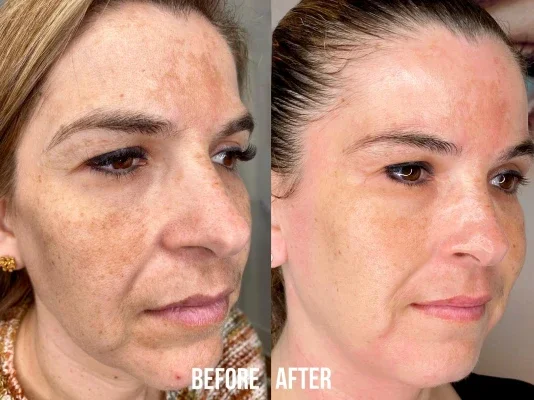
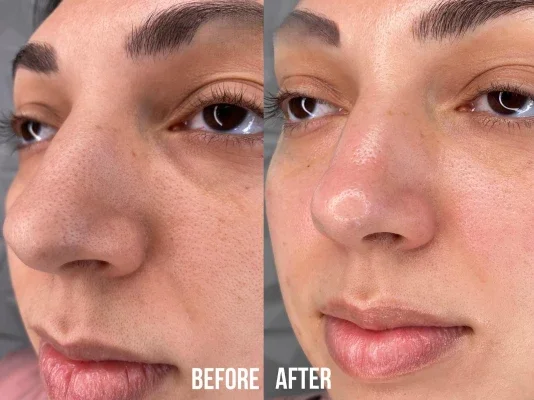
- Results: smoother and brighter skin from the first session.
Quick facts
- Session time
- Short. Commonly around thirty minutes, longer when combined with another facial treatment
- Downtime
- None. Skin may look slightly pink for an hour or two
- How often
- Every four to six weeks in most protocols, spaced further apart for sensitive skin
- Best for
- Dull texture, visible peach fuzz, makeup that clings, skin prep before actives
- Skin tone
- No heat and no chemicals, which makes it a gentler option in Fitzpatrick IV to VI when technique stays conservative
- Not for you if
- Active inflammatory or cystic acne, a rosacea flare, sunburn, open lesions, an active cold sore, or recent isotretinoin
On this page1 / 8What is dermaplaning, and what does it actually remove?
- What is dermaplaning, and what does it actually remove?
- Does dermaplaning make hair grow back thicker?
- Vellus hair versus terminal hair, and why the difference decides everything
- What dermaplaning does for your products and your makeup
- Is dermaplaning safe for brown and dark skin?
- Who should not have dermaplaning
- About doing it yourself with an eyebrow razor
- Booking in Miami and Naples
Dermaplaning is the treatment people are most curious about and most nervous to book, and the nervousness is almost always about one thing: not the blade, but week three, when the hair comes back. That question gets its own section below, with the actual biology attached. First, what is actually happening on the skin.
What is dermaplaning, and what does it actually remove?
It is a physical exfoliation performed with a sterile, single-use surgical blade held at roughly a…
It is a physical exfoliation performed with a sterile, single-use surgical blade held at roughly a forty five degree angle against taut skin, drawn across in short controlled strokes. Two things come off in that pass: the stratum corneum, the outermost layer of flattened dead cells (also your barrier, so the goal is to remove the excess, not strip the layer to nothing), and vellus hair, the fine, light-colored hair that covers most of the face (peach fuzz).
Removing both at once is why the result is immediate in a way most treatments are not: light no longer scatters off a layer of fuzz and dull cells, so skin looks brighter the moment you sit up. A genuine optical effect, not a promise about your collagen.
Does dermaplaning make hair grow back thicker?
No. This is the single most searched question about the treatment, and the answer has not changed…
No. This is the single most searched question about the treatment, and the answer has not changed in decades of dermatology, even though the sensation people report is real and the conclusion they draw from it is wrong.
A hair that grows out naturally has a tapered tip, which is why untouched hair feels soft. A blade that cuts it at the surface removes the taper and leaves a blunt cross section, wider at the point of contact, which feels rougher as it grows out. Rougher to the touch is not thicker, nothing about the hair itself changed.
What determines how a hair grows is the follicle, under the skin, regulated by hormones and genetics, which set color, diameter and density. A blade at the surface never reaches it. The American Academy of Dermatology has stated for years that shaving does not change hair thickness, and dermaplaning is that same mechanical action with a sterile blade.
Vellus hair versus terminal hair, and why the difference decides everything
This is the distinction that separates a good candidate from a bad one. Vellus hair is short, fine…
This is the distinction that separates a good candidate from a bad one. Vellus hair is short, fine, soft and usually unpigmented, covering most of the face, which is what dermaplaning is designed to remove. Terminal hair is thicker, longer and pigmented, appearing on the upper lip, chin and jawline in some people, driven by androgens and genetics, and it is the type involved in hirsutism.
Dermaplaning over vellus hair produces a clean result, because the hair is so fine that even a blunt cut end has almost nothing to it. Over terminal hair it is a different experience, and the source of most complaints about stubble. If terminal hair is your concern, dermaplaning is not the answer, and that conversation belongs with laser hair removal or a physician, since significant terminal hair can point to a hormonal cause worth investigating. One honesty note: vellus hair is not decorative, it wicks sweat and contributes to light touch sensation, but it grows back, so this is not a permanent trade.
What dermaplaning does for your products and your makeup
The stratum corneum is a barrier, and it is very good at its job, the reason most of what you put…
The stratum corneum is a barrier, and it is very good at its job, the reason most of what you put on your face stays on your face. Reducing it increases how much of a topical gets through: a study published in AAPS PharmSciTech in 2023 evaluated dermaplaning as a permeation enhancer and found significantly greater permeation of model drugs across dermaplaned skin.
The serum you use afterward works on skin that is genuinely more receptive, but be careful what you apply: freshly dermaplaned skin is not the moment for a strong acid, retinoid or aggressive vitamin C, since increased penetration cuts both ways. For makeup, the effect is mechanical: foundation no longer clings to peach fuzz, and sits flat.
Is dermaplaning safe for brown and dark skin?
The Fitzpatrick scale describes how skin behaves with sun and treatment, from type I, which burns…
The Fitzpatrick scale describes how skin behaves with sun and treatment, from type I, which burns and never tans, to type VI, deeply pigmented skin that rarely burns. Much of South Florida falls in types IV through VI, where dermaplaning has a structural advantage: no heat and no chemicals, the two most common triggers of post-inflammatory hyperpigmentation.
The caveat is equally real: melanin-rich skin has larger melanosomes and more melanin, and responds to even minor trauma with pigment. So the technique is what protects you: correct blade angle, single passes rather than repeated scraping, no dermaplaning over inflamed lesions, and honest spacing between sessions. The mistake is not choosing dermaplaning, it is doing it too aggressively or too often.
Who should not have dermaplaning
Some of these are absolute and some are a matter of timing.
Some of these are absolute and some are a matter of timing.
- Active inflammatory or cystic acne. Can rupture lesions and raise the risk of scarring and dark marks.
- A rosacea flare. Mechanical exfoliation on already inflamed skin tends to make it worse.
- Sunburn, open lesions, eczema, psoriasis or an active cold sore in the area. Wait until the skin is intact.
- Recent isotretinoin. Skin is thin and fragile; clinics commonly wait several months to a year, confirmed with the prescribing physician.
- Terminal facial hair as the main complaint. Not a safety issue, just the wrong treatment.
- Retinoids and acids in the days before. Usually paused about a week beforehand.
Adverse effects, when they happen, are usually irritation, dryness, small nicks or folliculitis, prevented by sensible technique and frequency.
About doing it yourself with an eyebrow razor
The honest risk list is short: tools reused until dull, no sterility, blades dragged sideways over…
The honest risk list is short: tools reused until dull, no sterility, blades dragged sideways over the bony brow and jawline where nicks happen, and technique that gets more aggressive over time because the first result felt good. Professional dermaplaning is a sterile single-use blade, a controlled angle, and someone who sees the parts of your face you cannot see well in a mirror.
Booking in Miami and Naples
Book an assessment at Aliestetic and tell us if you are on any acne medication and what your…
Book an assessment at Aliestetic and tell us if you are on any acne medication and what your history with dark marks looks like. Dermaplaning is frequently added to a facial or scheduled before a peel or HydraFacial. It is not a treatment for wrinkles, scars or pigmentation, and if that is what you are after, the honest answer is a different tool.
Frequently asked questions
Does dermaplaning make hair grow back thicker or darker?
No. The blade cuts hair at skin level and leaves a blunt end instead of the fine tapered tip the hair grew with, so regrowth can feel coarser to the touch. That is a sensation, not a change in the hair. Thickness, color, density and growth rate are set by the follicle under the skin, which is controlled by hormones and genetics and is never touched during the treatment. The American Academy of Dermatology has said for years that shaving does not alter hair thickness. Dermaplaning is the same mechanical action, done with a sterile blade.
Will I get stubble on my face?
Not from vellus hair. Peach fuzz is so fine that even with a blunt cut end there is very little to feel. What can produce noticeable stubble is dermaplaning over terminal hair, the thicker pigmented type that grows on the upper lip or along the jaw in some people. If that is the hair you want gone, dermaplaning is the wrong tool and we will say so, because cutting terminal hair at the surface every few weeks is not a strategy that ends well.
Does dermaplaning hurt?
No. There are no needles, no acids and no heat. The blade is held at an angle and drawn across taut skin in short strokes, and most people describe a light scraping sensation that is oddly satisfying. There is no numbing and no recovery. Skin can look faintly pink for an hour or two, and it usually looks noticeably smoother right away, which is why this treatment gets booked before events.
How often should I get dermaplaning?
Most protocols space it every four to six weeks, which roughly follows the skin cell turnover cycle. Oilier or more resilient skin often tolerates the four week end, and sensitive or reactive skin does better closer to six. Doing it more often than that is the most common mistake. Over-exfoliation shows up as tightness, stinging with products you used to tolerate, redness and breakouts, and in melanin-rich skin it can leave dark marks.
Is dermaplaning safe for brown and dark skin?
It is one of the gentler options for Fitzpatrick IV to VI, because it uses no heat and no chemicals, and those are the two usual triggers for post-inflammatory hyperpigmentation. The caveat is real though: darker skin has larger melanosomes and more melanin, so any inflammation can leave a dark mark behind. That means conservative technique, correct blade angle, no repeat passes over the same area to chase perfection, and appropriate spacing between sessions. Aggressive dermaplaning is riskier on brown skin than gentle dermaplaning is on any skin.
Can I have dermaplaning if I have acne?
Not over active inflammatory acne. Pustules, papules and cysts are a hard no, because dragging a blade across them can rupture lesions, spread bacteria across the face and raise the risk of scarring and dark marks. Skin with closed comedones and old acne marks but no active inflammation is often a good candidate. If you are unsure which category you are in, book the assessment rather than the treatment and let someone look at your skin.
Can I do dermaplaning at home with an eyebrow razor?
You can, and the risks are worth knowing. Home tools are usually reused until dull, are not sterile, and dull blades tug and scrape instead of cutting cleanly. The classic injuries are nicks over the bony brow ridge and jaw, folliculitis from bacteria pushed into follicles, irritation from the wrong angle, and post-inflammatory hyperpigmentation on darker skin where the technique got aggressive. Professional dermaplaning uses a single-use sterile blade, controlled angle and taut skin, and that is most of the difference.
Can I combine it with a peel, HydraFacial or microneedling?
Dermaplaning is often done first in the same visit as a chemical peel or a HydraFacial, because removing the dead surface layer lets what comes next work on skin rather than on debris. The judgment call is how much total exfoliation your skin can take in one sitting. Stacking a deep peel on freshly dermaplaned skin is not automatically better, it is just more, and more is where irritation and pigment problems start. Microneedling is generally scheduled separately.
How long do the results last?
The smoothness and the light-reflecting look last roughly two to four weeks in most people. Vellus hair regrows on its own cycle and the surface layer of dead cells rebuilds continuously, which is why the treatment is repeated rather than done once. This is maintenance, not a structural change to your skin.
Still not sure you are a candidate?
That is what the first consultation is for. It is free, there is no obligation, and you can come to Miami or start by video if you are travelling in.