
Updated

Surgical procedures are performed by an affiliated board-certified plastic surgeon. Aliestetic coordinates your consultation, pre-op and recovery.
What does liposuction actually do, and what can it not fix?
Liposuction removes localized fat through small cannulas, reshaping a contour instead of lowering a number on the scale. It was the most performed cosmetic surgical procedure in the United States in 2024, with 349,728 cases counted by the American Society of Plastic Surgeons. What it does not do matters just as much. It is not a treatment for obesity, it does not remove cellulite, which is a connective tissue problem rather than a fat problem, and it does not tighten skin that has lost elasticity. Fat cells taken out of a treated area do not grow back there, but the cells left everywhere else can still enlarge if you gain weight, so the durability of the result depends on what happens after surgery. At Aliestetic in Miami, the operation is performed by our affiliated plastic surgeon, and the post-operative program, lymphatic drainage, staged compression and fibrosis care, runs at our own Miami location.
Benefits of Real and Lasting Results
Total Remodeling
Removes fat in the abdomen, back, arms, legs, and more.
Body Harmony
Sculpts the figure while maintaining the naturalness of the silhouette.
Personalized Technique
The procedure is specifically adapted to each area and the patient's anatomy.
Comfort
Performed as an outpatient procedure with guided recovery.
How is Liposuction performed?
- A complete body evaluation and surgical planning are carried out.
- Local or general anesthesia is used depending on the patient's case.
- Fat extraction is precise through the use of microcannulas.
- The process includes the use of a compression garment and medical follow-up under the Aliestetic protocol.
Duration per session
Between 1.5 and 3 hours, depending on the treated areas.
Results are visible from the 2nd week, and the final result is reached between 2 and 3 months.
Real results
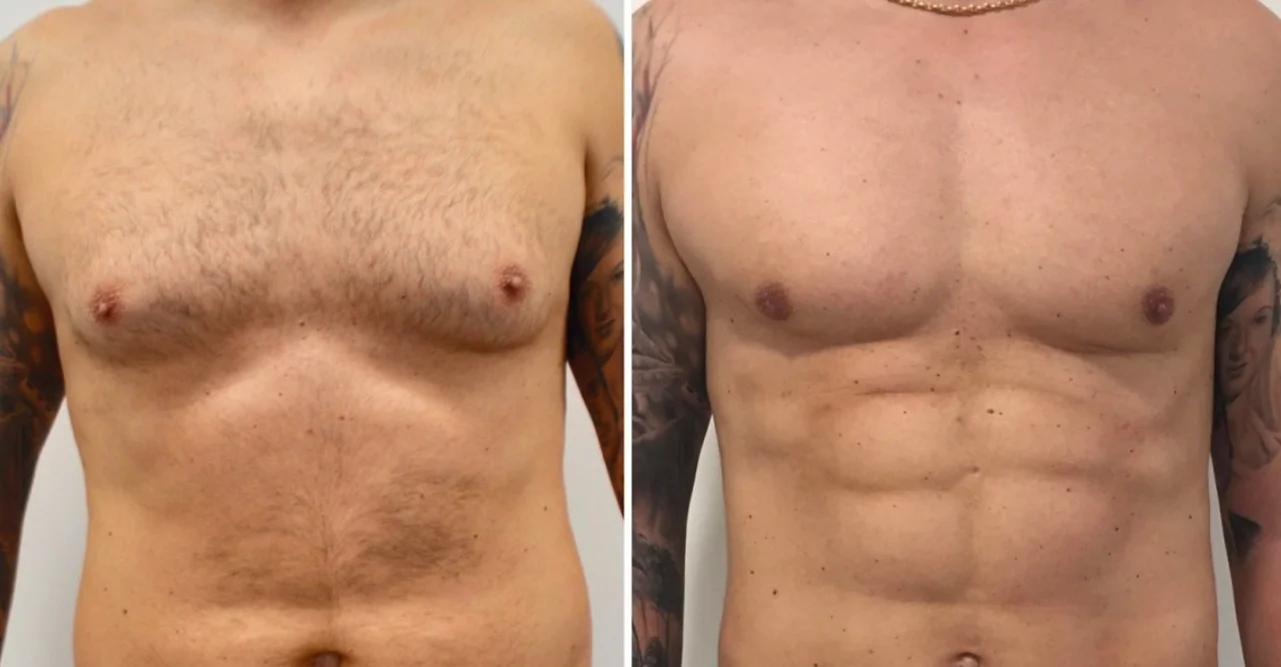
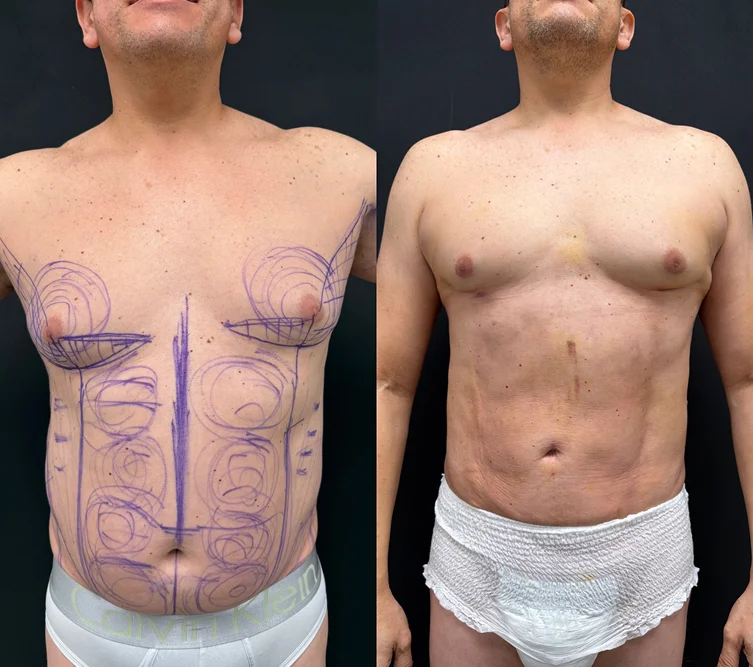
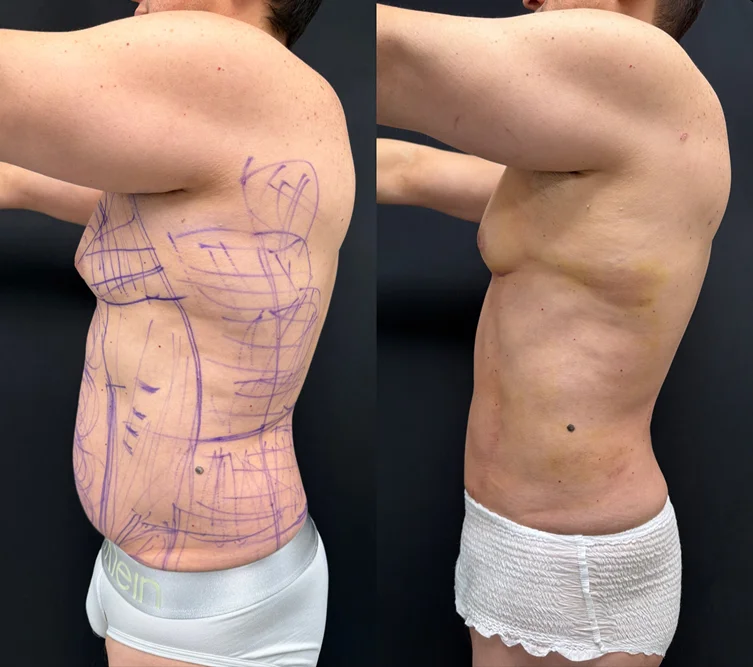
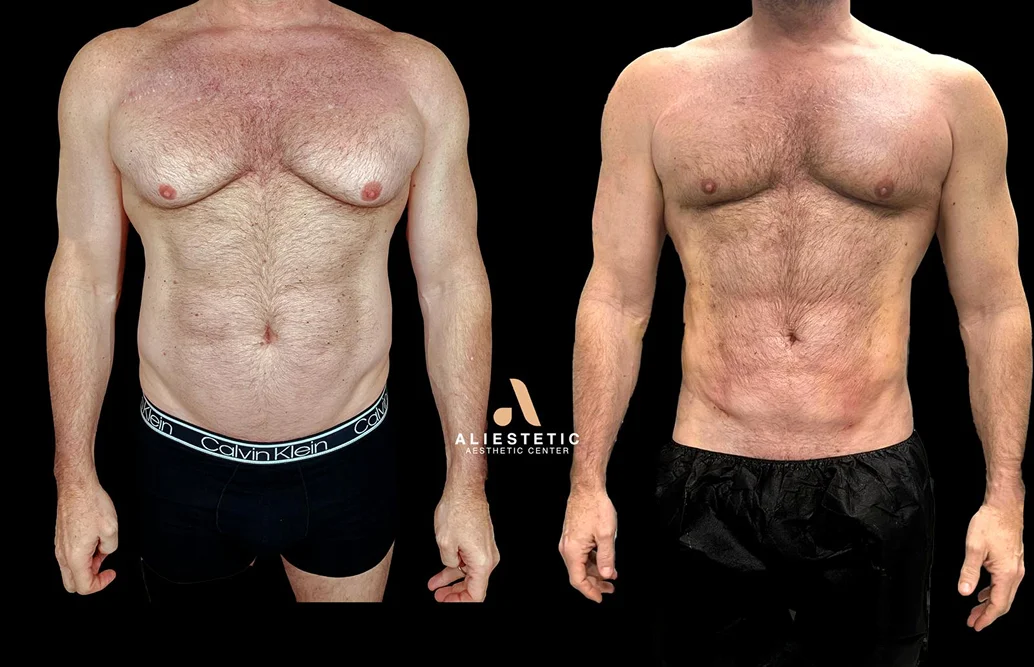
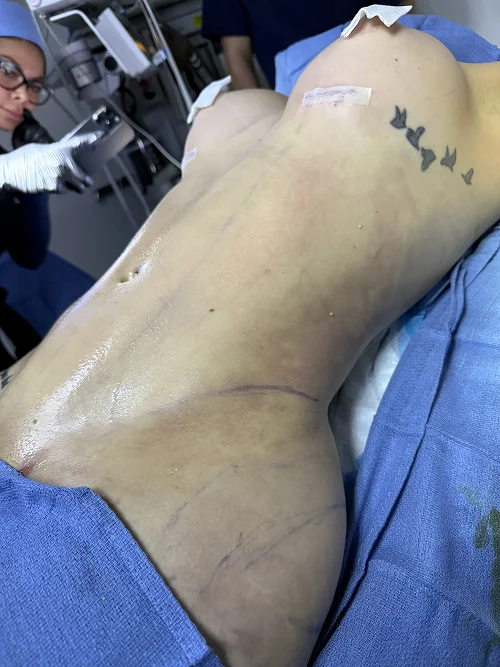
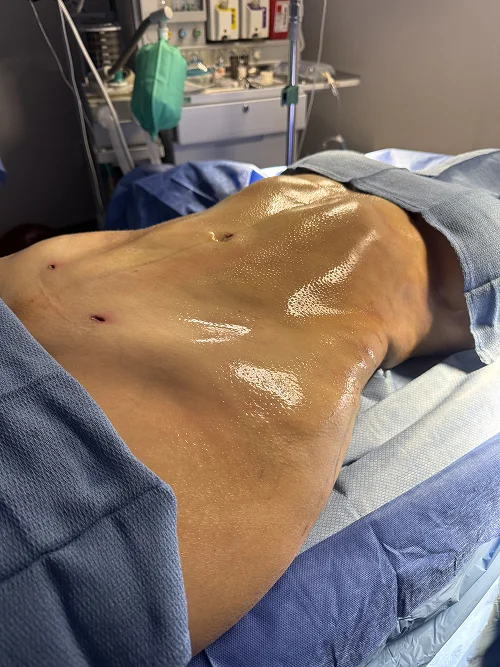
Results are individual and do not represent what any given person should expect.
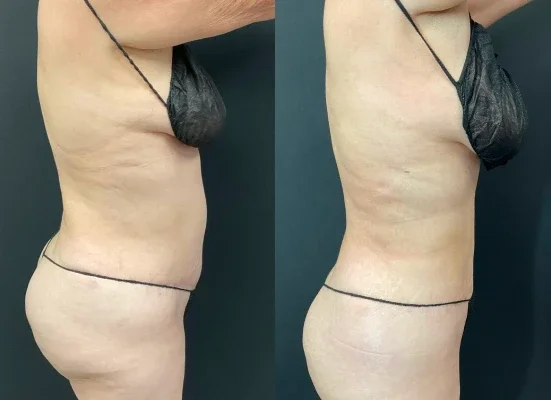
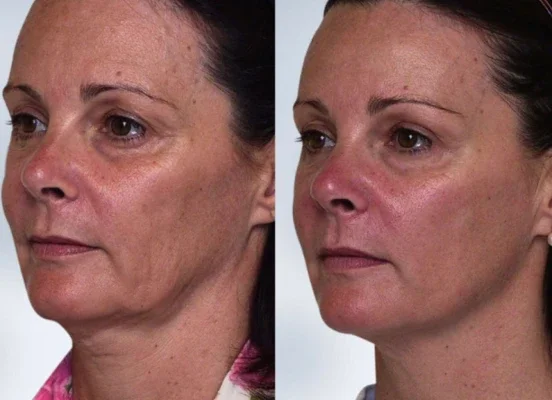
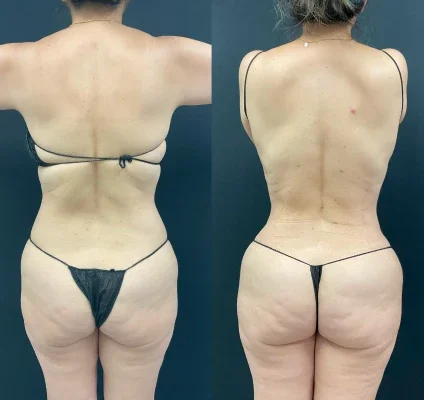
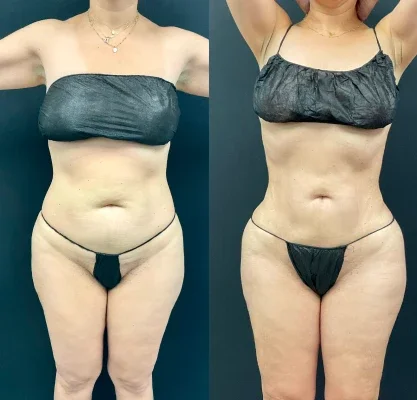
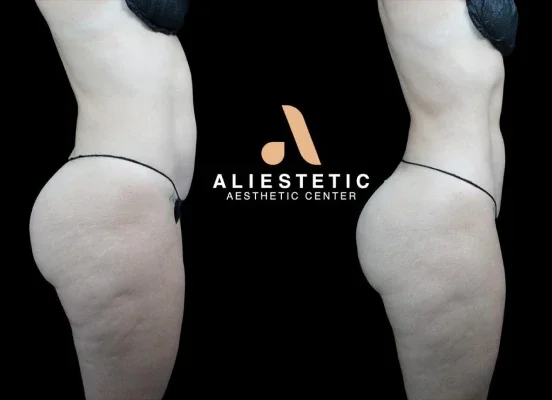
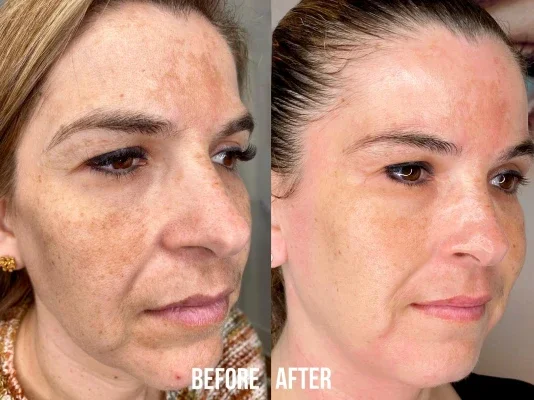
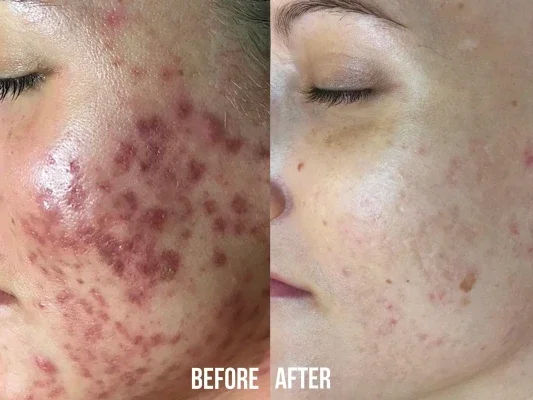
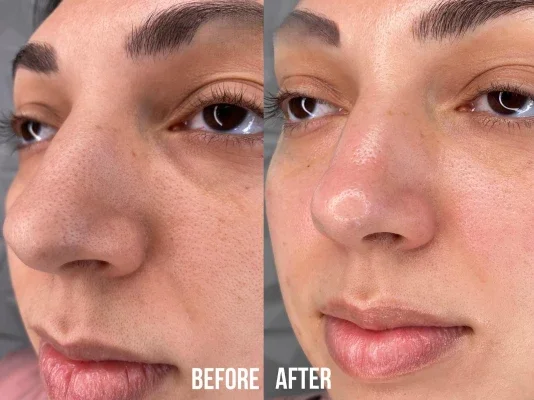
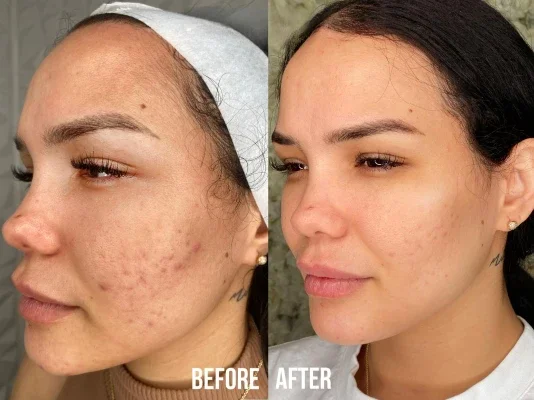
Before and after
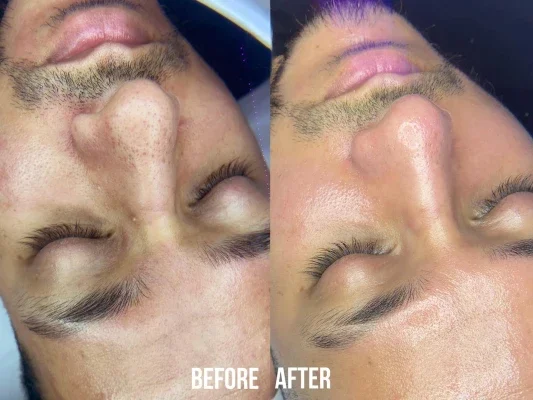
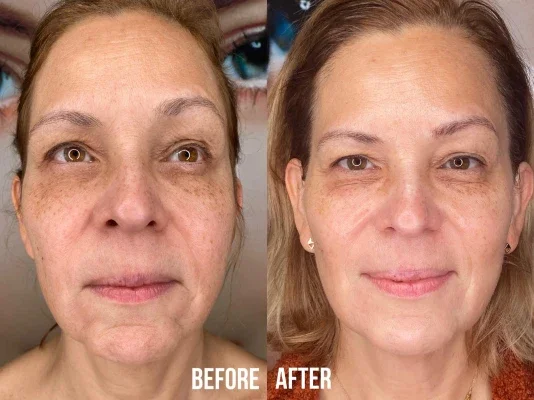
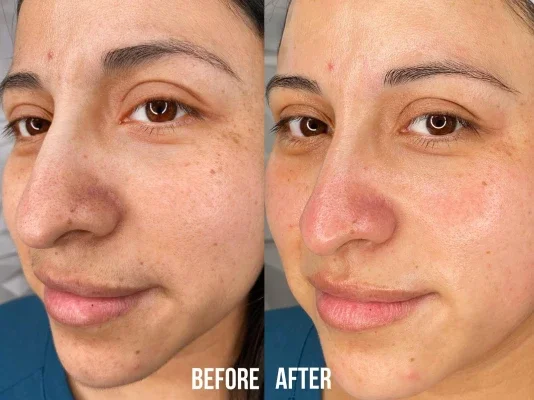
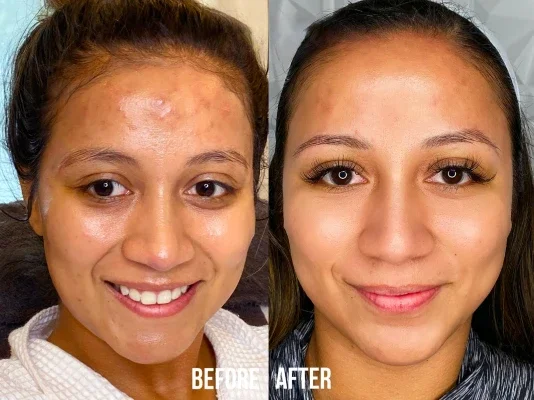
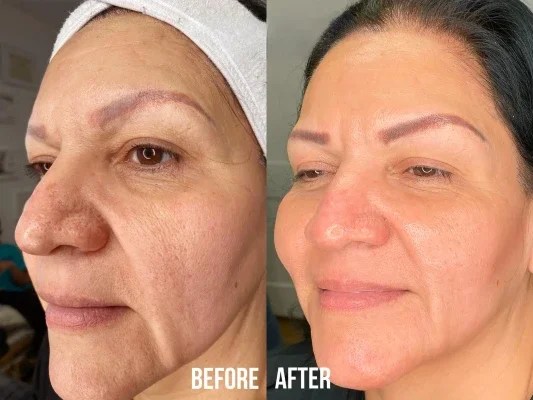
Real Aliestetic patients, photographed without retouching and published with their written consent.
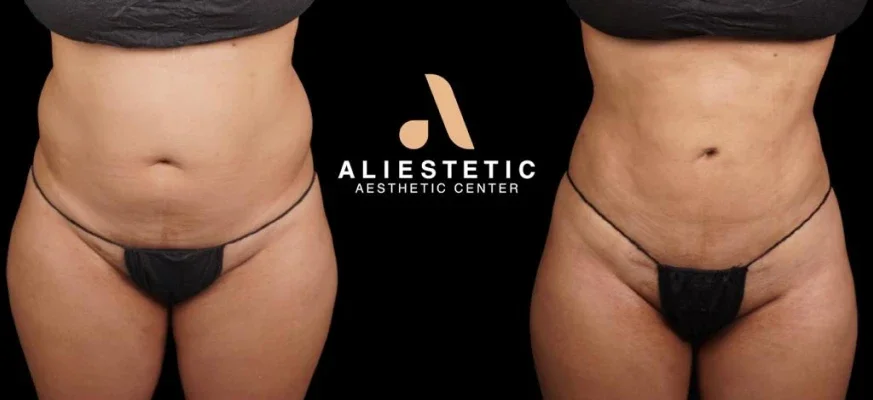
Results are individual and do not represent what any given person should expect. They depend on anatomy, age, skin quality, the procedure performed and adherence to post-operative care. These photographs are not a promise of outcome.
Real transformations
“After the liposuction, I feel lighter, safer, and more comfortable with my body.” (Daniela V., 39 years old).
Results are individual: one patient’s experience does not represent what any given person should expect.
Book your appointment nowQuick facts
- Anesthesia
- Tumescent local anesthesia with sedation, or general anesthesia. Decided by area count and volume
- Procedure time
- Roughly one to four hours depending on how many areas are treated
- Back to work
- Desk work commonly three to seven days. Physical work ten to fourteen days or more
- Compression garment
- Continuous at first, then stepped down in stages. Around four to six weeks or longer
- First results
- Visible within weeks, still hidden by swelling. Useful checkpoint around three months
- Final result
- Generally judged between six and twelve months
- Who operates
- An affiliated plastic surgeon. We give you the name, the Florida license number and the board certification at the consultation, before anything is scheduled
- Where recovery happens
- The Aliestetic recovery program in Miami, following the surgeon written orders
On this page1 / 10What liposuction actually does
Most people asking about liposuction, or lipo, are not asking about fat. They are asking about one area that has refused to move for years, whatever the scale says. That is the right starting point, and it is where the disappointment gets built: liposuction reshapes where fat sits. It is not weight loss, it is not a treatment for obesity, and it does not fix skin that no longer retracts.
It was the most performed cosmetic surgical procedure in the country in 2024, with volume up one percent over the prior year, according to the American Society of Plastic Surgeons.
Common is not the same as minor. Aliestetic does not operate. The surgery is performed by our affiliated surgeon, board certified by the American Board of Plastic Surgery, trained at the University of Virginia and at Northwestern. We run the entire recovery program at our own Miami location.
What liposuction actually does
Liposuction enters the subcutaneous fat through incisions a few millimeters wide and removes fat in…
Liposuction enters the subcutaneous fat through incisions a few millimeters wide and removes fat in passes with a cannula connected to suction, thinning the layer so the shape underneath reads differently. What it cannot do is worth repeating.
It is not obesity treatment
Removing several liters of fat is not the same as losing weight, and the metabolic benefits do not come with it. Surgeons generally prefer outpatient candidates under a body mass index of 30, evaluate 30 to 35 individually, and treat higher numbers as a significant risk factor.
It does not remove cellulite
Cellulite comes from fibrous bands tethering the skin down, so removing fat underneath sometimes makes the dimpling more visible, not less.
It does not tighten skin
The skin has to retract onto the new contour, and whether it does depends on the collagen and elastin in your dermis, your age and how much that skin already stretched. Skin that does not retract looks softer and more draped over a thinner area. That is physics, not a complication, and it is why some patients are better served by a procedure that removes skin.
Areas that can be treated
Lipo works where fat is localized and the skin above it still has decent tone.
Lipo works where fat is localized and the skin above it still has decent tone.
- Torso. Upper abdomen, lower abdomen, flanks, upper back, lower back and the bra roll.
- Arms. The posterior upper arm, when the issue is fat rather than hanging skin.
- Thighs. Inner, outer and anterior thigh, plus the banana roll under the buttock.
- Knees. The medial knee pad, small but with an outsized effect on how a leg reads.
- Neck and chin. Submental fat, often done alone as a short procedure.
- Chest and submammary area. Including male chest contouring, with its own considerations when glandular tissue is involved.
Small areas are not automatically easy. The chin, the arms and the anterior thigh are where being too aggressive shows for a long time.
Am I a candidate?
Good candidates are at a stable weight, in reasonable health, with localized fat and skin that…
Good candidates are at a stable weight, in reasonable health, with localized fat and skin that still snaps back when pinched. Not smoking matters more than people expect, because nicotine constricts the small vessels that keep treated tissue alive.
Who this does not serve well is equally specific: anyone hoping to lose weight, anyone with significant skin laxity in the area, anyone with uncontrolled diabetes, a clotting disorder or unstable cardiac disease. Pregnancy plans count too. Your surgeon decides candidacy in person, and a clinic willing to approve you from photographs is skipping the step that protects you.
The techniques
Almost every modern liposuction starts with tumescent infiltration, a large volume of dilute local…
Almost every modern liposuction starts with tumescent infiltration, a large volume of dilute local anesthetic with epinephrine placed into the fat before anything is removed. It numbs, constricts vessels to reduce bleeding and softens the fat, and it is why the incisions leak for a day or two afterward.
- Power assisted liposuction (PAL) uses a cannula tip that vibrates rapidly to loosen fat mechanically. Efficient, especially in fibrous areas.
- Ultrasound assisted liposuction, including VASER, emulsifies fat with high frequency ultrasound. Favored for dense fat and detailed contouring.
- Laser assisted liposuction delivers thermal energy that disrupts fat and stimulates some collagen, which is why it comes up for mild laxity in small areas like the neck. The trade off is that the destroyed fat cannot be reused for grafting.
That last point matters if fat transfer to the buttocks is part of your plan. In Florida, statute 458.328 applies: fat goes only into the subcutaneous space, never into or under the gluteal muscle, ultrasound guidance is required during cannula placement, and the surgeon cannot delegate the harvest or the injection.
No technique is universally superior. The surgeon’s judgment about which layer to work and when to stop matters far more than the brand of device.
How much fat can be taken out at once
The American Society of Plastic Surgeons practice advisory treats 5,000 milliliters of total…
The American Society of Plastic Surgeons practice advisory treats 5,000 milliliters of total aspirate as the line defining large volume liposuction, associated with higher complication risk, and generally calls for overnight observation above it. ASPS also notes there is no hard scientific data behind an absolute cutoff, and that five liters off a large frame and five liters off a small one are not the same event. The concerns are fluid shift, blood loss and treated surface area. Ask about your planned volume.
How the process runs
Your consultation is with your surgeon in person, who examines the areas, pinches the skin to judge…
Your consultation is with your surgeon in person, who examines the areas, pinches the skin to judge retraction, and defines the plan. Pre-operative work usually includes labs, medical clearance if your history calls for one, and instructions about stopping anything that thins the blood.
On the day, markings are drawn while you stand and the procedure runs roughly one to four hours. Discharge is usually the same day. You need an adult to drive you home and stay with you the first day.
Recovery week by week
- 01
Days 0 to 3
The hardest stretch. Soreness is diffuse rather than sharp and worst when you change position. Tumescent fluid drains from the incisions for a day or two, often more than expected and tinged with blood. Short, frequent walks start the same day, because immobility is associated with venous thromboembolism and pulmonary embolism is the leading cause of the rare deaths reported after this operation.
- 02
Days 4 to 7
Bruising looks worse before it looks better and travels downward into areas never treated. Swelling peaks in this window, not on day one, which is when people quietly panic. Lymphatic drainage often begins here if your surgeon has cleared it.
- 03
Weeks 2 and 3
Most people are back at a desk job. Numbness in treated areas is common and usually temporary. Hard patches and ridges show up as swelling redistributes: early fibrosis, which is worked on rather than waited out. Our seroma and fibrosis guide covers what is normal here.
- 04
Weeks 4 to 6
Shape becomes recognizable. Compression continues in a lighter stage, and knowing when to step down is covered in our compression garment stages guide. Exercise resumes on clearance.
- 05
Months 2 to 6
Swelling turns cyclical, worse at night and after salt, heat or a long day standing, which in Miami is not a small factor. Sides rarely deswell at the same rate, so temporary asymmetry is common.
Real risks
Contour irregularity is the most common problem, reported at roughly two percent in a systematic…
Contour irregularity is the most common problem, reported at roughly two percent in a systematic review of liposuction complications, followed by hyperpigmentation, seroma, hematoma and burns from energy assisted devices. Infection, prolonged numbness, altered sensation, fluid imbalance, skin necrosis and asymmetry are all on the real list, and anesthesia carries its own risk. Venous thromboembolism is uncommon but it is the complication that kills, which is why walking early is not a wellness suggestion. Revision surgery is a real possibility in body contouring.
What to ask before choosing a surgeon
- Verify the license. The Florida Department of Health Division of Medical Quality Assurance runs a free portal showing license status, registered address and public discipline. Search your surgeon before paying a deposit.
- Confirm board certification with the American Board of Plastic Surgery. Board certified plastic surgeon and cosmetic surgeon are not the same credential, and the second can be self applied.
- Ask who performs the procedure start to finish, and whether the facility is accredited.
- Ask what happens if you develop a seroma or a contour irregularity, and whether revision is included, discounted or billed.
What Aliestetic does, and what your surgeon does
Your surgeon operates. Aliestetic owns the part where most patients are left alone: lymphatic…
Your surgeon operates. Aliestetic owns the part where most patients are left alone: lymphatic drainage timed to your surgeon’s written clearance, staged compression with someone actually checking the fit, carboxytherapy on hardened zones once authorized for your stage, wood therapy only in the late phase, and eyes on your body often enough to catch a seroma while it is still small.
Frequently asked questions
How many days of recovery do I need?
Plan on three to seven days before you feel functional if one or two areas were treated, and closer to ten days if several were. Swelling and bruising usually peak somewhere in the first 48 to 72 hours and then start easing. You will be asked to walk short distances the same day. Feeling functional and being healed are different things: contour keeps refining for months after you feel fine.
When can I go back to work?
Desk work is commonly cleared around three to seven days after a limited procedure, and one to two weeks after a larger one. Physically demanding jobs usually need ten to fourteen days at minimum, and heavy labor can need several weeks. The variable nobody plans for is the compression garment, which is uncomfortable under work clothes at first. Your clearance comes from your surgeon, not from a blog timeline.
Does it hurt?
The first three days are the hardest and most people describe soreness rather than sharp pain, like a brutal workout combined with a deep bruise. It is worse when you change position and worst when you get out of bed. Prescription pain control is usually needed briefly and then steps down to over the counter medication. Pain that keeps increasing after day three instead of easing is not normal and should be reported.
Is it worth it?
It tends to be worth it for people close to a stable weight who want a specific area reshaped and who understand the limits. It tends to disappoint people who wanted weight loss, who have significant skin laxity, or who expected cellulite to disappear. The honest test is whether the area you dislike is fat sitting under skin with decent elasticity. That is a physical exam question, not an internet question.
How long do I have to wear the compression garment?
Most protocols run around four to six weeks or longer, continuous at first and then stepped down in stages. Compression manages swelling, supports the tissue while it settles and helps the skin lie down over the new contour. The most common mistakes are wearing the wrong size and stopping early because the garment starts feeling loose. Feeling loose usually means it is time for the next stage, not the end.
When does lymphatic drainage start?
Many surgeons clear gentle manual lymphatic drainage somewhere in the first week, often between day three and day seven, and some prefer to wait longer depending on how the incisions look. Sessions are typically two or three times a week in the first month and then taper. Starting too early or with aggressive pressure irritates healing tissue. At Aliestetic we schedule around the written clearance from your surgeon, never ahead of it.
When do I see the final result?
You will see a change within the first few weeks, but early swelling hides most of it. The useful checkpoint is around three months, and the settled result is generally judged between six and twelve months, depending on how much work was done and how your skin responds. Judging yourself at week three is the single most common source of unnecessary panic.
Can I gain the fat back?
Fat cells removed from a treated area do not regenerate there, and research published in Plastic and Reconstructive Surgery found fat reduction without redistribution to untreated areas. But the fat cells you still have everywhere else can enlarge. With significant weight gain the body can also create new fat cells throughout, which is why the result reads differently on a body that gained twenty pounds. Stable weight protects the contour.
How do I read a before and after honestly?
Look for the same angle, the same lighting, the same posture and the same distance from the camera. Ask how many weeks or months after surgery the after photo was taken, because a six week photo and a nine month photo are not the same claim. Look for patients whose starting anatomy resembles yours, including skin quality, not just the most dramatic case in the gallery.
Does liposuction treat cellulite or loose skin?
No. Cellulite comes from fibrous septa tethering the skin down, and removing fat underneath can occasionally make dimpling more visible rather than less. Loose skin is a dermal elasticity problem. If the skin does not retract, thinning the fat under it can leave the area looking softer and more draped. When laxity is significant, the honest conversation is about a skin excision procedure instead.
What is a seroma and how common is it?
A seroma is a pocket of fluid that collects under the skin, and it moves when you shift position. A systematic review of liposuction complications reported seroma in under one percent of cases, with contour deformity being the most common problem at roughly two percent. Small seromas often resolve with compression. Larger ones are drained with a needle in the office. It is a manageable problem, not an emergency, but it needs to be seen.
Still not sure you are a candidate?
That is what the first consultation is for. It is free, there is no obligation, and you can come to Miami or start by video if you are travelling in.