
Surgical procedures are performed by an affiliated board-certified plastic surgeon. Aliestetic coordinates your consultation, pre-op and recovery.
Quick facts
- Anesthesia
- General anesthesia or deep IV sedation, decided with your surgeon based on scope
- Procedure time
- Roughly three to six hours depending on technique and whether other areas are combined
- Back to work
- Low-visibility work ten to fourteen days. Client-facing or physical work three to four weeks
- First results
- Visible once major bruising resolves, still masked by swelling for several weeks
- Final result
- Generally judged around three to six months, once residual swelling settles
- Techniques
- SMAS lift or deep plane lift, chosen based on the degree and location of descent
- Who operates
- An affiliated plastic surgeon. We give you the name, the Florida license number and the board certification at the consultation, before anything is scheduled
- Where recovery happens
- The Aliestetic recovery program in Miami, following the surgeon's written orders
On this page1 / 8What a face lift actually does
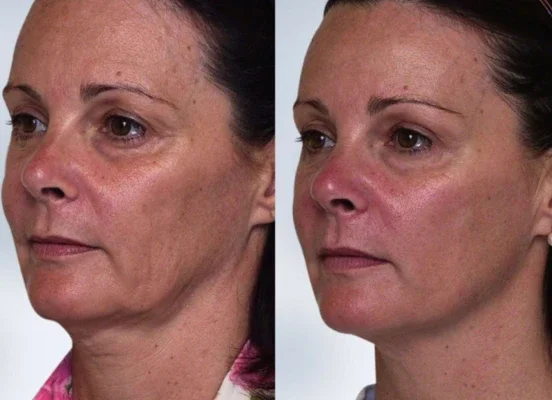
Most people researching a face lift are not trying to look younger in the abstract, they are looking at one specific thing: jowls along the jawline, a fold running from the nose to the corner of the mouth, or skin under the chin that did not used to hang. That specificity matters, because it is what decides which technique actually reaches the problem.
In 2024, ASPS member surgeons performed 79,058 face lifts, up one percent from 2023, making it one of the most consistently requested facial surgeries in the country.
Aliestetic does not operate. The surgery is performed by our affiliated plastic surgeon. We coordinate the consultation, the pre-operative workup and run the full recovery program at our own Miami location.
What a face lift actually does
Skin, fat and the fibrous layer beneath it, called the SMAS, descend over years under the effect of gravity and volume loss. A face lift repositions that descended tissue, it does not add volume the way a filler does and it does not resurface skin texture the way a laser or peel does. Surgeons commonly pair it with those other treatments, but the lift itself is about position, not texture or color.
Skin, fat and the fibrous layer beneath it, called the SMAS, descend over years under the effect of gravity and volume loss. A face lift repositions that descended tissue, it does not add volume the way a filler does and it does not resurface skin texture the way a laser or peel does. Surgeons commonly pair it with those other treatments, but the lift itself is about position, not texture or color.
SMAS lift versus deep plane lift
SMAS lift
The SMAS layer is tightened or re-suspended, most often through plication or a limited SMASectomy, and the skin above it is separately trimmed and redraped. It reliably improves the jawline and lower face with a shorter, less technical dissection.
Deep plane lift
The dissection goes underneath the SMAS itself, releasing the retaining ligaments that tether it to bone and deeper structures, so skin, SMAS and the fat compartments move together as one connected unit rather than two layers pulled independently. That composite movement is what allows correction of midface descent and the nasolabial fold, areas a SMAS lift can soften but rarely fully resets. It is a longer, more technical operation with more swelling in the midface during the second week of recovery.
Neither technique is universally correct. A surgeon experienced in both examines your face in person to decide where the descent actually is and which approach reaches it, and asking which technique a surgeon defaults to for every patient is a reasonable question to ask before booking.
Am I a candidate?
Good candidates have skin that still has some elasticity, structural jowling or midface descent that fillers and energy-based devices are not meaningfully moving, and are in stable health at a stable weight. Not smoking matters directly here, because nicotine constricts the small vessels the skin edges depend on to heal, and skin flap complications are one of the more serious risks of this surgery.
Good candidates have skin that still has some elasticity, structural jowling or midface descent that fillers and energy-based devices are not meaningfully moving, and are in stable health at a stable weight. Not smoking matters directly here, because nicotine constricts the small vessels the skin edges depend on to heal, and skin flap complications are one of the more serious risks of this surgery.
Being on a blood thinner, having uncontrolled hypertension or a bleeding disorder, and being prone to hypertrophic scarring or keloids all raise real risk and are discussed candidly at consultation, not glossed over. Anticipated large weight changes are also a reason to wait, since a lift performed before your weight stabilizes may need to be redone.
How the process runs
Your consultation is in person, with your surgeon examining skin elasticity, the location of descent, and your general health history. Pre-operative work typically includes labs and medical clearance if your history calls for one, plus instructions to stop anything that thins the blood well before surgery.
Your consultation is in person, with your surgeon examining skin elasticity, the location of descent, and your general health history. Pre-operative work typically includes labs and medical clearance if your history calls for one, plus instructions to stop anything that thins the blood well before surgery.
The operation itself commonly runs three to six hours depending on technique and whether eyelid surgery or another procedure is combined in the same session. Most patients go home the same day or the following morning with a companion, and a drain is often placed for the first day or two to prevent fluid and blood collection under the healing tissue.
Recovery week by week
- 01
Days 0 to 3
Swelling and bruising are heaviest here, along with tightness and pressure rather than sharp pain. A sudden spike in pain on one side, especially with rapidly increasing swelling, is a hematoma warning sign that needs same-day evaluation.
- 02
Days 4 to 10
Bruising travels downward toward the neck and jaw as it resolves, which looks alarming if you do not expect it. Sutures or staples, depending on technique, typically come out somewhere in this window.
- 03
Weeks 2 to 3
Most patients feel comfortable in low-visibility settings, often with makeup covering residual bruising. Deep plane patients tend to carry more midface swelling into this window than SMAS patients, because more tissue was mobilized.
- 04
Weeks 3 to 4
Return to client-facing work and light exercise is common here, on your surgeon’s clearance. Numbness around the ears and along incision lines is expected and usually fades over the following months.
- 05
Months 2 to 6
Residual swelling, especially in the midface and neck, continues settling. The final result is generally judged around three to six months, once that swelling is fully resolved.
Real risks
Hematoma is the most common early complication and the reason strenuous activity is restricted after surgery. Skin sensation changes around the ears, temporary in most cases, are expected. Facial nerve injury affecting movement is uncommon but serious, and infection, prolonged swelling, visible or widened scarring, hair loss along incision lines, and asymmetry are all part of the real risk profile. Skin flap complications from poor circulation, more common in smokers, can require additional treatment.
Hematoma is the most common early complication and the reason strenuous activity is restricted after surgery. Skin sensation changes around the ears, temporary in most cases, are expected. Facial nerve injury affecting movement is uncommon but serious, and infection, prolonged swelling, visible or widened scarring, hair loss along incision lines, and asymmetry are all part of the real risk profile. Skin flap complications from poor circulation, more common in smokers, can require additional treatment.
What to ask before choosing a surgeon
- Verify the license. The Florida Department of Health Division of Medical Quality Assurance runs a free portal showing license status, registered address and public discipline.
- Confirm board certification with the American Board of Plastic Surgery. Board certified plastic surgeon and cosmetic surgeon are not the same credential.
- Ask which technique, SMAS or deep plane, the surgeon plans for your face and why, based on your own exam, not a default.
- Ask what happens if a hematoma develops, and what the plan is if a revision becomes necessary.
What Aliestetic does, and what your surgeon does
Your surgeon operates. Aliestetic coordinates the consultation and pre-operative workup, and runs the recovery side: monitoring the healing incisions, timing follow-up visits to your surgeon’s written orders, and being the point of contact in Miami through the months your face is still settling into its final shape.
Your surgeon operates. Aliestetic coordinates the consultation and pre-operative workup, and runs the recovery side: monitoring the healing incisions, timing follow-up visits to your surgeon’s written orders, and being the point of contact in Miami through the months your face is still settling into its final shape.
What is the difference between a SMAS face lift and a deep plane face lift?
A SMAS face lift tightens or re-suspends the superficial musculoaponeurotic system, the fibrous layer under the skin, then trims and redrapes the skin separately over it. A deep plane face lift dissects underneath that same layer, releasing the ligaments that anchor it to deeper structures, and moves skin, SMAS and the fat compartments as one connected unit instead of two layers pulled at different angles. That composite movement is what lets a deep plane lift correct midface descent and the nasolabial fold, areas a SMAS lift can tighten but rarely fully resets. The tradeoff is a longer, more technical operation with a slower early recovery. Neither technique is universally correct. In 2024, ASPS member surgeons performed 79,058 face lifts, up one percent from the prior year. At Aliestetic in Miami we coordinate the consultation and the full recovery program at our own location, and the surgery itself is performed by our affiliated plastic surgeon.
Frequently asked questions
How many days of recovery do I need?
Plan on two weeks before you are comfortable in public without makeup covering bruising, and closer to three to four weeks before you feel fully like yourself. Swelling and bruising are heaviest in the first several days and shift downward toward the neck as they resolve, which surprises people who do not expect bruising to travel. A deep plane lift generally carries more midface swelling in the second week than a SMAS lift does, because more tissue was mobilized.
When can I go back to work?
Remote or low-visibility work is commonly cleared around ten to fourteen days, once the worst bruising has faded or is coverable. Client-facing work or anything where your face is the product usually needs three to four weeks. Physical activity that raises blood pressure, including exercise, is restricted for two to four weeks because it increases hematoma risk, which is the most common early complication of this surgery.
Does it hurt?
Tightness and pressure, more than sharp pain, is how most patients describe the first several days, particularly around the ears and under the jaw where dissection is most extensive. Prescription pain control is typically needed for a short window and then steps down. Pain that spikes suddenly on one side, especially with visible swelling, is a hematoma warning sign and needs same-day evaluation, not a wait-and-see approach.
Will I look like a different person?
A well-executed face lift is not supposed to change who you look like, it is supposed to move tissue that has descended back toward where it sat years earlier. Overfilled, wind-tunnel or pulled results generally come from over-tightening the skin itself instead of addressing the deeper layer, which is one of the arguments in favor of deep plane technique, since repositioning the composite unit reduces tension on the skin closure.
How long does the result last?
There is no single honest number, because aging continues regardless of the surgery. What is generally agreed is that repositioning the deeper SMAS or deep plane layer, rather than only tightening skin, produces a more durable result than a skin-only lift, since skin-only tightening stretches back out faster under normal facial movement. Your own result depends on skin quality, sun exposure, weight stability and genetics as much as on technique.
Am I too young, or too old, for a face lift?
Age on its own does not decide candidacy, skin quality and the degree of descent do. Most candidates fall in their forties through sixties, but the honest exam question is whether pinched skin snaps back and whether jowling and midface volume loss are structural enough that fillers and energy devices will not meaningfully move them. Being on a blood thinner, having uncontrolled hypertension or a bleeding disorder, or smoking, all change the risk calculation regardless of age.
Can I combine it with eyelid surgery or a neck lift?
Combining procedures in one operation is common when a surgeon determines it is safe for your health and anesthesia time, and many patients find the eyes and lower face age in ways a single face lift alone does not fully address. It is a decision made after an in-person exam, not something to request based on a photo of a different patient.
What are the real risks?
Hematoma is the most common early complication and the reason activity is restricted after surgery. Changes in skin sensation, temporary or occasionally permanent, are expected around the ears and can extend elsewhere. Facial nerve injury affecting movement is uncommon but serious, and asymmetry, infection, prolonged swelling, and scarring that requires revision are all part of the real risk profile, not just the rare-but-mentioned list.
Still not sure you are a candidate?
That is what the first consultation is for. It is free, there is no obligation, and you can come to Miami or start by video if you are travelling in.