Updated
Why does acne leave dark marks on brown skin, and how are they treated?
Those flat brown or grayish patches left behind after a pimple heals are post inflammatory hyperpigmentation, not scars. Inflammation from the acne lesion signals melanocytes to overproduce pigment, and in Fitzpatrick phototypes IV to VI, which covers most Latino, Caribbean and Afro descendant patients at Aliestetic in Miami, that response is stronger and lasts longer. Published dermatology reviews describe post inflammatory hyperpigmentation persisting for many months and, in more severe acne, well over a year. Because the mark is pigment and not a change in skin structure, it can fade with time and appropriate treatment, unlike a true atrophic scar. The core of treatment is unglamorous: control the active acne first, since every new lesion creates a new mark, protect from sun and visible light daily, and then use professionally selected superficial peels and topical care. Heat and light based devices are not the first choice in darker skin.
“I have never had such an effective treatment for my acne. Fewer breakouts, fewer marks, and zero irritation.” (Gabriel C., 23 years old).
Benefits: Results that transform
- Decreases acne breakouts and inflamed spots.
- Eliminates bacteria without damaging the skin.
- Reduces redness, pores, and post-acne marks.
- Improves overall skin texture and evenness.
- Quick and non-invasive treatment.
How does it work?
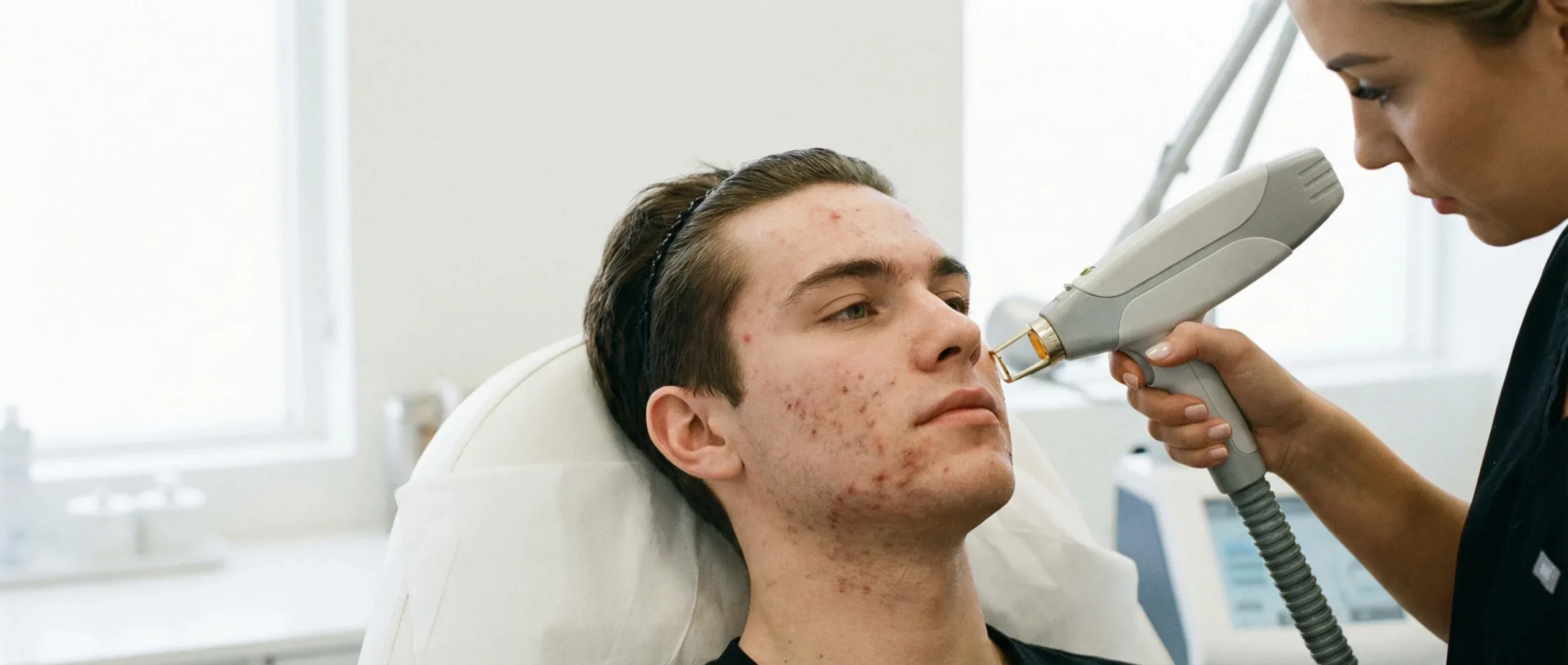
- Blue light: eliminates P. acnes bacteria responsible for breakouts.
- Yellow light: reduces inflammation, redness, and sebum production.
- The combination visibly improves the skin from the root.
- Duration: 30–40 minutes.
- Results: progressive improvement from the first session. 4–6 sessions are recommended.
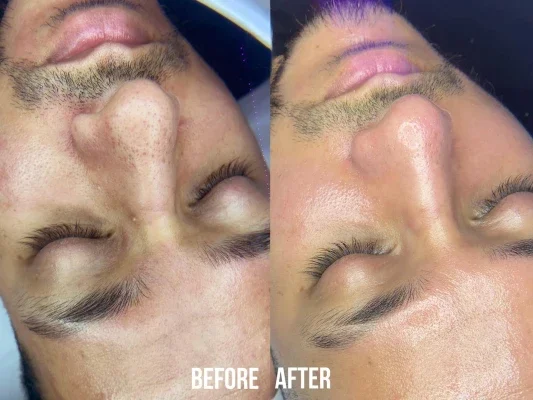
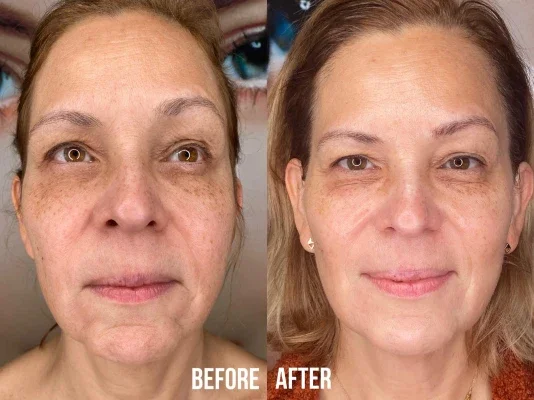
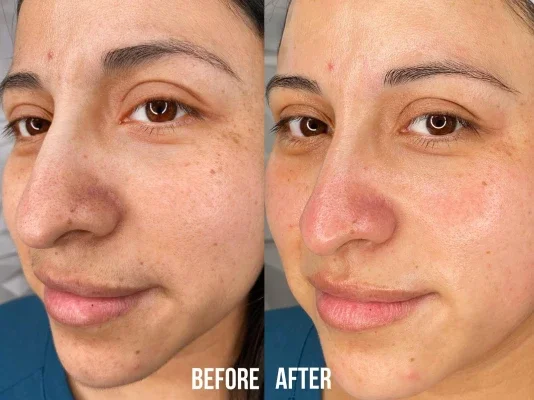
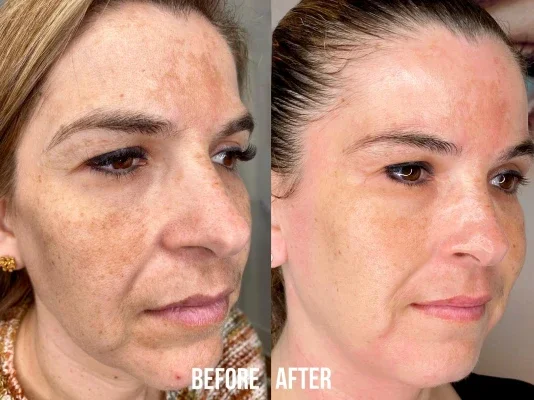
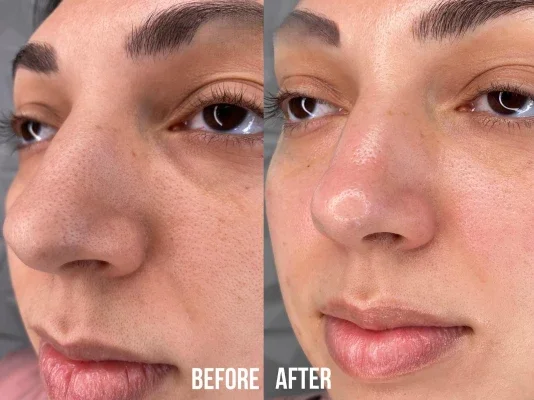
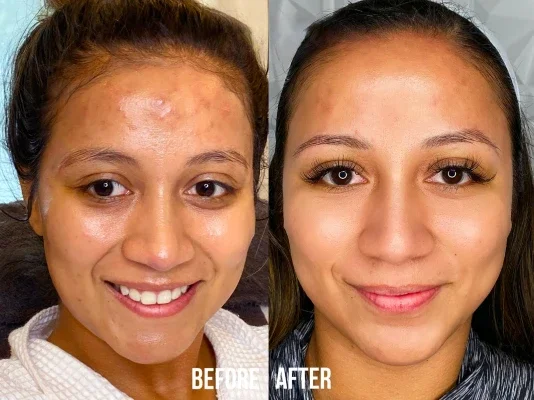
Before and after
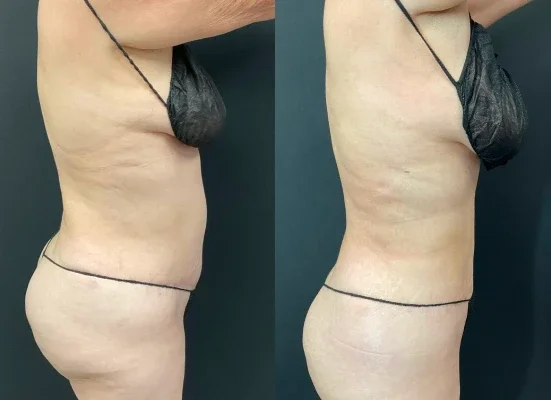
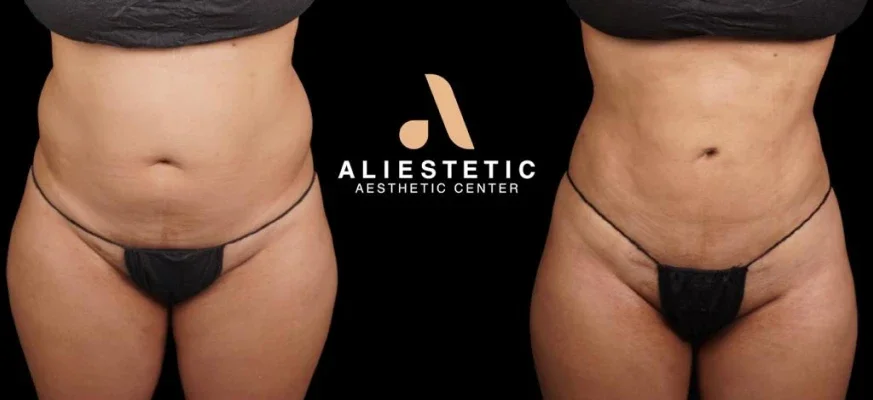
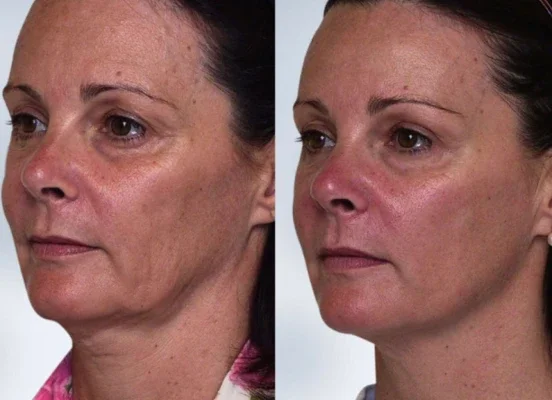
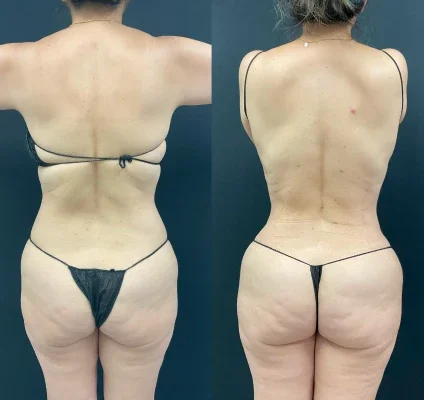
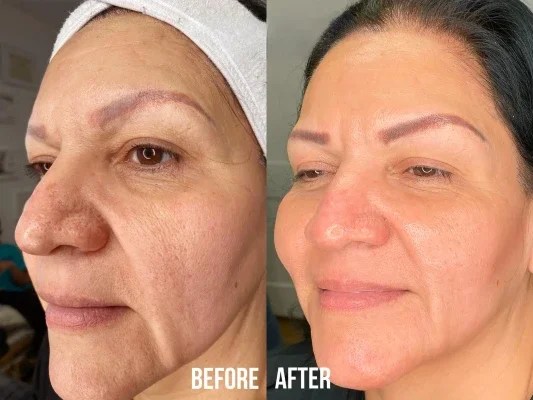
Real Aliestetic patients, photographed without retouching and published with their written consent.
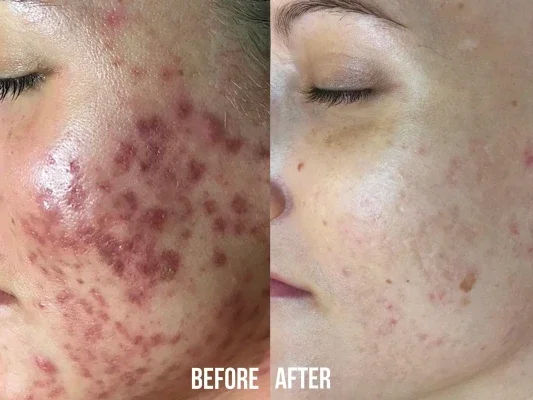
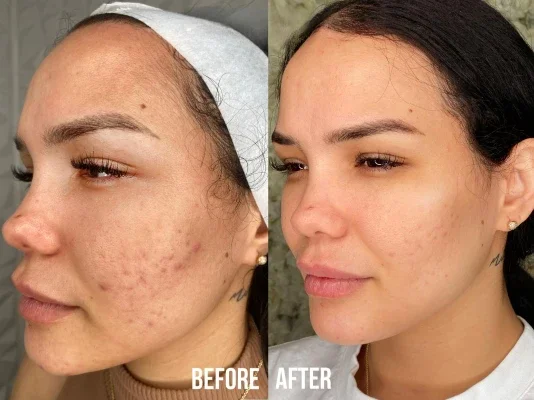
Results are individual and do not represent what any given person should expect. They depend on anatomy, age, skin quality, the procedure performed and adherence to post-operative care. These photographs are not a promise of outcome.
Quick facts
- Sessions
- A series set at assessment, generally spaced every 2 to 4 weeks depending on the treatment
- Session time
- About 30 to 60 minutes depending on whether extractions are included
- Downtime
- Hours of redness after a deep cleaning facial, a few days of light flaking after a peel
- When you see change
- Active acne improves over weeks. Pigment is measured in months and results vary
- Best for
- Mild to moderate acne, congestion and blackheads, and the dark marks left behind
- Not for you if
- You have nodulocystic acne, active scarring or need prescription therapy. That is dermatology
On this page1 / 8The three things people call acne scars
- The three things people call acne scars
- Why acne marks are so much worse on brown skin
- Sunscreen is not the boring part, it is the treatment
- What causes acne in the first place
- What an aesthetic center can do, and what it cannot
- When you need a dermatologist, not us
- What not to do, stated plainly
- What a realistic plan looks like
Most people who come to us about acne are also asking about the map of brown marks left by breakouts that healed months or years ago. Those are two problems, with two treatments and two timelines, and clinics that treat them as one get both wrong. A large share of the skin we treat in Miami and Naples is Fitzpatrick phototype IV, V or VI, exactly the skin where post inflammatory hyperpigmentation is worst and lasts longest.
The three things people call acne scars
Post inflammatory hyperpigmentation
A flat brown or grayish patch where a pimple used to be, visible but not palpable. It is excess melanin, so it can fade. This is the dominant complaint in brown skin.
Post inflammatory erythema
A flat pink or purplish mark, also smooth, but the color is dilated capillaries rather than melanin. Press it: if the color blanches and refills, it is vascular. If it stays put, it is pigment.
A true scar
The surface itself has changed. Atrophic scars are depressions, grouped as ice pick, boxcar and rolling. Hypertrophic and keloid scars are the raised version, and they matter more in darker skin, where keloid tendency is more common.
A brightening protocol will not fill a depression, and resurfacing is the wrong tool for a flat brown mark. Identifying which you have is the first thing we do.
Why acne marks are so much worse on brown skin
Quick answer
Why do acne marks last longer on brown skin? Because melanin rich skin responds to inflammation by producing pigment. The Fitzpatrick scale runs from type I, which always burns and never tans, to type VI, deeply pigmented skin that rarely burns. In types IV to VI the melanocytes react more strongly and for longer to any inflammatory event, whether that is a pimple, a scratch, a harsh product or an aggressive treatment. The skin is not more fragile. It is more reactive, and the reaction is visible.
Dermatology sources describe that hyperpigmentation persisting a year or longer after severe lesions. It is why we go gentler rather than harder, and why we do not lead with heat and light.
Sunscreen is not the boring part, it is the treatment
Ultraviolet and visible light both drive pigment production, and existing marks darken further with…
Ultraviolet and visible light both drive pigment production, and existing marks darken further with exposure, so without daily protection every peel and serum you pay for is working against your own environment. One detail matters specifically for darker skin: high energy visible light, not only ultraviolet, contributes to hyperpigmentation, and standard clear sunscreens do not block it well. Dermatology reviews recommend tinted sunscreens containing iron oxides for pigment prone patients, because the iron oxide is what blocks visible light. Tinted formulas also fix the white cast on deeper skin tones, which is the actual reason many people stopped wearing sunscreen at all.
What causes acne in the first place
Acne is not a hygiene problem. Four processes interact: the follicle lining thickens and sheds…
Acne is not a hygiene problem. Four processes interact: the follicle lining thickens and sheds abnormally, called follicular hyperkeratinization, plugging the pore; sebum rises, driven largely by androgens; Cutibacterium acnes proliferates and shifts toward inflammatory strains; and inflammation follows. That sequence is why blackheads and whiteheads are comedones with little inflammation, papules and pustules are inflamed, and nodules and cysts are deep, painful and the most likely to scar permanently. Acne concentrated on the jawline that flares with the menstrual cycle and resists topicals usually has a hormonal driver a facial cannot address.
What an aesthetic center can do, and what it cannot
We do not prescribe and do not replace a dermatologist. We do skin level work that supports a…
We do not prescribe and do not replace a dermatologist. We do skin level work that supports a medical plan or handles milder cases.
Deep cleaning facial with extraction
For congestion, blackheads and closed comedones. Proper technique clears plugs that topicals shift slowly. Extractions done badly, or done by you in a bathroom mirror, are a main cause of the marks you came in to remove.
HydraFacial
Vortex cleansing, exfoliation and suction that clears sebaceous and keratinized debris from follicular openings. A study in the Journal of Clinical and Aesthetic Dermatology reported improvement in acne severity over twelve weeks, but it was small and industry supported, so we treat it as evidence for mild to moderate acne, not cystic disease.
PCA chemical peels
The workhorse of pigment and acne work. Salicylic acid peels are well studied in acne and in post inflammatory hyperpigmentation in Fitzpatrick IV to VI, and lower concentration salicylic and mandelic formulas are preferred in deeper skin over stronger glycolic peels, which carry more risk of pigment rebound. The PCA Sensi Peel, a blended 6 percent trichloroacetic acid formula with lactic acid, is built for sensitive and ethnic skin.
Microneedling
For atrophic scarring, once the acne is inactive. Controlled micro injury without heat in the epidermis: published comparisons in Fitzpatrick IV to VI describe results comparable to fractional laser at a lower rate of hyperpigmentation. It treats texture, not pigment.
Why not IPL first
In deeply pigmented skin, epidermal melanin competes for the energy these devices deliver, and published data describe very high rates of hyperpigmentation after ablative resurfacing in higher phototypes. Leading with light makes the marks worse.
When you need a dermatologist, not us
See a dermatologist for deep painful nodules or cysts, acne already leaving depressed scars, or…
See a dermatologist for deep painful nodules or cysts, acne already leaving depressed scars, or possible candidacy for prescription therapy including isotretinoin, which current American Academy of Dermatology guidance supports for acne that is severe, scarring, or causing significant psychosocial burden. Uniform itchy bumps on the chest, shoulders and hairline are often not acne but a fungal folliculitis, which worsens on standard acne antibiotics.
Treating scarring acne with facials while the scarring continues is the most expensive mistake in this category. The scars are permanent and the money is gone.
What not to do, stated plainly
Do not squeeze
Forcing follicular contents deeper spreads inflammation into surrounding tissue, and in melanin rich skin that becomes a mark outlasting the lesion by months. It is also the direct route to permanent scarring.
Do not scrub, strip or stack
Grainy scrubs, alcohol astringents and daily strong exfoliation damage the barrier, and a damaged barrier inflames more easily and stays inflamed longer. So does starting a retinoid, a strong acid, benzoyl peroxide and a vitamin C in the same week.
Skip lemon juice and baking soda
Baking soda wrecks the barrier through pH. Lemon is worse in this climate: citrus contains furanocoumarins, and juice on skin followed by sun causes phytophotodermatitis, a phototoxic burn that blisters and leaves dark pigment for months.
Be very careful with imported lightening creams
The FDA has warned about skin lightening products, usually made abroad and sold in shops serving Latino, Caribbean, Asian, African and Middle Eastern communities, found to contain mercury or the potent steroid clobetasol propionate, undeclared on the label. Mercury can damage the kidneys and nervous system, and it reaches the whole household. A potent steroid on the face thins the skin, triggers steroid induced acne and can suppress the adrenal glands. A cream that clears your marks in ten days is a warning sign, not a result.
What a realistic plan looks like
Assessment first, to identify what your marks are and whether your acne needs a physician. Then…
Assessment first, to identify what your marks are and whether your acne needs a physician. Then control of active lesions, because chasing old marks while new ones form is spending money in a leaking bucket. Then superficial peels matched to your phototype, a home routine you will keep, and daily tinted sun protection. Microneedling last, only for textural scarring and only once the acne is quiet.
We photograph under standardized conditions, same light, distance and angle, because pigment changes slowly and memory is a poor judge of slow change. Timelines are measured in months, and anyone promising to erase years of marks in a few sessions is describing something the evidence does not support. Come see us in Miami or Naples and we will tell you what your skin needs, including when the answer is a dermatologist.
Frequently asked questions
Are the dark marks acne leaves the same thing as acne scars?
No, and confusing them leads to the wrong treatment. A flat brown or gray mark that you can only see, not feel, is post inflammatory hyperpigmentation. It is excess melanin and it can fade. A true scar involves a change in the surface of the skin, either a depression such as an ice pick, boxcar or rolling scar, or a raised hypertrophic or keloid scar. Structure does not fade with time or with brightening products, because the problem is not pigment.
How long do dark marks from acne take to fade?
Longer than anyone wants to hear. Dermatology sources describe post inflammatory hyperpigmentation taking many months and, after severe inflammatory lesions, more than a year. Deeper phototypes generally take longer. Treatment can shorten that, but the honest framing is months, not weeks, and only if the active acne is under control and sun protection is genuinely daily. Results vary considerably from person to person.
My marks are red, not brown. Is that different?
Yes. Flat pink or red marks are usually post inflammatory erythema, which is vascular rather than pigmentary, meaning dilated capillaries rather than excess melanin. It is more common in lighter skin and it responds to different approaches than brown marks do. There is a simple check: press the mark with a clear surface or a fingertip. If the color briefly blanches and returns, it is vascular. If it stays the same, it is pigment.
Why does acne leave worse marks on brown and dark skin?
Because melanin rich skin responds to inflammation by producing pigment. The Fitzpatrick scale runs from type I, which always burns and never tans, to type VI, deeply pigmented skin that rarely burns. In types IV to VI the melanocytes react more strongly and for longer to any inflammatory event, whether that is a pimple, a scratch, a harsh product or an aggressive treatment. The skin is not more fragile. It is more reactive, and the reaction is visible.
Can I treat the marks and the active acne at the same time?
Partly, and this is where sequencing matters. Some treatments do both, such as salicylic based peels that reduce comedones while helping surface pigment. But there is no point aggressively chasing old marks while new inflamed lesions keep appearing, because each one seeds another mark. In practice we prioritize calming the active acne, and pigment work runs alongside it and continues after.
When do I need a dermatologist instead of a facial?
See a dermatologist if you have deep painful nodules or cysts, if your acne is already leaving depressed scars, if it is on your chest and back as well as your face, if it flares along the jawline in a hormonal pattern and does not respond, if you may be a candidate for prescription therapy including isotretinoin, or if itchy uniform bumps suggest a fungal folliculitis rather than acne. An aesthetic center does not prescribe and does not replace medical care.
Is IPL or a laser a good idea for my dark marks?
Usually not as a first step in brown or dark skin. Light based devices target chromophores, and epidermal melanin competes for that energy, which is the mechanism behind burns and worsened pigmentation. Published work notes very high rates of post inflammatory hyperpigmentation after ablative laser resurfacing in higher phototypes. Intense pulsed light can also worsen hormonal melasma, the patchy facial darkening many people call paño. Safer sequencing usually starts with peels, topicals and microneedling.
Does microneedling help acne scars on dark skin?
It is one of the better supported options there. Microneedling creates controlled micro injuries without depositing heat into the epidermis, and the literature describes comparable results to fractional laser for atrophic acne scarring with a lower rate of post inflammatory hyperpigmentation in Fitzpatrick IV to VI. It is done in a series, and it is for scars once acne is inactive, not over inflamed lesions.
Does an acne facial hurt, and how long do I need before going back to work?
A deep cleaning facial with extractions is uncomfortable in the moment, particularly on inflamed skin, and you can leave with redness for several hours. Superficial peels can sting for a few minutes and are followed by a few days of tightness and light flaking. Neither is a procedure with formal downtime, though many people schedule a peel for a Thursday or Friday. Microneedling leaves you visibly red for a day or two.
What should I stop doing right now?
Stop squeezing lesions, since that is the most direct route to more pigment and to permanent scars. Stop scrubbing, stop alcohol based astringents, and stop stacking strong actives from different videos on top of each other, because a damaged barrier inflames more and inflames longer. Skip lemon juice and baking soda entirely. And avoid imported skin lightening creams, which the FDA has warned may contain mercury or a potent steroid that is not on the label.
Still not sure you are a candidate?
That is what the first consultation is for. It is free, there is no obligation, and you can come to Miami or start by video if you are travelling in.