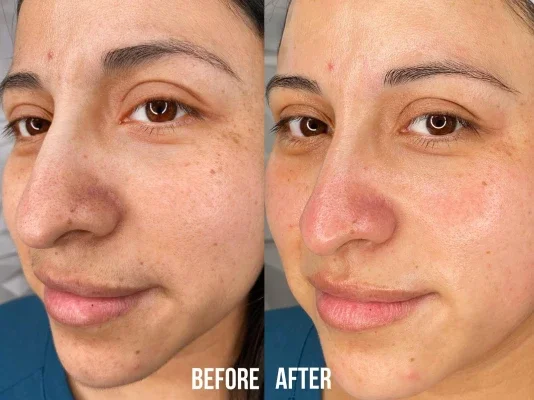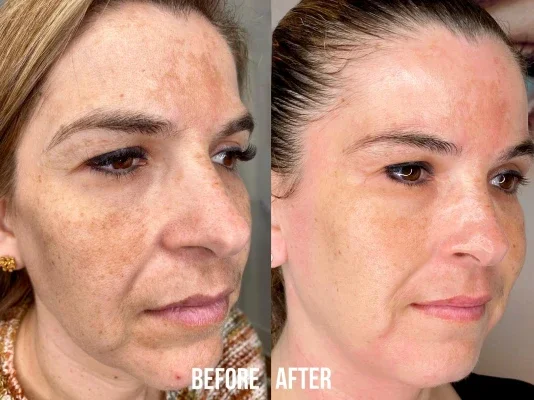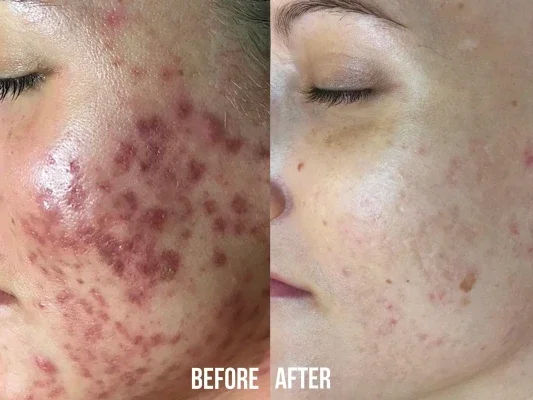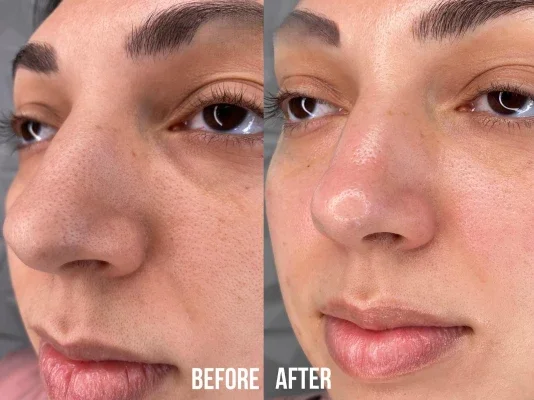
Updated
Is plasma fibroblast (Plasmapen) safe, and is it FDA approved?
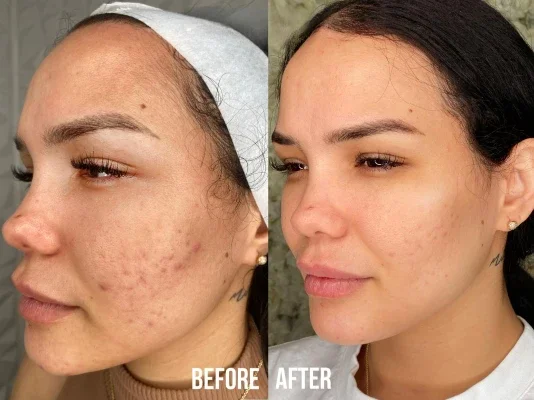
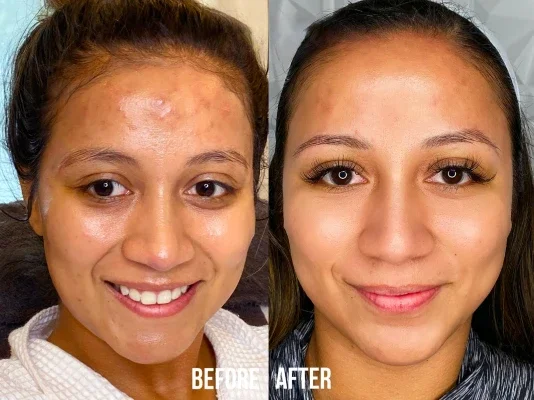
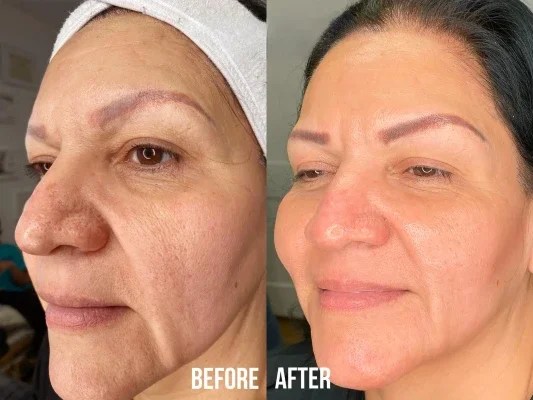
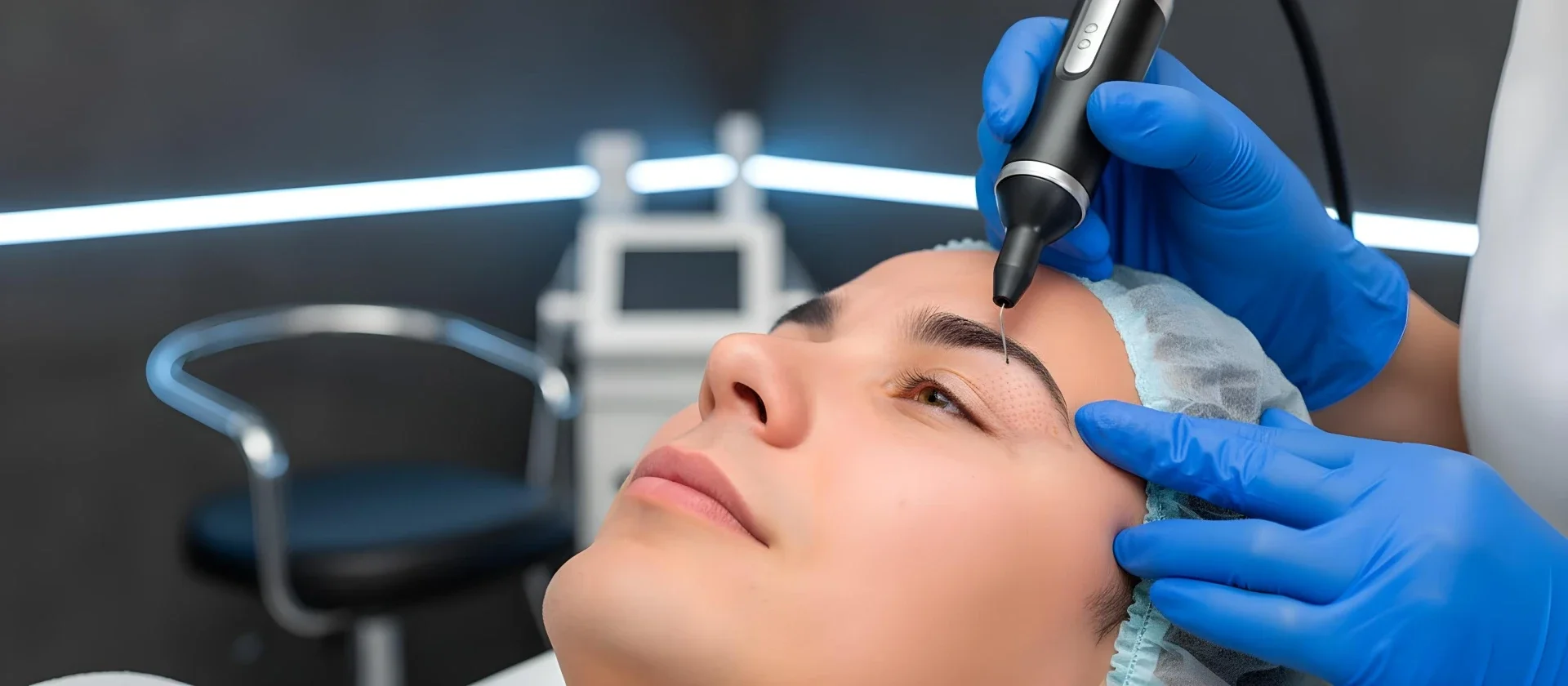
Plasma fibroblast, sold under names like Plasmapen, uses a handheld device that creates a small electrical arc between a probe tip and the skin. The arc ionizes the air in that gap and delivers a controlled micro burn to the epidermis. The skin tightening people see is the result of that thermal injury contracting the tissue as it heals. The FDA has not cleared or approved any plasma fibroblast device for cosmetic skin treatment, and Health Canada has told consumers to avoid these devices entirely, listing burns, scarring, skin peeling and crusting, UV sensitivity and hyperpigmentation among the risks. RealSelf members give Plasmapen a 33 percent Worth It rating, one of the lowest in aesthetics. At Aliestetic in Miami we perform it only in narrow situations, and we turn people away when the risk of permanent pigment change outweighs a modest cosmetic gain. Results and risks vary from person to person.
“I had the treatment on my eyelids and the change was impressive. My look was lifted without surgery.” (Sofía M., 47 years old).
Transformative Benefits
- Lifting effect without surgery.
- Diminishes expression lines and fine wrinkles.
- Improves sagging in eyelids, neck, and face.
- Stimulates collagen and cell renewal.
- Treats scars, spots, and stretch marks.
How does it work?
- The device creates a plasma micro-arc over the skin.
- It produces a controlled contraction of the dermis.
- Activates collagen and elastin production.
- It may generate temporary micro-crusts that fall off within a few days.
- Duration: 45–60 minutes.
- Results: visible after 7–10 days, and they continue to improve for weeks.
Quick facts
- What it actually is
- A controlled micro burn of the epidermis created by a plasma arc, not a laser and not a lift
- Regulatory status
- No FDA clearance or approval for cosmetic use. Not authorized for sale in Canada
- Visible downtime
- Pinpoint crusts for roughly 5 to 10 days on the face, then weeks of pink skin
- Skin tone
- Higher risk in Fitzpatrick IV to VI for both hyperpigmentation and permanent hypopigmentation
- Not for you if
- You keloid, you are pregnant, you took isotretinoin this year, you cannot avoid sun, or you want a lift
- Performed by
- Aliestetic, in house, at our Miami and Naples locations, after a patch test
On this page1 / 9What a plasma device actually does to your skin
- What a plasma device actually does to your skin
- What the regulators actually say
- What it can reasonably do, and for whom
- If your eyelid concern is real excess skin
- Why brown and dark skin changes the entire calculation
- The operator matters more than the device
- What to ask before anyone touches your face with this
- Recovery, described without adornment
- How we handle plasma fibroblast at Aliestetic
Unlike most treatment pages, this one is not written to talk you into it: a large share of the people who ask us about plasma fibroblast walk out having chosen something else, and that is a good outcome. In Miami and Naples, where most of our patients have brown or dark skin, this is the treatment where skin tone changes the math most.
What a plasma device actually does to your skin
A plasma pen is a handheld probe held a fraction of a millimeter above the skin. It creates a small…
A plasma pen is a handheld probe held a fraction of a millimeter above the skin. It creates a small electrical arc across that gap, the arc ionizes the air, and that ionized gas delivers a burst of heat to the point of skin underneath. The heat sublimates a tiny column of epidermis, leaving a dark pinpoint dot, and around it the tissue contracts.
That contraction is the entire mechanism. The tightening people pay for is the visible result of controlled thermal injury. This is not a device that stimulates something gently: it burns dots into your face in a grid, and the skill lies entirely in how small, how shallow, how close together and how evenly those burns are placed. Every risk on this page follows from that.
What the regulators actually say
The FDA has not cleared or approved any plasma fibroblast device for cosmetic skin treatment
Clinics advertise otherwise, sometimes pointing at a 510(k) clearance for a different device category and sometimes simply inventing it. Cleared and approved are not synonyms either, and these pens have neither for aesthetic use.
Health Canada went further
No plasma pen has been approved for sale in Canada, meaning none was evaluated there for safety, effectiveness or quality, and it told consumers to avoid these treatments in spas and from estheticians. Its list of effects includes hyperpigmentation, UV sensitivity, crusting, excessive burns from overuse, scarring, infection, and sagging skin particularly in the upper eyelids.
And the patients
RealSelf members give Plasmapen a 33 percent Worth It rating, while most established aesthetic treatments sit far above that. A third of people saying it was worth it is not a statistic anyone would print in an ad, which is exactly why it belongs here.
The regulator listed sagging upper eyelid skin as a possible outcome of the treatment most often sold as a fix for sagging upper eyelid skin.
What it can reasonably do, and for whom
Plasma has a defensible role on small, localized targets: a skin tag or raised spot a physician has…
Plasma has a defensible role on small, localized targets: a skin tag or raised spot a physician has already confirmed is benign, or a single fine line where a very limited, very superficial treatment is acceptable. There is also a narrow eyelid candidate, someone with mild crepey texture on the upper lid, light to medium skin, no keloid tendency and a tolerance for looking visibly treated for a week or two. That is a specific person, not a general audience.
What it does not do is lift. It does not reposition tissue, remove a fold or tighten deeper structures, and skin that hangs because there is too much of it is a structural problem that a surface burn does not solve.
If your eyelid concern is real excess skin
Blepharoplasty is surgery performed by a physician: it removes or repositions skin, muscle and fat…
Blepharoplasty is surgery performed by a physician: it removes or repositions skin, muscle and fat, and it has a long published record of outcomes. Plasma fibroblast has a different mechanism, different evidence and different results. If you have a genuine fold of skin resting on your lashes, if your lid obstructs part of your visual field, or if what bothers you is heaviness rather than fine crepiness, the correct next step is an oculoplastic or plastic surgeon. Paying for a plasma series first and still needing surgery afterward is a common and avoidable sequence.
Why brown and dark skin changes the entire calculation
Most of our Latino, Caribbean and Afro descendant patients fall in Fitzpatrick types IV, V and VI…
Most of our Latino, Caribbean and Afro descendant patients fall in Fitzpatrick types IV, V and VI. Melanin rich skin is not more fragile. It is more reactive to inflammation, and that reaction is pigment.
Post inflammatory hyperpigmentation
A controlled burn is inflammation by definition, and in higher phototypes melanocytes answer inflammation with more pigment. A case report in Dermatologic Therapy in 2020 documented periorbital hyperpigmentation after plasma exeresis in two women, appearing once the crusts released and taking four months in one case and nine in the other to resolve. Both went in for a cosmetic concern and spent most of a year on the consequence.
Permanent hypopigmentation
The worse risk. If the thermal injury destroys melanocytes, the skin heals lighter and there is no reliable way to bring that pigment back. On a face with even, deep pigment, a grid of pale dots is far more visible than the fine line it was meant to treat.
The practical consequences are unglamorous: lower energy, wider spacing, fewer passes, more sessions for less effect, absolute sun avoidance afterward and a test patch first. Treating a type V face with type II settings produces a result you live with for a long time.
The operator matters more than the device
Everything that decides whether you get a fine dot or a burn is manual: distance from the skin…
Everything that decides whether you get a fine dot or a burn is manual: distance from the skin, angle of the probe, dwell time, spacing, number of passes over the same area, energy setting relative to this specific person’s skin, and recognizing in real time that the tissue is responding badly and stopping.
No parameter on the machine protects you from an untrained hand. Unlike a modern laser with built in cooling and safety lockouts, nothing here is automatic, so most of the disasters circulating online are technique, not physics. Plasma pens are also sold openly online for very little money, and some training in this field is a weekend course. That combination is where most of the harm comes from.
What to ask before anyone touches your face with this
Take these to any consultation, including ours.
Take these to any consultation, including ours.
- What exact device, from what manufacturer, and what is its regulatory status for cosmetic use?
- What training do you have on it, from whom, and can you show me the certificate?
- How many patients with my skin tone have you treated? Not skin in general. My tone.
- Can I see before and after photos of Fitzpatrick IV, V or VI patients, same lighting, three months out?
- Will you do a test patch in a discreet area and let me see how it heals first?
- If I develop hyperpigmentation or a lighter patch, who manages it and at whose cost?
If any answer is vague, that is your answer.
Recovery, described without adornment
- 01
Day 0 to 2
Small dark dots across the treated area, immediately visible. Swelling builds, and around the eyes it can be substantial enough that people take time off work.
- 02
Day 3 to 10
The crusts dry, tighten, itch and shed on their own, usually finishing inside this window on the face. They must not be picked, scrubbed, steamed or exfoliated off. This period decides whether the marks are temporary.
- 03
Week 2 to 8
Fresh pink or red skin underneath. Normal healing, and also the phase people were not warned about. Makeup resumes once the skin is intact.
- 04
Month 2 onward
Any pigment that developed is dealt with here, and this is where a brown skinned patient can find herself treating a mark for months.
Through all of it: no sun, real sunscreen daily, no picking, and no active ingredients unless your provider approved them.
How we handle plasma fibroblast at Aliestetic
We assess before we sell: your phototype, your scarring history, what actually bothers you and…
We assess before we sell: your phototype, your scarring history, what actually bothers you and whether a different treatment answers it better. For many people that is microneedling for texture, a professionally chosen peel for tone, or a proper home routine, and we say so.
When plasma is genuinely appropriate we treat conservatively and we test first. When it is not, we tell you. If this page talked you out of the treatment, it did its job.
Frequently asked questions
Is Plasmapen approved by the FDA?
No. The FDA has not cleared or approved any plasma fibroblast device for cosmetic skin treatment, and there is an important difference between cleared and approved that marketing often blurs. FDA clearance under the 510(k) pathway means a device is similar enough to something already on the market. Approval is a higher bar. Plasma fibroblast pens have neither for aesthetic use. Some plasma devices are cleared for cutting and coagulating tissue in surgery, and the FDA has warned against using those outside their cleared purpose for cosmetic work.
What did Health Canada say about plasma pens?
Health Canada published an information update stating that no plasma pen device has been approved for sale in Canada, which means none has been evaluated there for safety, effectiveness or quality. It advised consumers to avoid these treatments at spas and by estheticians. The listed effects include pain, swelling, redness, hyperpigmentation, UV sensitivity, skin peeling and crusting, and sagging skin particularly in the upper eyelids. It also flagged excessive burns from overuse, along with scarring and infection as burn complications.
Why is the RealSelf rating so low?
RealSelf members give Plasmapen a 33 percent Worth It rating, which sits near the bottom of the aesthetic categories tracked on that site. Read the actual reviews rather than the number. The pattern in the negative ones is consistent: results that were subtler than expected, downtime that was longer and more visible than the patient was told, and pigment changes or texture changes that took months to settle or did not settle. That pattern points at expectation setting and operator technique more than at the physics of the device.
Is plasma fibroblast safe on brown or dark skin?
It carries real and disproportionate risk there. Fitzpatrick IV, V and VI skin, which describes a large share of our patients in Miami, responds to thermal injury with post inflammatory hyperpigmentation more readily and for longer. The opposite problem also exists: if the injury damages melanocytes, the result can be permanent hypopigmentation, pale dots that do not come back. A case report in Dermatologic Therapy in 2020 described periorbital hyperpigmentation after plasma treatment that took four and nine months to resolve in two patients.
Does it hurt?
Topical numbing cream is applied first and most people describe the treatment itself as tolerable, with a hot pinpoint sensation and the smell of burning. The harder part is afterward. The first two to three days involve significant swelling, and around the eyes that swelling can close the eye area noticeably. Then come days of tight, itchy, visible crusts. Discomfort is manageable. Appearance is the part people underestimate.
How long is the recovery, honestly?
Tiny carbon crusts form immediately and typically shed on their own somewhere between day four and day ten on the face, sometimes longer on the body. Under them is fresh pink skin, and that pinkness commonly takes weeks to months to normalize. Strict sun avoidance and daily sunscreen are required through that entire window, not just the first week. Picking a crust early is the single most reliable way to turn a temporary mark into a permanent one.
Can plasma fibroblast replace eyelid surgery?
No, and we will not present it that way. Blepharoplasty is a surgical procedure performed by a physician that removes or repositions tissue, and it has decades of published outcomes behind it. Plasma fibroblast does not reproduce those results. If you have genuine excess eyelid skin, a heavy fold resting on your lashes, or skin blocking part of your visual field, the correct next step is an evaluation with an oculoplastic or plastic surgeon, not a plasma device.
Who should not have this treatment?
People with Fitzpatrick IV to VI skin who are not willing to accept pigment risk, anyone with a personal or family history of keloids or hypertrophic scarring, pregnancy or breastfeeding, isotretinoin use in the past year, active herpes simplex or any active skin infection in the area, poorly controlled diabetes, autoimmune or connective tissue disease, healing or clotting disorders, active eczema or psoriasis at the site, and anyone who cannot stay out of the sun for weeks.
Is there anything better for what I want?
Often yes, and we will say so at your assessment. For skin texture and acne scarring, microneedling has strong evidence and a much better safety record in darker skin. For dark marks and uneven tone, professionally selected chemical peels and a real home routine do more with less risk. For loose skin that a surface treatment cannot reach, the honest answer may be that no in office device will do it. We would rather tell you that than sell you a burn.
Still not sure you are a candidate?
That is what the first consultation is for. It is free, there is no obligation, and you can come to Miami or start by video if you are travelling in.