Carboxytherapy in Post-Surgical Recovery
Updated
On this page1 / 9What is carboxytherapy?
Carboxytherapy is one of those treatments that sounds either alarming or magical depending on who describes it. Injecting a gas under the skin does not sound like a relaxing spa afternoon, and the claims made for it online range from reasonable to absurd.
Aliestetic is an aesthetic center in Miami where surgery is performed by an affiliated plastic surgeon. Carboxytherapy is one of the in house tools used during recovery, scheduled according to what the operating surgeon instructs, not according to what a patient saw on a video.
What is carboxytherapy?
It is the controlled injection of medical grade carbon dioxide gas into the subcutaneous layer, delivered through a very fine needle by a device that regulates flow rate and volume.
It is the controlled injection of medical grade carbon dioxide gas into the subcutaneous layer, delivered through a very fine needle by a device that regulates flow rate and volume.
Carbon dioxide is not a foreign substance to your body. It is a normal product of cellular metabolism, constantly produced by your tissues and cleared by your lungs. That is part of why the treatment has a long track record of use in aesthetic and vascular medicine in Europe and Latin America.
How is it supposed to work?
The main proposed mechanism is the Bohr effect, and this is genuinely well described physiology rather than marketing language.
The main proposed mechanism is the Bohr effect, and this is genuinely well described physiology rather than marketing language.
Hemoglobin carries oxygen in your blood. Its willingness to release that oxygen into tissue depends partly on the local carbon dioxide concentration and pH. When carbon dioxide rises locally, hemoglobin’s affinity for oxygen decreases, the oxygen dissociation curve shifts to the right, and more oxygen is unloaded into the surrounding tissue.
Injecting carbon dioxide into the subcutaneous space raises local carbon dioxide, which in turn drives that oxygen release, produces local vasodilation and increases blood flow through the microvasculature. Reviews of carboxytherapy in dermatology and aesthetic medicine, including work published in Clinics in Dermatology and review articles in the aesthetic dermatology literature, describe increases in local blood flow measured by laser Doppler, which is the kind of objective measurement that supports the proposed mechanism rather than just asserting it.
The gas itself diffuses away and is cleared through normal respiration.
Where does it fit after surgery?
Three situations come up most often in recovery work.
Three situations come up most often in recovery work.
Areas of firmness and fibrosis
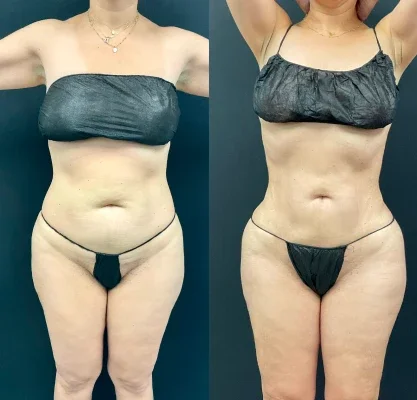
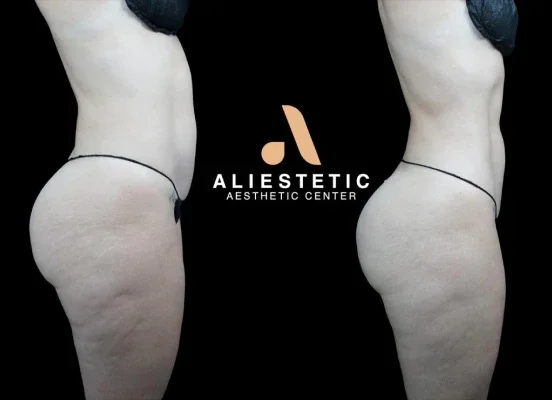
After liposuction some areas heal harder than others, with palpable bands, thickened zones or an uneven texture. Improving local circulation in those areas is one part of the standard approach, along with compression and appropriate manual work. Carboxytherapy is used here as a circulatory tool, not as a mechanical way to break tissue.
Healing scars
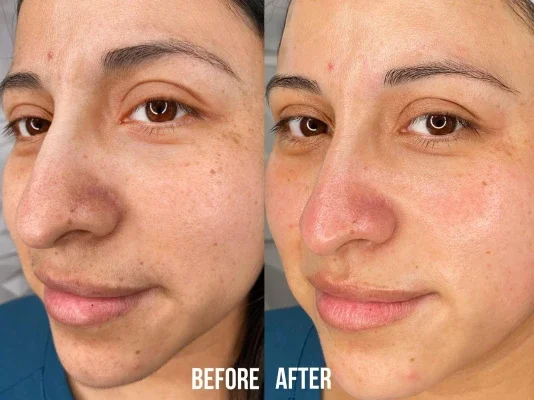
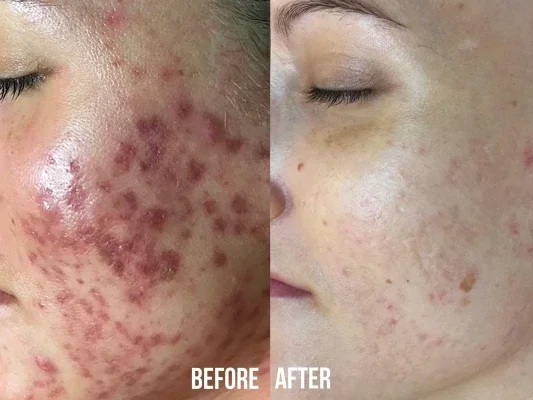
Preliminary clinical work published in the plastic surgery literature has explored carboxytherapy for pathologic scars as a minimally invasive option. The word to hold on to is preliminary. It is an area of active investigation, not a settled treatment protocol.
Skin quality and sluggish areas
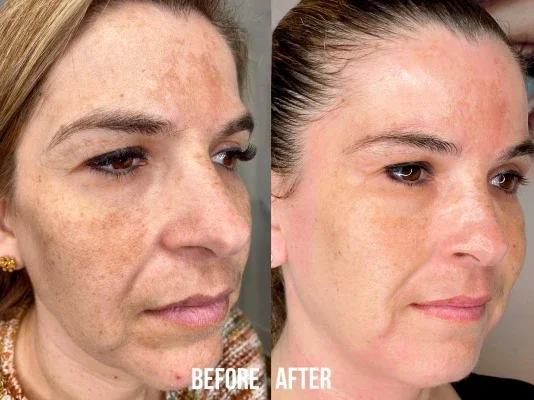
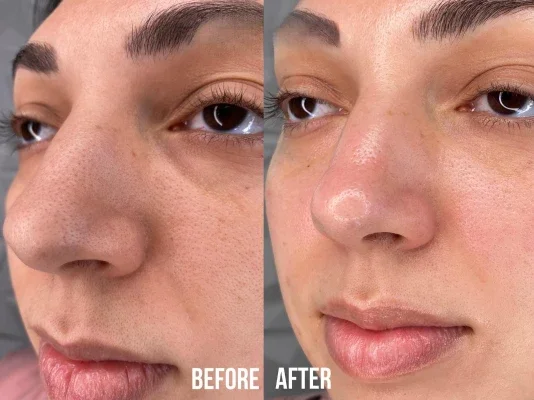
Zones that look dull or feel congested during a long recovery are sometimes treated to support local circulation. This is comfort and skin quality work, and it should be described that way.
What carboxytherapy is not, in this context, is a fat reduction treatment that improves your surgical contour, and it is not a way to avoid dealing with a lump that has not been examined.
What does a session feel like?
The needle is very fine. Most of the sensation comes from the gas rather than the puncture.
The needle is very fine. Most of the sensation comes from the gas rather than the puncture.
Patients typically describe pressure that builds and then eases, a stinging or warm sensation, and a distinctive crackling or crunching feeling under the skin as the gas moves through the tissue plane. That sensation is unusual the first time and normal after that. Sessions are short.
Afterwards, expect redness at the injection points, a temporary swollen or puffy feel in the treated area, and sometimes small bruises. That settles over a few days. The area may feel warmer for a while, which is consistent with the vasodilation the treatment is meant to produce.
When can it start?
Not in the first days. Carboxytherapy is not a substitute for the early recovery basics, which are compression, gentle lymphatic drainage, walking, hydration and monitoring.
Not in the first days. Carboxytherapy is not a substitute for the early recovery basics, which are compression, gentle lymphatic drainage, walking, hydration and monitoring.
It is introduced once the operating surgeon clears it, and it is not applied over incisions that have not closed, over active infection, or over recently grafted fat that needs to be left undisturbed. If you have a fat graft, ask your surgeon specifically which areas are excluded.
At Aliestetic in Miami we ask for your post-operative instructions before we schedule anything. If you traveled here for surgery and do not have written instructions, get them. That document is the backbone of every decision made about your recovery, and it protects you.
What are the honest limits of the evidence?
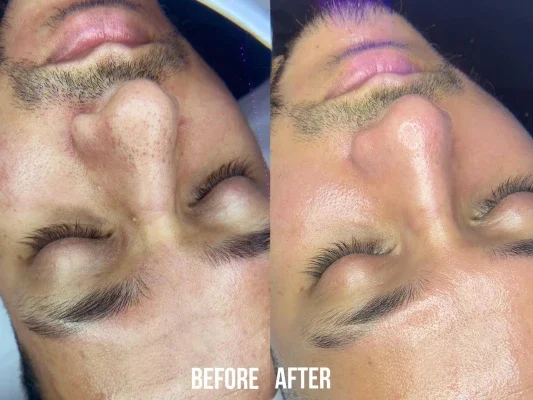
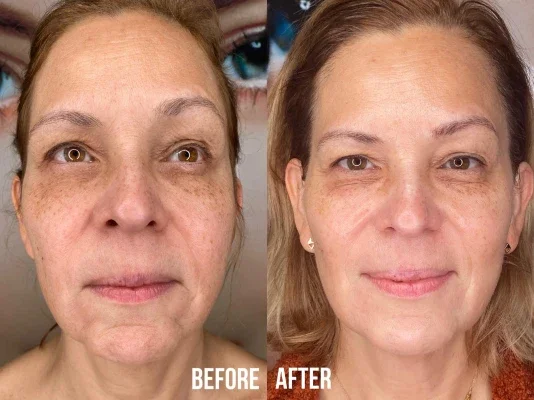
Carboxytherapy has a reasonable physiologic rationale and a growing literature in aesthetic medicine, including studies on infraorbital dark circles, skin hydration and viscoelasticity, and preliminary work on scars. What it does not have is a large body of high powered randomized trials in post-surgical body contouring recovery specifically.
Carboxytherapy has a reasonable physiologic rationale and a growing literature in aesthetic medicine, including studies on infraorbital dark circles, skin hydration and viscoelasticity, and preliminary work on scars. What it does not have is a large body of high powered randomized trials in post-surgical body contouring recovery specifically.
That means the correct way to talk about it is as a supportive treatment with a plausible mechanism and encouraging but limited clinical data. Not as a proven method to reshape a result. Nobody can promise you an outcome from it, and any provider who does is telling you something the literature does not support.
How does it compare with the other recovery tools?
Patients often ask which treatment is best, which is the wrong question. They do different jobs and they belong to different weeks.
Patients often ask which treatment is best, which is the wrong question. They do different jobs and they belong to different weeks.
Manual lymphatic drainage is the early workhorse. Very light pressure, applied to help move post-surgical fluid, generally the first hands-on treatment a surgeon clears. Its value is highest when swelling is at its peak.
Carboxytherapy is not an early treatment and it is not a fluid movement treatment. It is a circulatory intervention aimed at a specific area, usually one that is healing more slowly, feels firm, or has a scar that is maturing poorly. It enters when incisions are closed and the surgeon has cleared it.
Wood therapy applies firm mechanical pressure and belongs later still, in the phase where deeper manual work is appropriate. Using it early can add trauma to fragile tissue.
Compression runs underneath all of it, from day one through roughly six weeks or longer depending on your surgeon’s protocol.
Framing them as competitors leads to buying the wrong thing at the wrong time. Framing them as a sequence is what a coordinated recovery actually is.
Who should avoid it?
Carboxytherapy is generally avoided in pregnancy, in patients with active infection or broken skin at the treatment site, in uncontrolled hypertension, in significant cardiac or renal disease, in severe respiratory disease, in epilepsy, and in patients on anticoagulants unless their physician has cleared it.
Carboxytherapy is generally avoided in pregnancy, in patients with active infection or broken skin at the treatment site, in uncontrolled hypertension, in significant cardiac or renal disease, in severe respiratory disease, in epilepsy, and in patients on anticoagulants unless their physician has cleared it.
Beyond that list, the ordinary post-surgical red flags still apply. Fever, spreading redness, escalating pain, a hot hard area, a fluid pocket that shifts under the skin, or any calf pain, chest pain or shortness of breath mean you contact your surgeon or seek emergency care rather than book a treatment.
Why this matters if you flew into Miami
A large share of cosmetic surgery patients in Miami are not from Miami. They arrive, they have surgery, and the recovery weeks are the part that was never organized. That is exactly the window when firmness, scar changes and fluid problems appear and when someone should be looking at your body regularly.
A large share of cosmetic surgery patients in Miami are not from Miami. They arrive, they have surgery, and the recovery weeks are the part that was never organized. That is exactly the window when firmness, scar changes and fluid problems appear and when someone should be looking at your body regularly.
Carboxytherapy is a small piece of that picture. The bigger piece is having a coordinated plan: compression managed correctly through its stages, drainage timed to your surgeon’s instructions, deeper manual work introduced only when the tissue is ready, and someone who knows the difference between a normal firm area and a problem that needs a surgeon.
That is what Aliestetic coordinates. The surgery belongs to your surgeon. The weeks after it should not be improvised.
What is carboxytherapy used for after cosmetic surgery?
Carboxytherapy is the injection of small, controlled amounts of medical grade carbon dioxide gas into the subcutaneous tissue using a very fine needle. The proposed mechanism is the Bohr effect: raising local carbon dioxide reduces the affinity of hemoglobin for oxygen, which shifts the oxygen dissociation curve and increases oxygen release into the treated tissue, alongside local vasodilation and increased microcirculation. In recovery work it is used mainly on areas of firmness, fibrosis and healing scars rather than as a fat reduction treatment. At Aliestetic in Miami it is introduced only after the operating surgeon clears it, never over an unhealed incision or an active infection, and never as a substitute for surgical assessment of a lump. Clinical evidence in aesthetic medicine is growing but still limited in size, so expectations should stay modest and results are not guaranteed.
Frequently asked questions
Does carboxytherapy hurt?
Most people describe pressure, a stinging sensation at the needle and a crackling or crunching feeling under the skin as the gas diffuses. It is usually brief. Redness, mild swelling and occasional bruising at the injection points are common and settle within a few days.
Can carboxytherapy fix fibrosis after liposuction?
It is one of several tools used for areas of firmness, alongside compression, gentle manual work and time. It is not a guaranteed fix, and a firm area should be assessed by your surgeon first to rule out a seroma or another cause that needs different management.
How soon after surgery can I start?
Only when your operating surgeon clears it. It is not an early first week treatment. Incisions must be closed and healing must be on track, and grafted areas are handled separately because they need to be left undisturbed.
Who should not have carboxytherapy?
It is avoided in pregnancy, with active infection or unhealed skin at the site, in uncontrolled hypertension, in significant heart or kidney disease, in severe respiratory disease, in epilepsy, and in patients on anticoagulants without medical clearance. Always disclose your full medication list.
Questions about your case?
Consultations are free, in person in Miami or by video if you are out of state.
Book a free consultation